The Psychology of Workspace: What Your Desk Reveals About You
Office dynamics are governed by silent communication, and few things scream louder than a workspace. Researchers in environmental psychology suggest that personal spaces serve as physical manifestations of the self. While professional norms often demand neutrality, the way an individual arranges their immediate environment provides colleagues with subtle cues about personality traits, work ethics, and cognitive styles.
The Personality Spectrum at Work
Studies utilizing the Big Five personality model—Openness, Conscientiousness, Extraversion, Agreeableness, and Neuroticism—reveal distinct desk patterns.
- The Conscientious Organizer: Desks characterized by rigid symmetry, color-coded files, and minimal surface clutter suggest a high level of conscientiousness. Peers often perceive these individuals as reliable, detail-oriented, and disciplined. Research indicates these workers often value predictability and efficiency.
- The Open Innovator: Conversely, a workspace filled with creative artifacts, diverse literature, or eclectic desk items often signals high "Openness to Experience." These employees are perceived as imaginative and adaptable, though excessive clutter might inadvertently signal poor time management to more traditional coworkers.
- The Extraverted Hub: A desk facing outward, equipped with extra seating or a candy jar, functions as an invitation to social interaction. These environments are hallmarks of extraverts who thrive on verbal collaboration and external energy.
Perception vs. Reality
It is vital to distinguish between actual personality and perceived professionalism. While a messy desk might genuinely belong to a high-performing "big picture" thinker, social psychology notes the Halo Effect. If a workspace is perceived as disorganized, colleagues may unfairly project that lack of order onto the employee’s work quality, regardless of their actual output. This cognitive bias means that appearance often precedes evidence in the court of office opinion.
Strategic Workspace Customization
To balance authentic self-expression with professional reputation, consider these guidelines:
- Intentional Personalization: Select items that reflect professional identity rather than just hobbies. A framed certificate or a professional book display conveys expertise, whereas overly personal knick-knacks can distract from one's professional persona.
- Visual Cleanliness: Maintain a “clean desk policy” baseline. Even if one thrives in creative chaos, having a cleared surface at the end of the day signals a reset and readiness for upcoming challenges.
- Communication Cues: Use the environment to communicate boundaries. If the goal is deep work, a pair of noise-canceling headphones acts as a physical barrier. If the goal is collaboration, clear pathways and open layouts signal accessibility.
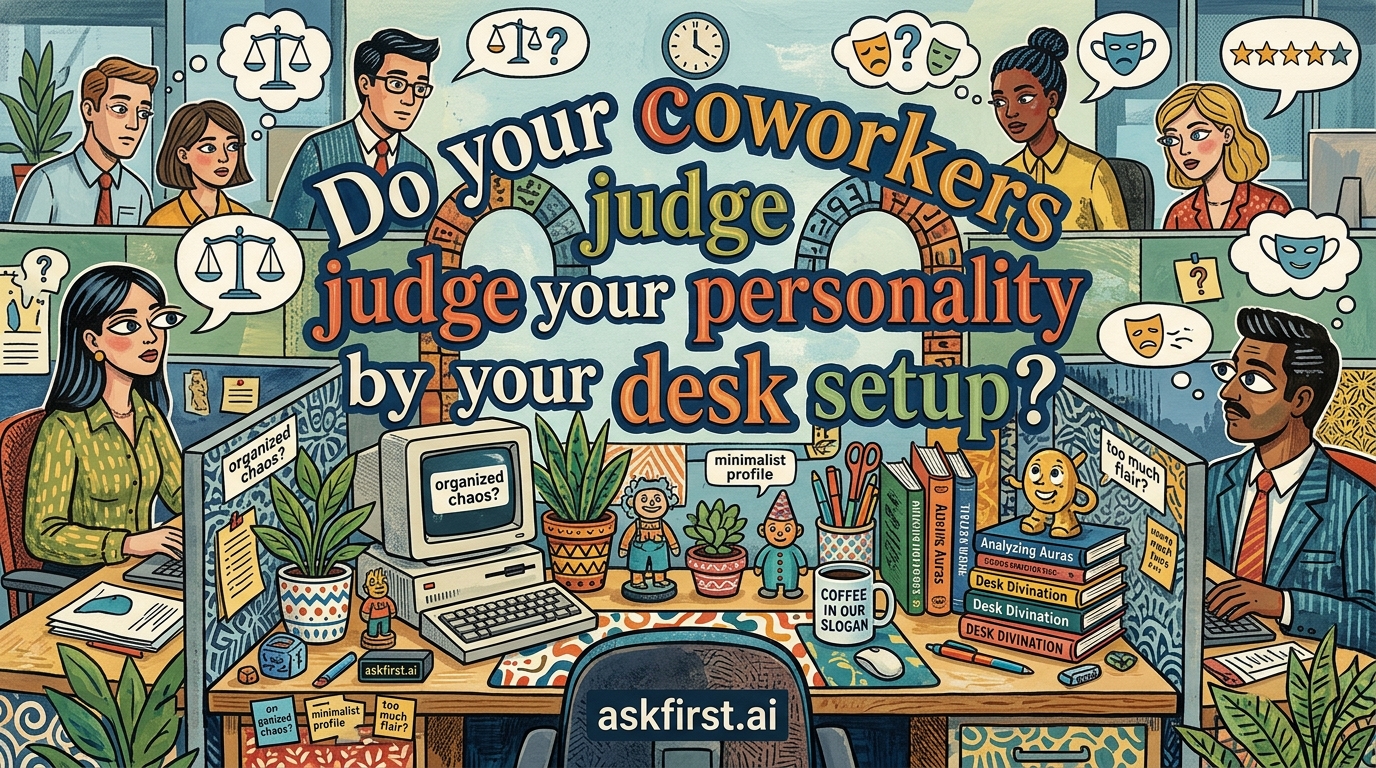
Ultimately, coworkers do observe and subconsciously categorize personality traits based on workspace habits. Understanding that the desk is a social signal allows professionals to curate an image that aligns with their career goals, blending authenticity with the quiet signals of competence and respect.