The Science of Gut Decisions: Business Intuition Revealed
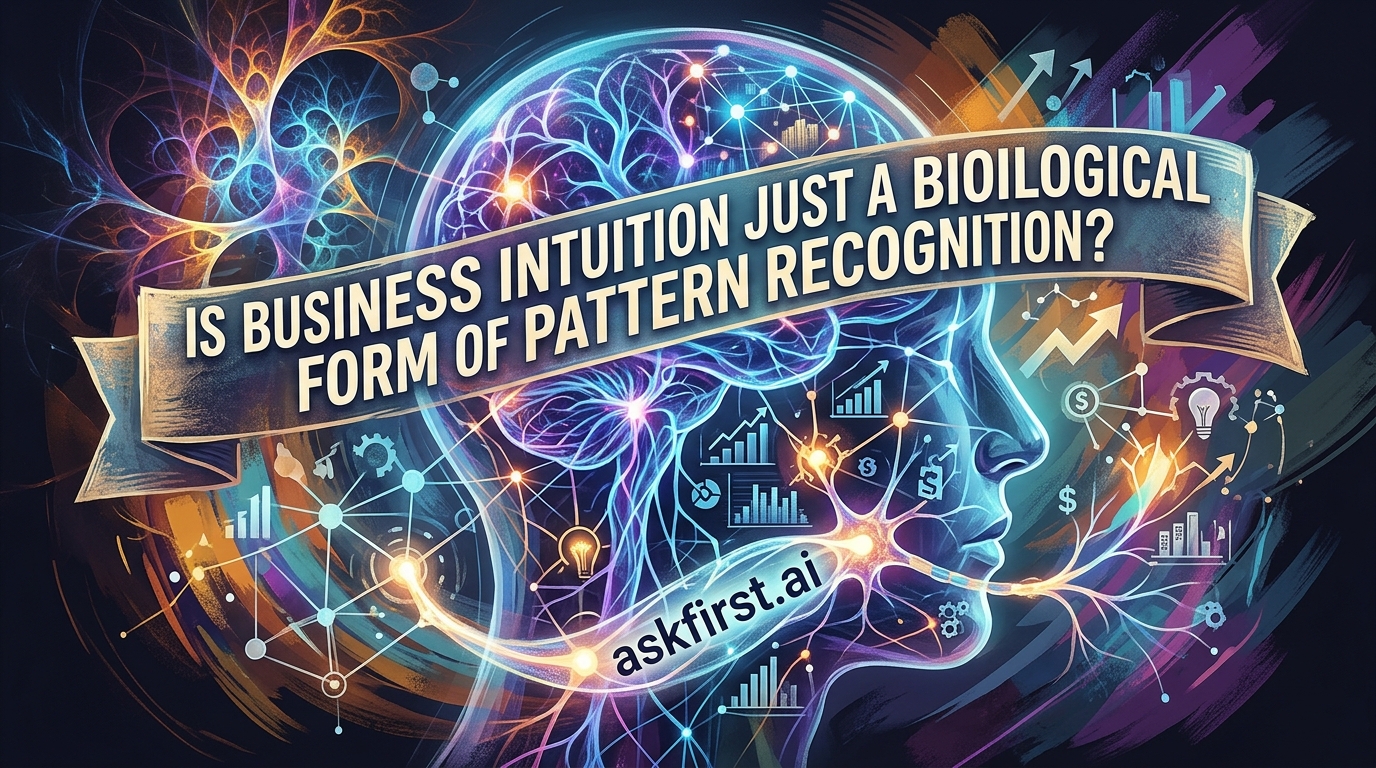
Business intuition is often framed as a mystical talent, yet rigorous cognitive science suggests a much more grounded reality. At its core, what leaders label as a "gut feeling" is the biological manifestation of sophisticated pattern recognition. The human brain, a marvel of evolutionary engineering, constantly processes vast streams of data, identifying recurring themes, risks, and opportunities without conscious oversight. This process, known in psychology as "thin-slicing," allows experts to make high-stakes decisions by accessing non-conscious knowledge reservoirs built through years of experience.
The Mechanism of Rapid Cognition
When a seasoned entrepreneur identifies a viable market niche or senses a pending deal failure, they are not relying on magic. They are performing rapid pattern matching. The brain stores thousands of professional scenarios—negotiations, market shifts, and consumer behaviors—as cognitive schemas. When a new situation presents itself, the mind compares the current sensory input against these historical patterns. If a match occurs, the brain signals an intuitive "hit," often manifesting as a physical sensation. This is essentially the biological equivalent of high-speed predictive modeling.
The Expert Advantage
This phenomenon is not universal; it is highly context-dependent. Research in the field of naturalistic decision-making, notably by Gary Klein, highlights that intuition only functions effectively in environments with "high-validity." In stable, predictable sectors where cause-and-effect patterns repeat, years of immersion create a library of experiences. A veteran venture capitalist can spot a failing startup from a single meeting because their brain has indexed thousands of past "failures" against specific verbal and non-verbal cues. Conversely, in low-validity environments where chaos rules, intuition is prone to cognitive biases and should be tempered by analytical rigor.
Integrating Intuition and Logic
- Pattern Recognition: The foundational layer where experience meets observation.
- Heuristic Utilization: Using mental shortcuts to process information rapidly.
- Feedback Loops: Constant reinforcement from real-world outcomes that refine future intuitive accuracy.
Strategic success rarely stems from intuition alone. The most effective business leaders utilize a hybrid model. They leverage intuitive pattern recognition to generate hypotheses and identify initial paths, then apply analytical frameworks—like scenario planning or quantitative analysis—to validate these initial flashes of insight. By bridging the gap between biological pattern matching and structured data analysis, professionals can minimize the impact of cognitive biases like overconfidence or status quo bias, ultimately elevating their decision-making from mere guessing to disciplined judgment. Intuition serves as the scout, while data serves as the architect; together, they construct a robust business strategy.