The Silent Barrier: Decoding Workplace Dishonesty
Workplace communication is rarely as transparent as organizational charts suggest. While honesty is a stated corporate value, employees frequently find themselves navigating a complex web of social and professional pressures that make absolute truth a risky endeavor. This phenomenon, often termed "organizational silence," stems from deep-rooted psychological and structural factors.
The Fear of Retaliation and Social Costs
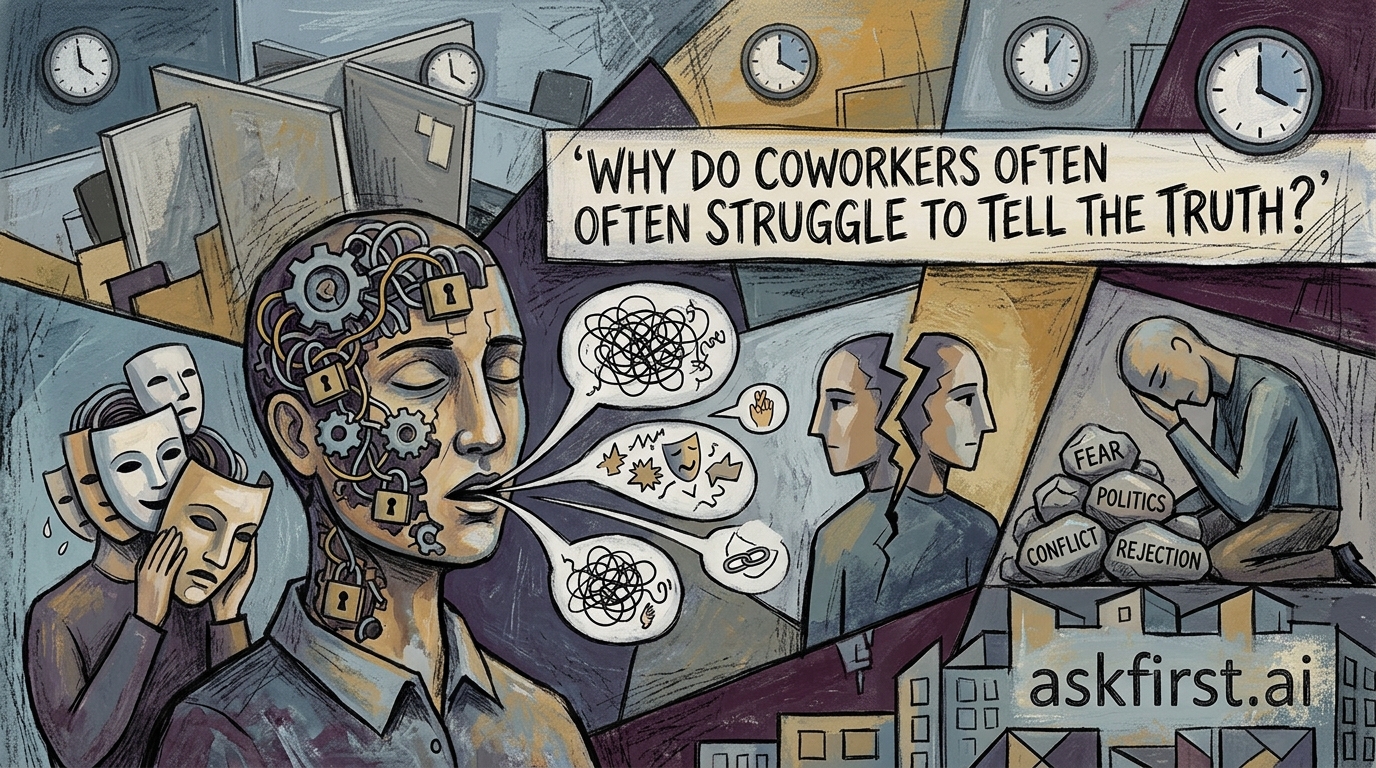
At the core of the struggle is the fear of negative consequences. When an employee perceives that speaking the truth—whether regarding a project failure, a management oversight, or a toxic peer dynamic—will jeopardize their job security or social standing, silence becomes a rational self-preservation strategy. Research in organizational psychology suggests that individuals weigh the "cost of honesty" against the "benefit of security." In hierarchies where leaders do not model psychological safety, truth-telling is viewed as a liability rather than an asset.
The Ambiguity of Professional Diplomacy
What many classify as dishonesty is often an extreme form of professional diplomacy. The corporate environment requires navigating delicate interpersonal relationships where maintaining harmony is frequently rewarded over raw accuracy. This social filtering manifests in several ways:
- Impression Management: Coworkers downplay mistakes to maintain a perception of competence.
- Saving Face: Employees avoid contradicting colleagues to maintain long-term working relationships.
- Groupthink: Individuals suppress dissenting opinions to align with the dominant consensus, prioritizing team cohesion over analytical rigor.
The Structural Incentive Structure
Beyond individual psychology, organizational incentives often punish truth-tellers. If a company culture emphasizes "making numbers" or meeting deadlines regardless of reality, employees will instinctively mask inconvenient truths to ensure those metrics are met. When transparency results in scrutiny rather than support, truth becomes a victim of the incentive system. This is a classic "Principal-Agent Problem" where the agent (the employee) acts to maximize their immediate personal benefit rather than the firm's long-term transparency goals.
Strategies to Cultivate Radical Candor
To bridge the gap between social maneuvering and truth, organizations must move beyond platitudes. Cultivating a culture of "Radical Candor" requires intentional systemic changes:
- Decouple Feedback from Appraisal: Ensure that honest reporting of issues does not automatically influence performance ratings.
- Reward the Messenger: Publicly recognize those who bring bad news to light early. This shifts the incentive from hiding mistakes to solving them collaboratively.
- Model Vulnerability: When leaders admit their own fallibility, it signals to the workforce that reality is more important than image.
Ultimately, truth in the workplace is not merely a moral choice but a functional one. Organizations that foster an environment where honesty is the lowest-friction path will invariably outperform those where employees spend their energy masking the facts.