The Psychology of Employment: Why Most Prefer Structure Over Autonomy
For many, the path of entrepreneurship is lauded as the ultimate expression of freedom, yet a vast majority of the global workforce remains committed to traditional employment. This preference is not merely a byproduct of habit; it is deeply rooted in psychological mechanisms, risk management, and the fundamental human need for cognitive efficiency.
The Safety Net of Predictability
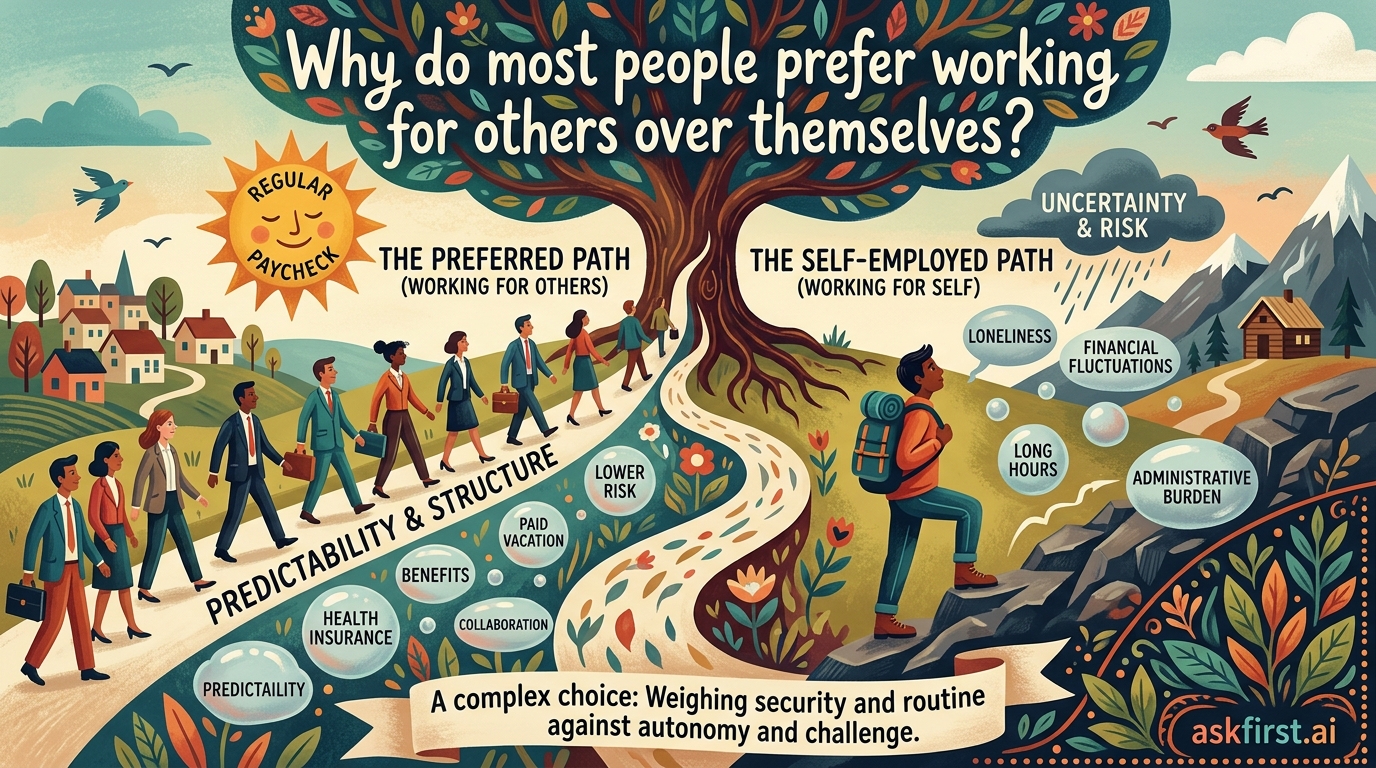
The primary driver for choosing employment over self-employment is the mitigation of cognitive load and uncertainty. When working for an organization, the employee trades absolute autonomy for structured predictability. This arrangement allows individuals to detach from the "business side" of their craft—such as marketing, accounting, or supply chain logistics—and focus exclusively on their core competency. By outsourcing the administrative complexities to an employer, the individual experiences reduced decision fatigue, which is a major contributor to stress. Psychologically, this allows the worker to maintain a clearer distinction between professional obligations and personal life.
Risk Aversion and Prospect Theory
According to Prospect Theory, developed by Daniel Kahneman and Amos Tversky, individuals are generally loss-averse, often fearing the prospect of losing a stable income more than they value the potential of outsized gains from a personal venture. Entrepreneurship carries a high probability of failure, particularly in the initial phases. Conversely, employment provides a reliable flow of capital, health benefits, and retirement structures. Most human brains are hardwired to prioritize short-term security and social consistency. The risk of "going it alone" requires a high tolerance for ambiguity, a personality trait that, while celebrated, is not universally distributed or necessarily beneficial for all professional structures.
Social Dynamics and Collective Purpose
Employment also satisfies the fundamental human need for belonging. Working within an organization provides a built-in community, mentorship structures, and a defined role within a larger system. Entrepreneurship can be an isolating endeavor, often requiring the individual to serve as their own chief strategist, manager, and laborer. In a collaborative corporate environment, employees benefit from the division of labor, where collective effort achieves goals that would be impossible for an individual to replicate alone. This synergy fosters a sense of purpose that is derived from participating in a larger institutional mission.
Financial Stability and Resource Access
Finally, most modern enterprises possess access to capital, infrastructure, and brand equity that an individual simply cannot replicate at scale. Employees leverage these institutional resources to perform their roles effectively without the personal liability of funding such operations. This access allows individuals to contribute to massive, world-changing projects while shielded from the financial volatility of market shifts, providing a stable foundation from which to pursue their personal lives and interests.