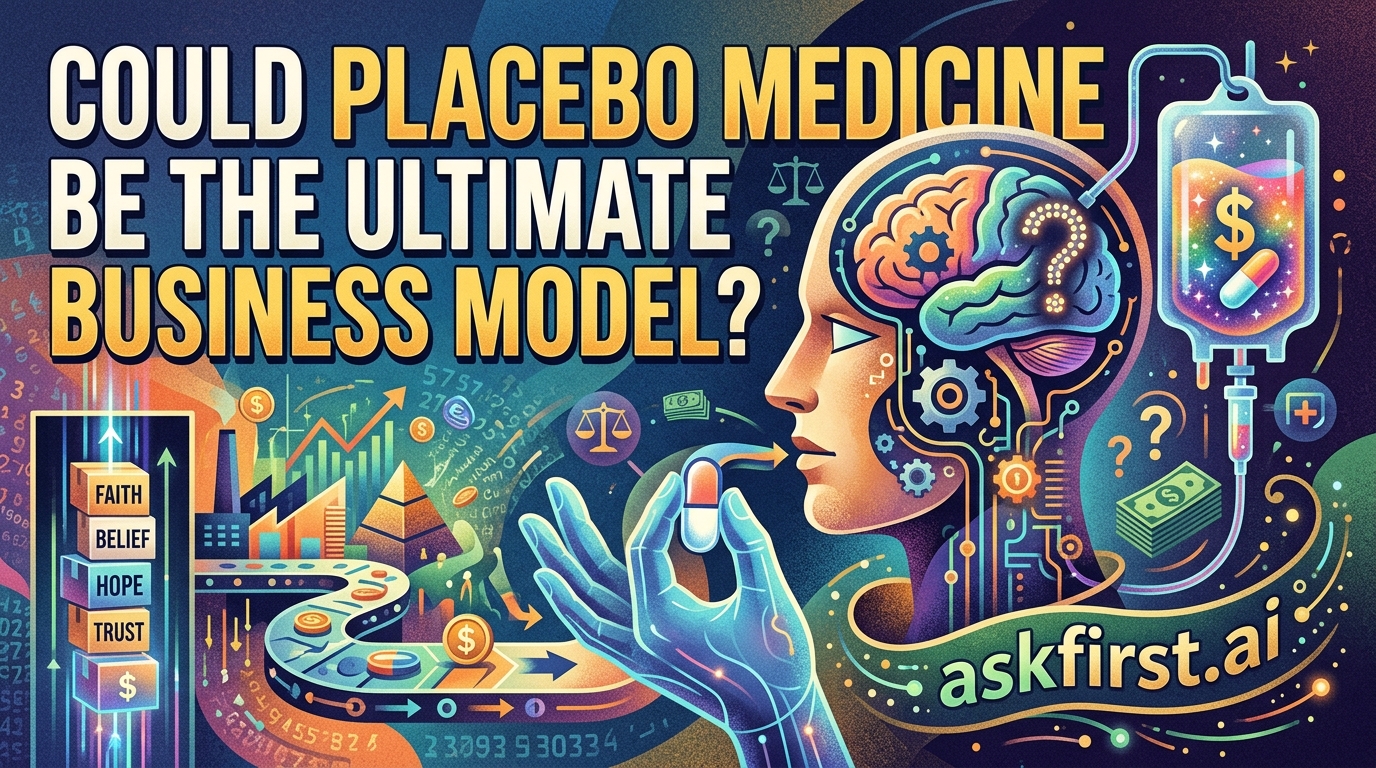
The Placebo Paradox: Marketing the Power of Belief
The concept of the placebo effect—where a patient experiences a perceived improvement in condition due to the expectation of healing rather than a pharmacologically active substance—remains one of the most fascinating phenomena in medical science. While clinical trials treat placebos as "noise" to be eliminated, from a business perspective, the placebo effect represents the ultimate product: a solution rooted in human psychology rather than expensive molecular engineering.
The Economics of Expectation
Traditional pharmaceutical models are burdened by massive R&D costs, rigorous regulatory hurdles, and limited patent lifespans. Conversely, a "placebo model" leverages branding, packaging, clinical atmosphere, and the therapeutic alliance between provider and patient. When a patient believes a treatment will work, the brain releases endogenous opioids and dopamine, creating genuine physiological changes. This biological reaction provides the "product efficacy" without the associated development expenses of traditional drugs.
Why Placebo is a Masterpiece of Branding
In the luxury and wellness markets, the placebo effect is already a central pillar of revenue generation. Businesses selling high-end "functional" goods—such as expensive hydration sprays, specialized ergonomic accessories, or premium supplements—often lean heavily on the "price-effect" heuristic. Research published in journals like Nature suggests that higher-priced products often produce stronger placebo responses simply because consumers subconsciously assume that higher cost equals higher quality.
- The Ritual Effect: Just as a complex surgery offers more "psychological weight" than a pill, the ritual of an expensive wellness retreat reinforces the expectation of recovery.
- Provider Influence: The perceived authority and empathy of the person administering the "remedy" significantly amplifies the patient’s subjective relief, a phenomenon known as the "warm-glow" of medical care.
Ethical Boundaries and Long-Term Viability
While the placebo model is commercially attractive, it operates within a tight ethical loop. Modern medicine requires informed consent, and deceiving patients about the nature of their treatment is generally considered a violation of medical ethics. However, recent developments in "open-label placebo" studies—where patients are told exactly what they are taking and informed that it is a placebo—have shown that the effect persists even without deception. This discovery could revolutionize wellness commerce, allowing businesses to market products based on their ability to trigger self-healing mechanisms, rather than relying on false medical claims.
Ultimately, the placebo effect highlights that the most powerful medical instrument available is the human mind. By understanding how belief shapes physiology, businesses can create systems that empower patients to harness their own internal resources, turning the placebo effect from a nuisance in trials into a fundamental tool for human optimization.