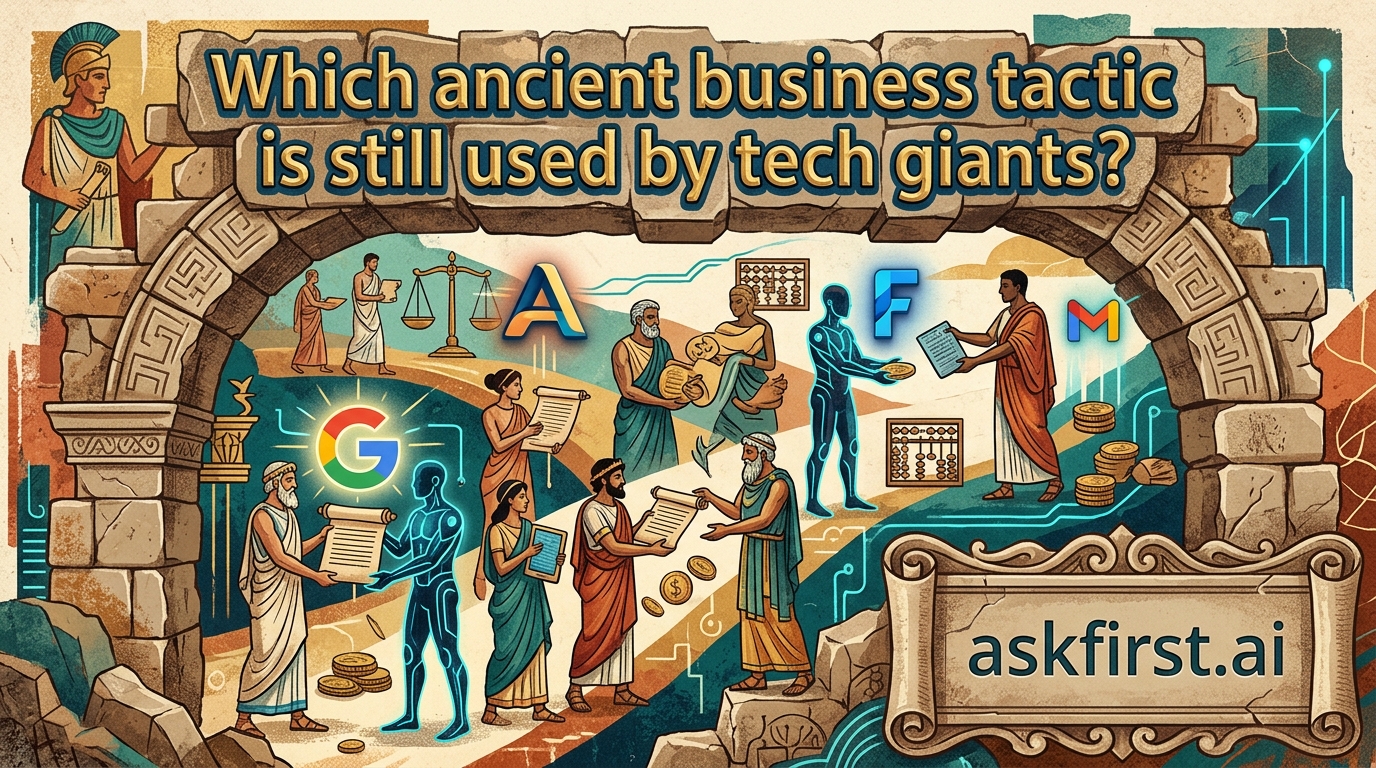
The Ancient Business Tactic Powering Modern Tech Giants
The Echoes of Antiquity: How Bundling Dominates Modern Tech
Bundling, the practice of grouping multiple products or services together for a single price, stands as one of the most resilient and effective business strategies in history. Far from being a modern invention of Silicon Valley, this method dates back to ancient trade routes and early mercantile markets where merchants grouped surplus goods with high-demand items to ensure full inventory clearance. Today, global tech behemoths utilize this same psychological and economic engine to secure market dominance and maximize customer lifetime value.
The Economic Logic of Bundling
At its core, bundling serves two primary economic functions: lowering transaction costs and leveraging consumer psychology. When a company offers a bundle, it effectively eliminates the friction of multiple purchasing decisions. For the consumer, it creates a perception of value through "added" items that might not have been purchased individually. For the corporation, it acts as a mechanism to marginalize competitors who might only specialize in one of the segments within that bundle.
Historical Roots and Modern Evolution
Historians trace the roots of bundling to the ancient Silk Road, where traders often exchanged packages of spices, textiles, and precious metals rather than individual goods. By diversifying the value proposition, merchants mitigated the risks of individual commodity price drops. Modern tech giants have mastered this by digitalizing the concept. Consider how software ecosystems operate: a user who enters an ecosystem for a core product, such as a cloud storage solution, is often presented with a suite of integrated office tools, communication apps, and security features. Once a user integrates these multiple touchpoints into their daily routine, the "switching cost" becomes prohibitively high.
Why It Remains Unbeatable
- Reduction of Customer Acquisition Costs: By marketing a single "all-in-one" subscription, companies acquire customers across multiple service lines simultaneously.
- Retention through Interdependence: When a user relies on a platform for three or four interconnected tasks, removing that platform becomes significantly harder.
- Data Aggregation: Bundling allows tech entities to gather comprehensive insights across diverse user activities, facilitating better product development and hyper-personalized advertising.
The Psychological Hook: The Perceived Deal
Consumers possess a well-documented cognitive bias toward bundles; they tend to evaluate the total price of a bundle rather than the individual component values. This is known as price bundling, where the marginal utility of the extra items feels like a "bonus" to the purchaser, even if the price is effectively higher than if they had shopped for individual solutions. By framing the offer as an inclusive ecosystem, companies convert transactional customers into loyal members of their digital infrastructure. As long as businesses seek to capture greater market share and build impenetrable moats, this ancient practice of grouping goods will remain the foundational architecture of the global digital economy.