Why 80% of Startups Fail Within Five Years
The Startup Reality: Why Most Ventures Fail and How to Survive
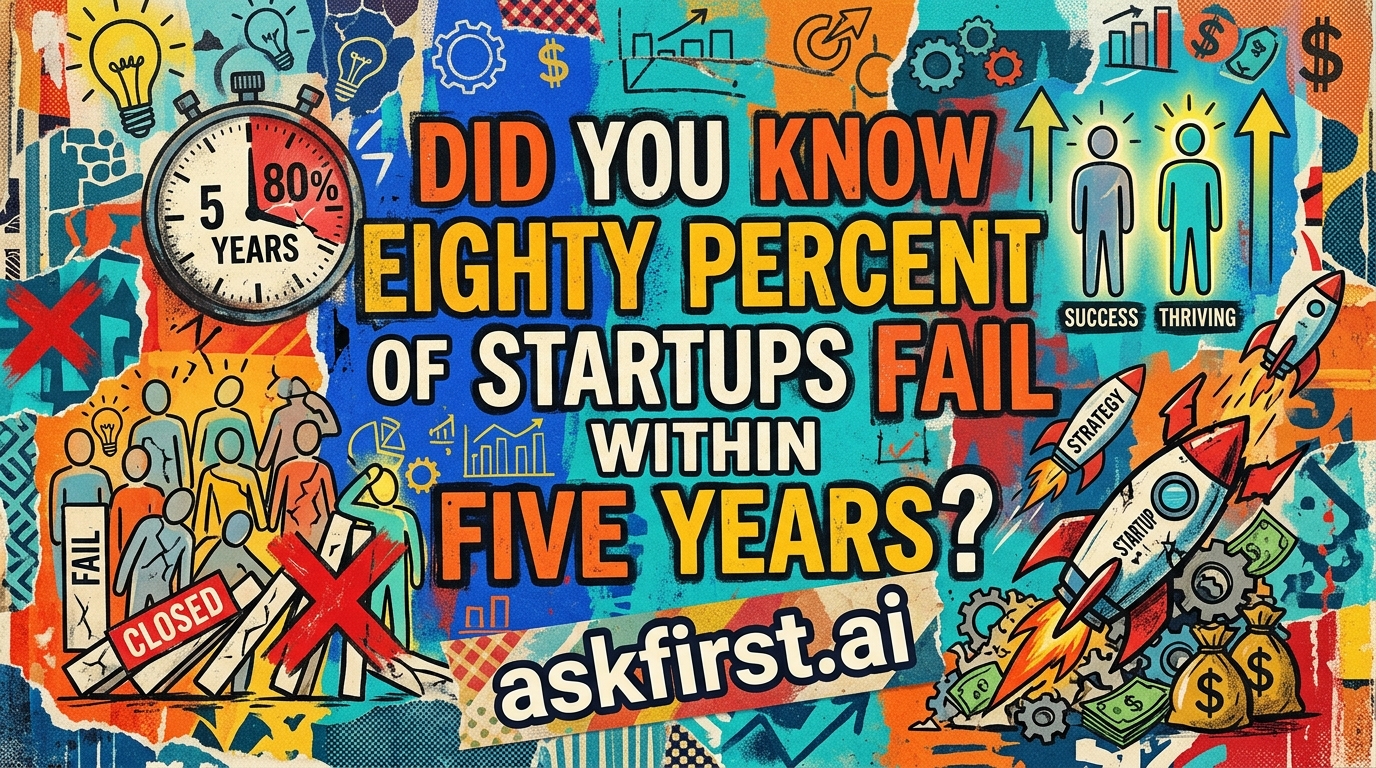
Statistics regarding startup failure rates are often cited as a cautionary tale for aspiring entrepreneurs. While the exact figure of eighty percent is a common benchmark frequently discussed in business circles—supported by data from organizations like the Bureau of Labor Statistics and research from the Harvard Business School—it is vital to understand the root causes behind these failures to shift the odds in a founder's favor.
The Anatomy of Startup Failure
Business longevity is rarely a matter of luck; it is a manifestation of strategy, execution, and market alignment. The most common pitfalls that lead to early collapse include:
- Market Misalignment: This is the primary driver of failure. Many companies build products that the market simply does not need. Launching a sophisticated solution for a non-existent problem is the fastest route to bankruptcy.
- Cash Flow Mismanagement: Even profitable ideas can die if the operational runway is insufficient. Exhausting capital before reaching product-market fit or failing to secure subsequent funding rounds is a frequent ending for many startups.
- Team Dynamics: A mismatch in skill sets or a breakdown in founder relationships can dismantle a company from within. Venture capital firms often cite the quality of the founding team as the most critical variable in their investment decisions.
Pivoting Toward Success: Strategic Resilience
To transcend these failure rates, successful ventures often embrace specific methodologies that minimize risk and maximize adaptability. The concept of the 'Lean Startup,' popularized by Eric Ries, emphasizes the importance of the Build-Measure-Learn feedback loop. Instead of betting everything on one launch, entrepreneurs are encouraged to release a Minimum Viable Product (MVP), gather data from real users, and iterate rapidly based on actual performance metrics.
Furthermore, financial discipline remains the backbone of endurance. Maintaining a lean cost structure during the initial growth phase allows firms to pivot when necessary without running out of cash. Diversifying revenue streams early on can also protect a company from market volatility, ensuring that a single negative shift does not jeopardize the entire enterprise.
The Role of Adaptability
It is essential to recognize that failure is often a prerequisite for innovation. Companies that view failure as a data point rather than a final outcome are more likely to achieve long-term success. By fostering a culture of radical transparency, where team members feel comfortable flagging obstacles before they become crises, businesses create a robust safety net. Ultimately, while the statistics are sobering, they serve as a roadmap for what to avoid, empowering founders to approach their business models with the rigor, skepticism, and flexibility required to build a sustainable, future-proof organization.