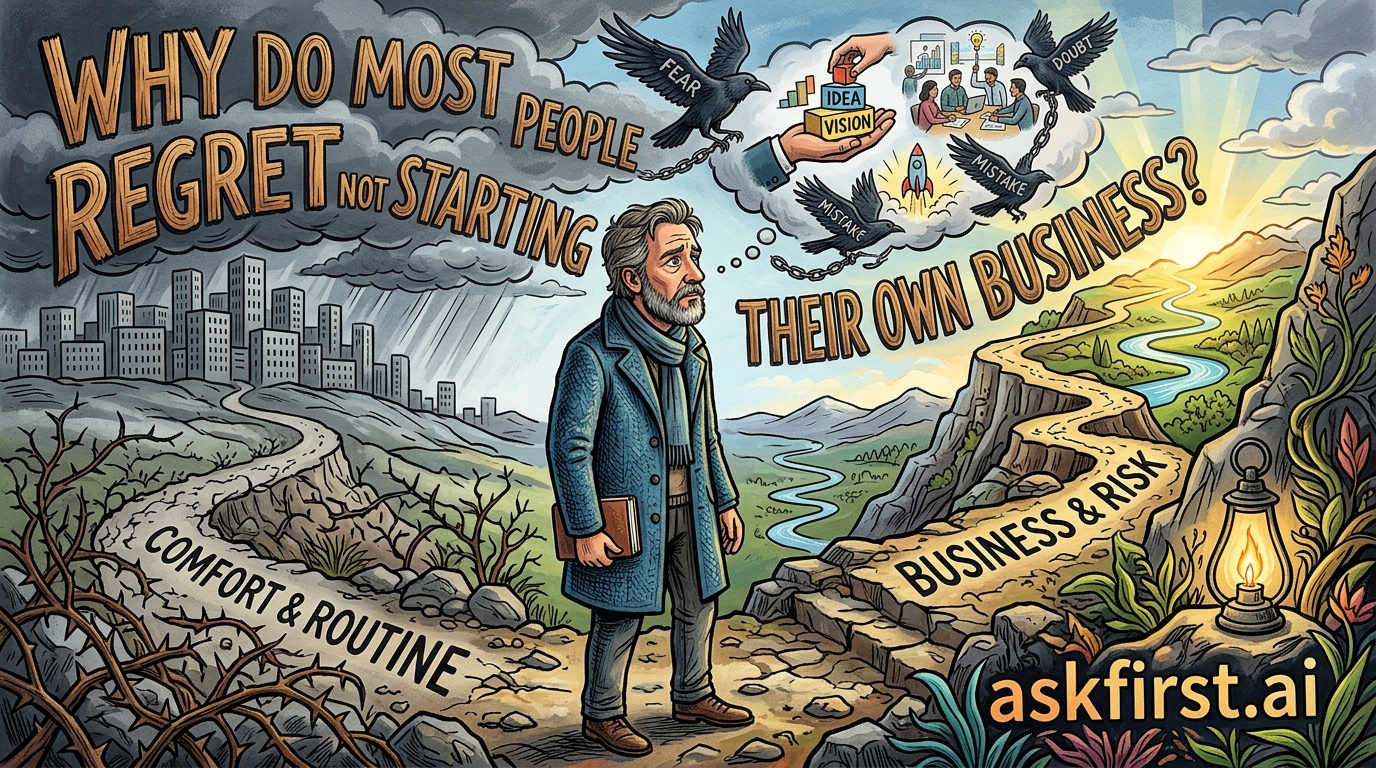
Why Most People Regret Never Starting a Business
The Hidden Cost of Inaction: Why Entrepreneurship Stays on the Bucket List
Many individuals harbor a quiet longing to transition from employee to founder, yet the vast majority remain tethered to the safety of traditional employment. This phenomenon of deep-seated professional regret, often labeled as the "regret of inaction," is a complex intersection of cognitive psychology and societal risk perception. Research into longitudinal career satisfaction consistently reveals that individuals are more likely to rue paths they did not take than mistakes made during their professional tenure.
The Psychology of the Status Quo Bias
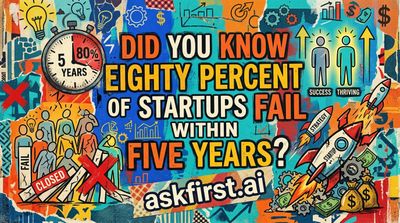
At the heart of this regret lies the Status Quo Bias, a psychological mechanism where people prefer their current situation because the psychological cost of departing from it feels disproportionately high. The human brain is evolutionarily wired to prioritize safety and loss aversion. In a corporate environment, the paycheck serves as a predictable signal of survival, whereas starting a business introduces the ambiguity of potential failure. Many individuals overestimate the risks of failure while failing to account for the "opportunity cost" of stagnant career growth, which leads to profound long-term dissatisfaction.
The Illusion of Perfect Timing
Another significant driver of regret is the perpetual search for the "perfect" conditions. Prospective entrepreneurs often wait for the right market climate, sufficient personal capital, or a lighter workload before committing. However, industry analysis shows that successful ventures rarely arise from optimal conditions; they arise from solving critical problems under constraints. By waiting for the "ideal" moment, many individuals watch others capitalize on gaps in the market, creating a cycle of resentment directed at their own hesitation.
Autonomy and Self-Actualization
Beyond financial motivations, the primary driver for entrepreneurship is the pursuit of autonomy. Modern labor economics suggests that humans thrive when they have control over their environment and work product. When individuals sacrifice this agency for the perceived security of employment, they often experience a gradual erosion of professional purpose. The regret felt later in life is rarely about the money lost from not launching a product, but rather the loss of the "what if" regarding one's potential.
Mitigating the Future Regret
To move past this barrier, experts recommend:
- Conducting a Pre-Mortem: Imagine it is five years in the future and the business failed, then work backward to identify manageable risks.
- Executing in Parallel: Utilize the "side hustle" model to test market viability without immediate financial catastrophe.
- Shifting Perspective: Reframe the fear of failure as the fear of living a life dictated by the risk-aversion of others.
The most significant takeaway for any aspiring entrepreneur is that the cost of starting is quantifiable and temporary, whereas the cost of perpetual hesitation is a lifelong shadow of regret. Entrepreneurship is not merely about launching a company; it is about reclaiming agency over one's own trajectory.