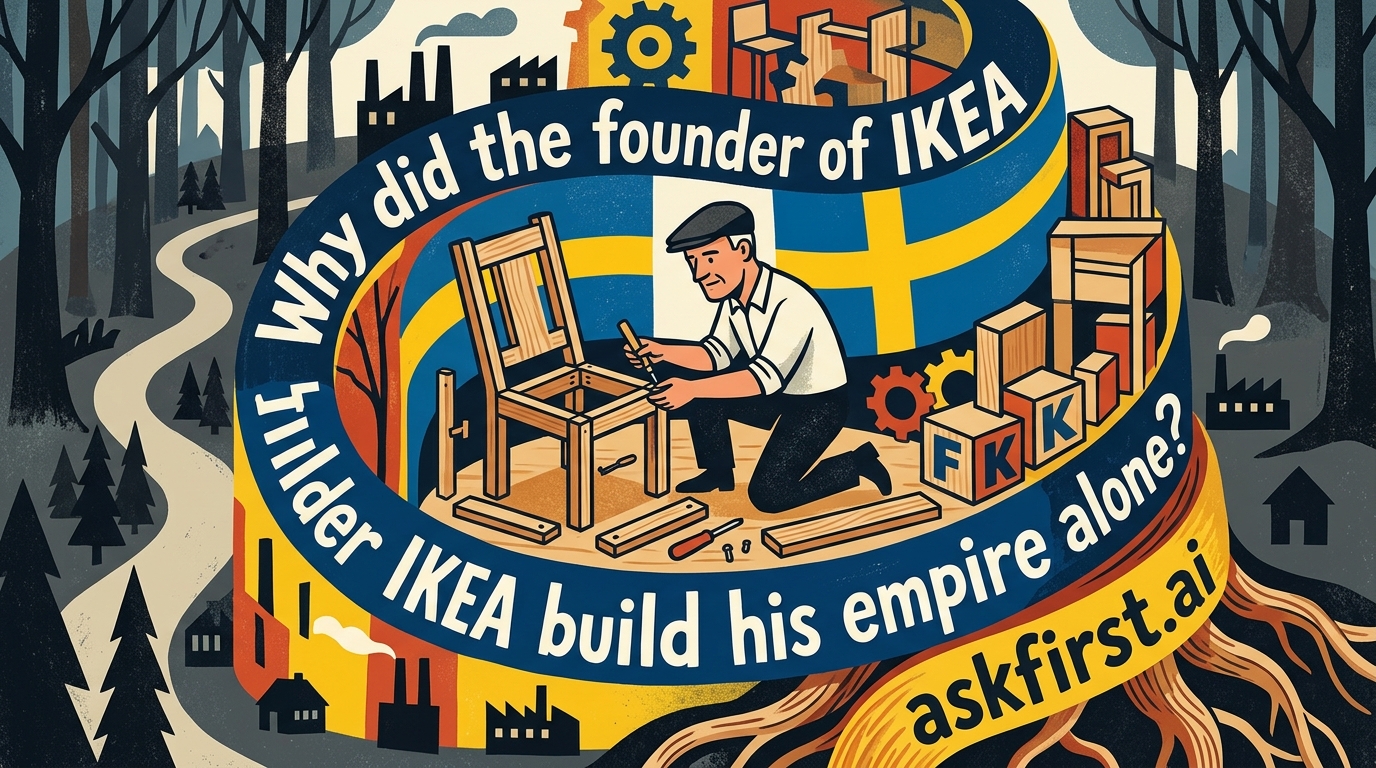
The Solitary Visionary: Decoding Ingvar Kamprad's Solo Empire Building
Ingvar Kamprad, the founder of IKEA, is often mythologized as a lone wolf who single-handedly constructed a global furniture empire. While no multibillion-dollar enterprise exists without teams, the perception of his "solo" journey is rooted in his unique philosophy of radical independence and extreme fiscal austerity. This approach was not about rejecting collaboration, but about protecting a specific corporate DNA that favored lean operations over bureaucratic expansion.
The Philosophy of Frugality and Independence
Kamprad founded IKEA in 1943 at the age of 17. From the beginning, he operated with a "do-it-yourself" mentality that extended from his product design to his management style. His decision to remain the primary architect of the company’s vision was driven by several core principles:
- Extreme Cost-Consciousness: Kamprad believed that unnecessary overheads, including large administrative teams or luxury offices, diluted the company's ability to offer low-cost products to the "many people."
- The Democratic Design Ethos: He insisted that design must be functional, beautiful, and affordable. By keeping the organizational structure flat and controlled by his singular vision, he ensured that no middle manager could compromise on quality or price.
- Long-Term Patience: Unlike publicly traded companies beholden to quarterly earnings, Kamprad built the company through internal financing and slow, organic growth. This autonomy allowed him to prioritize the next thirty years over the next three months.
Why Autonomy Became His Strategic Weapon
Critics might argue that such a centralized model is prone to stagnation. However, for Kamprad, maintaining a tight grip on the core business was an insurance policy against the dilution of his mission. By avoiding heavy external debt or venture capital, he prevented outside stakeholders from exerting pressure that would contradict his "lean and mean" philosophy.
Research into business leadership suggests that founder-led organizations often outperform competitors because of this unwavering consistency. Kamprad utilized this to establish a corporate culture—often referred to as "The IKEA Way"—where every employee understood the importance of resourcefulness. In his own words, he often described waste as a "mortal sin" in the company, a mindset that permeated every level of operations.
Challenging the "Alone" Myth
It is important to clarify that "alone" does not mean "without employees." Kamprad built a massive workforce, but he was famously hands-off regarding micromanagement while remaining entirely uncompromising on corporate ethics and values. He acted as the "keeper of the flame" rather than a traditional CEO who relies on a board of directors for his moral compass. His legacy serves as a masterclass in how a singular, obsessive focus on a specific value proposition can scale from a small Swedish mail-order business into a worldwide cultural institution. By remaining in the shadows and leading through principles rather than mandates, he proved that a unified vision is more powerful than a sprawling corporate hierarchy.