The Path to Entrepreneurship: A Comprehensive Guide
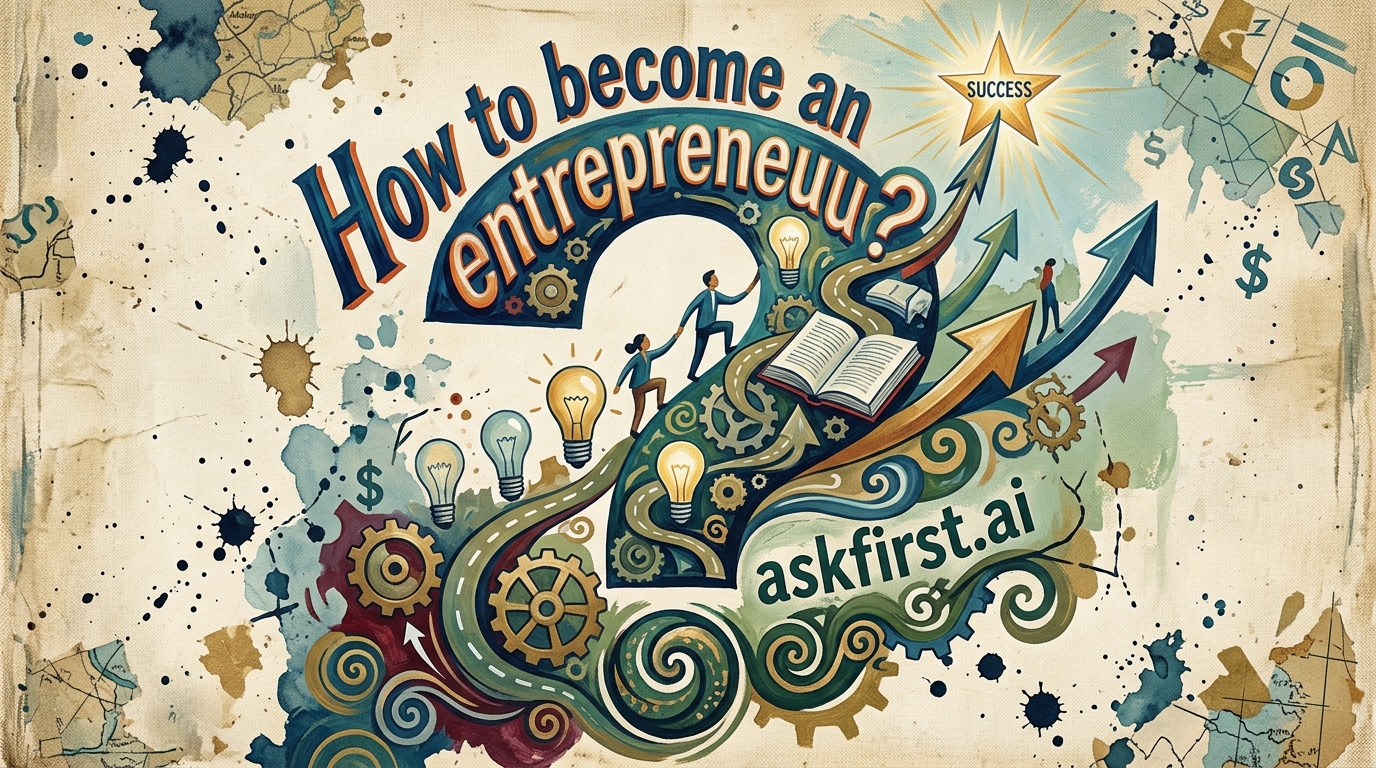
Becoming an entrepreneur is the process of designing, launching, and running a new business, which is often initially a small business, offering a product, process, or service for sale. It is a journey that balances high-risk innovation with the potential for significant economic reward and personal autonomy.
1. The Foundational Mindset
Entrepreneurship begins with a shift in perspective. Successful entrepreneurs possess a high tolerance for ambiguity, resilience in the face of failure, and an innate desire to solve problems. Unlike traditional employment, entrepreneurship requires self-directed motivation and the ability to pivot strategies based on market feedback.
2. Step-by-Step Execution Guide
Phase I: Ideation and Validation
- Identify a Pain Point: Successful ventures solve a specific problem. Conduct market research to identify gaps in existing services.
- Market Validation: Before investing capital, test your concept. Create a Minimum Viable Product (MVP)—the simplest version of your offering that provides value.
- Target Audience Analysis: Define your ideal customer profile (ICP) using demographics, psychographics, and behavioral data.
Phase II: Business Planning
- The Business Model Canvas: Move beyond traditional 50-page business plans. Use a one-page canvas to map your value proposition, revenue streams, cost structure, and key partnerships.
- Legal Structure: Choose a structure (e.g., LLC, C-Corp, Sole Proprietorship) that aligns with your tax goals and liability protection needs.
- Financial Forecasting: Project your burn rate, break-even point, and cash flow requirements for the first 24 months.
Phase III: Launch and Growth
- Funding Strategy: Determine if you will bootstrap (self-fund), seek angel investment, apply for venture capital, or pursue bank loans.
- Go-to-Market (GTM) Strategy: Utilize digital marketing, content strategy, and networking to acquire your first 100 paying customers.
3. The Entrepreneurial Landscape: Statistics and Reality
According to the Global Entrepreneurship Monitor (GEM), approximately 10% of the working-age population is involved in early-stage entrepreneurial activity globally. However, the failure rate remains high; roughly 20% of new businesses fail during the first two years, and 45% fail within the first five. The primary reasons for failure include a lack of market need, running out of cash, and poor team composition.
4. Pros and Cons
| Pros | Cons |
|---|---|
| Potential for uncapped financial upside | Unpredictable and inconsistent income |
| Autonomy and creative freedom | High levels of stress and burnout |
| Significant personal and professional growth | Long hours and sacrifice of personal time |
| Ability to create jobs and influence society | High risk of financial loss |
5. Future Trends
The landscape of entrepreneurship is shifting toward "Solopreneurship" and AI-augmented operations. Advances in generative AI allow single founders to perform the work of entire departments—marketing, coding, and customer service—at a fraction of the historical cost. Additionally, the rise of the "Circular Economy" and ESG (Environmental, Social, and Governance) mandates are forcing new entrepreneurs to prioritize sustainability as a core business metric rather than an afterthought.
Conclusion
Becoming an entrepreneur is not a destination but a continuous process of iterative learning. It requires a disciplined approach to risk management, a relentless focus on customer value, and the emotional fortitude to navigate the inherent volatility of the market. By validating your idea, securing your operations, and scaling with data-driven decisions, you can transform an abstract concept into a viable, lasting enterprise.