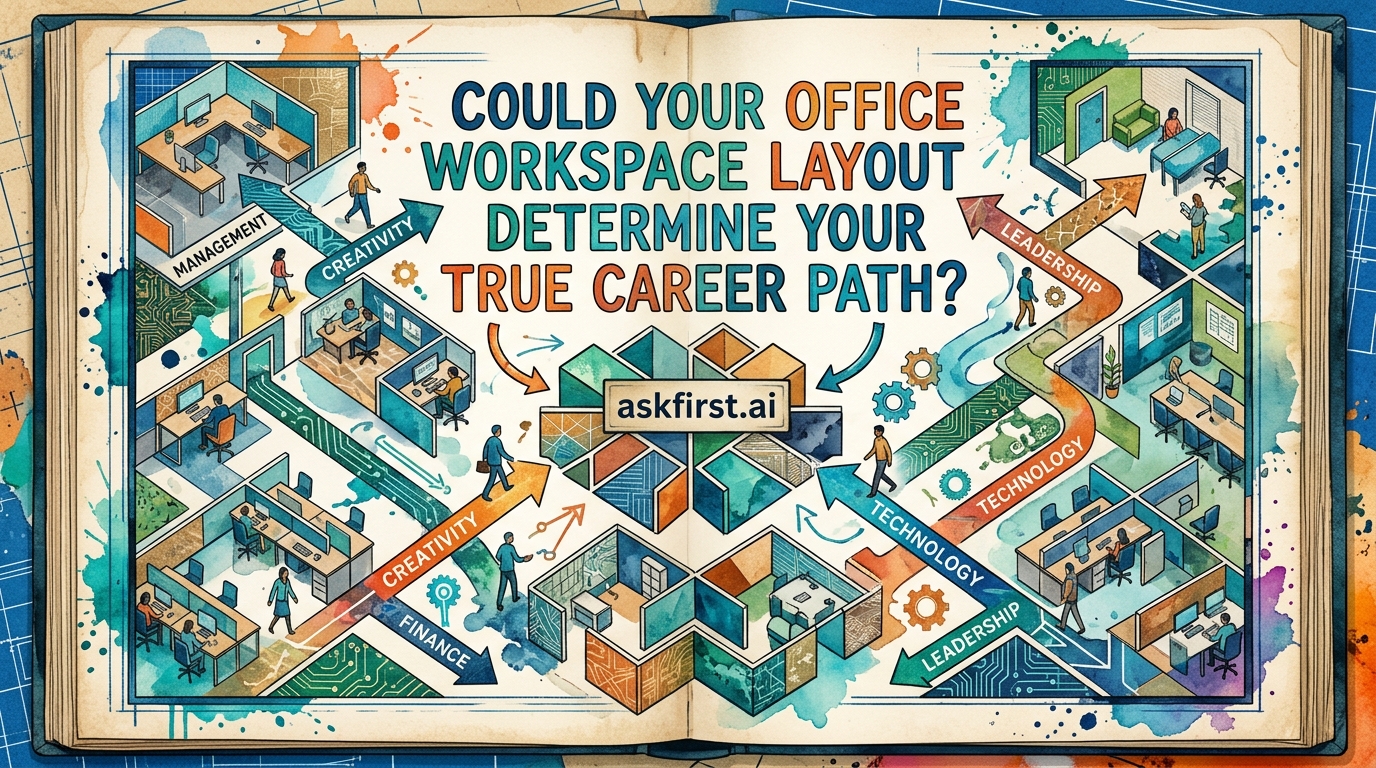
The Architectural Determinism of Career Success: Does Your Desk Define Your Destiny? The environment in which an individual operates serves as more than mere physical backdrop; it acts as a subtle architect of behavioral patterns, cognitive focus, and professional trajectory. Environmental psychology suggests that workspace layouts—whether open-plan, private offices, or hybrid hot-desking setups—exert a profound influence on daily productivity and, by extension, long-term career outcomes. ## The Cognitive Architecture of Open-Plan Spaces The open-office movement was originally designed to foster collaboration and transparency. However, research suggests that for deep-work professionals—such as software engineers, researchers, or creative writers—the constant ambient noise and visual interruptions often lead to cognitive fatigue. When an individual spends years in a high-stimulation environment that stifles deep focus, they may unintentionally steer their career toward roles that prioritize reactive management and communication over complex technical output. Conversely, individuals who naturally thrive in these high-velocity, high-social settings often find themselves gravitating toward leadership, sales, or public relations, where constant external interaction is a core requirement of the role. ## Private Sanctuaries and Focused Mastery In contrast, the private office or dedicated quiet zone facilitates 'Flow State' mastery. Proponents of deep work, such as Cal Newport, argue that professional excellence is tied to the ability to concentrate without distraction. Those who curate or demand these spaces are effectively signaling their intent to build a career based on specialized, high-value skills that require sustained attention. This environment often creates a feedback loop: the worker produces superior, high-level results, which leads to greater autonomy and further control over their physical environment, thereby reinforcing a career path centered on independent expertise. ## The Psychology of Proximity and Power Spatial hierarchy remains a potent force in organizational culture. Studies in environmental ergonomics suggest that proximity to decision-makers, or the placement of one’s desk in relation to natural light and high-traffic flow, subtly dictates social influence. Individuals situated in 'high-visibility' hubs often build stronger internal networks, leading to faster paths toward management or political advancement within a firm. This does not necessarily equate to better performance, but it highlights the 'visibility bias' inherent in office geography. ## Navigating Your Professional Environment To align a workspace with a desired career path, one must treat the office layout as a strategic tool rather than a static constraint: * Identify Your Cognitive Profile: If deep analytical work defines your success, prioritize quiet zones or noise-canceling interventions. * Strategic Positioning: If you seek to climb the organizational ladder, seek desks in areas that foster incidental interactions with leadership. * Ergonomic Alignment: Ensure your tools—from monitor height to chair quality—support the long-term stamina required for your specific professional ambitions. Ultimately, while a desk cannot force a career change, the habits formed within its boundaries create the momentum that shapes the professional life ahead. Choosing a environment that reflects your work style is the first step toward professional alignment.
P.S. You can ask any follow-up question on this topic by continuing the dialogue with AI in the chat below