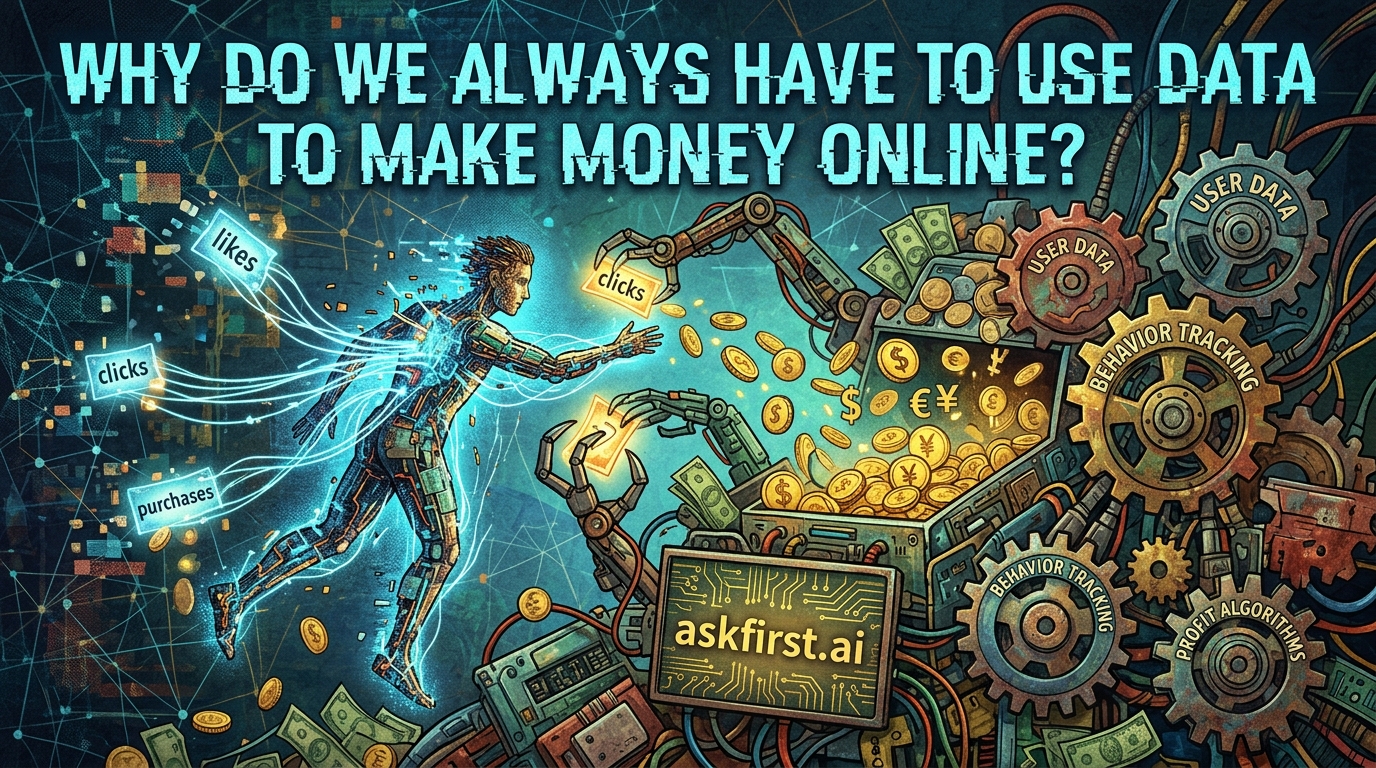
The Imperative of Data in the Digital Economy
In the contemporary digital landscape, data has transcended its role as mere information to become the fundamental currency of commerce. The question of why we "always" use data to generate revenue online is rooted in the transition from intuition-based business models to evidence-based precision. Data serves as the bridge between anonymous digital traffic and profitable customer relationships.
1. The Mechanics of Data-Driven Revenue
The digital economy operates on a feedback loop where data is the primary input. Without data, online business is akin to "blind marketing," where resources are spent on audiences that may have no interest in the product.
- Targeting and Segmentation: Data allows businesses to move away from "mass marketing" toward hyper-personalized outreach. By analyzing demographics, browsing behavior, and purchase history, companies ensure their advertisements reach individuals with the highest probability of conversion.
- Predictive Analytics: Through machine learning and statistical modeling, businesses use historical data to forecast future trends. This minimizes risk by predicting inventory needs, seasonal demand, and potential churn rates.
- Optimization of Conversion Funnels: Data provides the "why" behind user behavior. A/B testing—a process of comparing two versions of a webpage to see which performs better—is entirely dependent on data metrics like click-through rates (CTR) and bounce rates.
2. Historical Context: From Intuition to Big Data
In the early days of the internet, websites were static brochures. As e-commerce matured, the ability to track cookies and user sessions changed everything. The rise of Big Data in the 2010s allowed corporations to aggregate petabytes of information, leading to the dominance of platforms like Google and Meta, whose entire business models are built on the monetization of user data.
3. Practical Guide: How Data Drives Profit
To leverage data for revenue, businesses typically follow this cycle:
- Collection: Implementing tracking pixels, cookies, and CRM systems to capture user interactions.
- Aggregation: Cleaning and organizing disparate data points into a centralized data warehouse.
- Analysis: Utilizing Business Intelligence (BI) tools (e.g., Tableau, PowerBI) to identify patterns.
- Action: Implementing changes—such as personalized product recommendations or dynamic pricing—based on those insights.
4. Pros and Cons of Data-Centric Models
The Pros:
- Efficiency: Drastic reduction in wasted ad spend.
- Customer Experience: Users receive relevant content, reducing digital clutter.
- Scalability: Automated systems can process data for millions of users simultaneously.
The Cons:
- Privacy Concerns: The collection of personal data raises ethical and legal questions (e.g., GDPR, CCPA).
- Data Silos: When data is not shared across departments, it leads to fragmented customer experiences.
- Over-reliance: Businesses may lose the "human touch" or fail to innovate when relying solely on historical metrics.
5. Future Trends
The future of data-driven revenue is moving toward Privacy-Preserving Computation. As users demand more control over their information, businesses are shifting toward "first-party data"—data collected directly from the customer with consent—rather than relying on third-party tracking. AI-driven automation will continue to lower the barrier to entry, allowing even small businesses to utilize predictive analytics that were once reserved for enterprise-level firms.
Conclusion
Data is not just an optional tool; it is the infrastructure of the internet. It turns guesswork into predictable revenue, allowing businesses to operate with a level of efficiency that was impossible in the pre-digital era. As we move forward, the most successful entities will be those that balance data-driven profitability with ethical data stewardship.