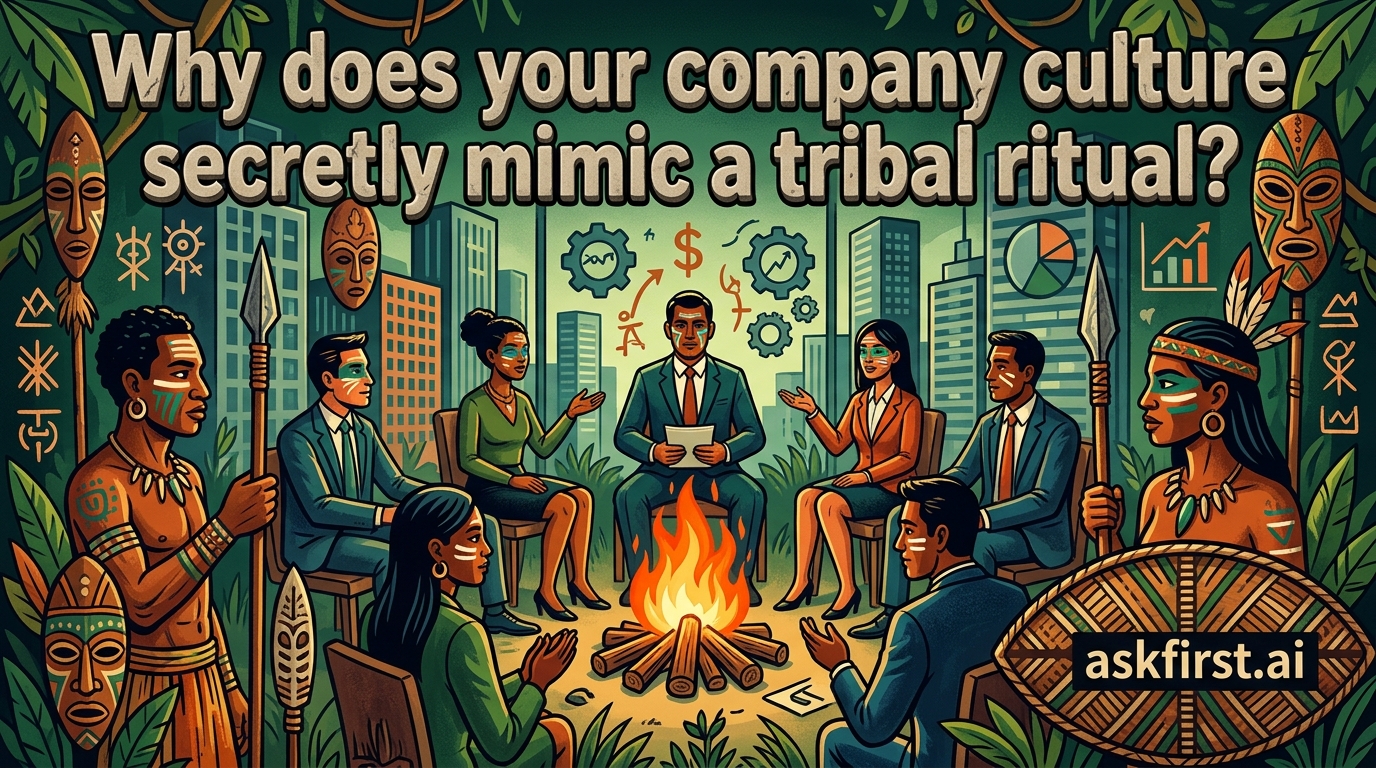
The Hidden Primacy of Tribalism in Modern Corporate Structure
Corporate culture often appears as a polished collection of vision statements and performance metrics. However, beneath the surface, organizations frequently mirror ancient tribal structures, driven by human evolutionary psychology. These rituals foster belonging and coherence, mirroring the deep-seated need for group cohesion found in historical hunter-gatherer societies.
The Evolution of the Corporate Tribe
Anthropologically, humans are hardwired to function in groups of approximately 150 individuals, a concept known as Dunbar’s Number. Organizations, regardless of size, break down into these smaller "tribes" or departments to remain functional. When leadership implements morning stand-up meetings, project retrospectives, or even onboarding ceremonies, they are engaging in secularized versions of communal chanting or initiation rites. These behaviors serve as social signaling mechanisms, distinguishing "insiders" from "outsiders" and solidifying group identity.
Core Ritual Mechanisms
Modern workplaces leverage several key tribal elements:
- Shared Language and Jargon: Much like sacred dialects in ancient rituals, industry-specific jargon functions as a shibboleth, reinforcing group identity and signaling intelligence within the hierarchy.
- Rites of Passage: Onboarding processes and promotions serve as transitions. They acknowledge the individual's new status within the hierarchy and mandate a shift in commitment to the collective.
- Physical Gatherings: Whether a town hall meeting or a virtual social hour, the gathering of the tribe serves the same purpose as the ancient campfire—it synchronizes the emotional state of the group and facilitates the exchange of social intelligence.
The Psychology of Belonging
Why does this persist? Evolutionary biologists argue that individual survival was once predicated entirely on group acceptance. Today, while physical survival is rarely at stake in a corporate setting, psychological well-being is heavily dependent on peer approval. Neuroimaging studies suggest that social exclusion triggers the same regions of the brain as physical pain. Consequently, companies utilize "tribal" rituals because they fulfill the fundamental human necessity for secure attachment to a collective. This creates a powerful "us vs. them" dynamic, which, while beneficial for focus and alignment, requires careful management to avoid dysfunctional siloing.
Conclusion
The mimicry of tribal rituals is not an accidental oversight; it is an instinctive management practice. By recognizing these structures, leaders can harness the power of community, common purpose, and clear identity to build high-performing teams. When these rituals are aligned with positive goals, the organization transforms from a mere workplace into a cohesive, motivated community capable of navigating the complexities of the modern world with ancient, proven psychological strategies.