The Startup Reality: Decoding the High Failure Rate
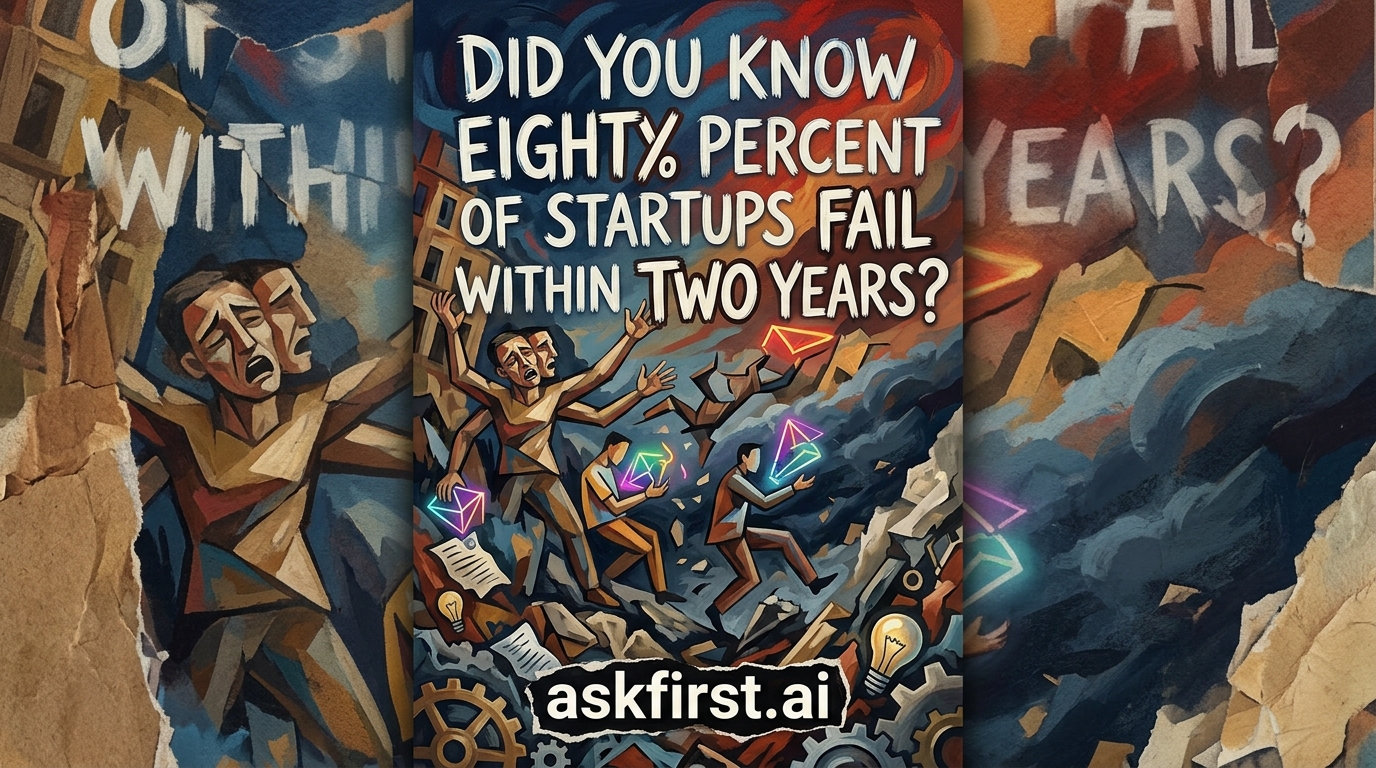
While the claim that 80% of startups fail within two years is a widely cited statistic, the reality is more nuanced. Data from sources like the U.S. Bureau of Labor Statistics often indicates that approximately 20% of new businesses fail during their first two years, 45% during the first five years, and 65% within ten years. Regardless of the exact percentage, the inherent volatility of launching a new venture remains a significant challenge for entrepreneurs globally.
Understanding the Core Reasons for Failure
Successful startups are rarely products of luck alone; they are results of rigorous planning, adaptability, and market validation. Research into business failure highlights several recurring pitfalls:
- Lack of Market Need: The primary reason for startup failure is often the development of products or services that nobody actually needs. Building a solution without first deeply validating the problem leads to wasted capital.
- Cash Flow Mismanagement: Even companies with brilliant ideas can collapse if they run out of cash. Proper financial forecasting, burn rate monitoring, and maintaining a solid runway are essential for survival.
- Inadequate Teams: A startup is only as strong as its founders and employees. Mismatched skill sets, inability to pivot, or toxic company cultures can paralyze progress faster than external competition.
- Strong Competition: Ignoring established incumbents or failing to differentiate the value proposition leads to being drowned out in crowded markets.
The Strategic Path to Longevity
To transcend these failure rates, entrepreneurs must adopt a philosophy rooted in continuous iteration. This involves implementing the Lean Startup Methodology, which emphasizes creating a Minimum Viable Product (MVP). By releasing a basic version to real users early, entrepreneurs gather critical feedback before committing excessive resources to full development.
Furthermore, financial discipline is non-negotiable. It is critical to maintain a lean operation where unnecessary overhead is eliminated. Strategic pivots—shifting the business model based on data rather than ego—are a hallmark of resilient organizations. Companies like Slack and Instagram began with entirely different focuses but pivoted successfully based on what their users truly wanted.
The Psychological Shift: Resilience as Strategy
Beyond metrics, mindset plays a pivotal role. Founders who view failure as a data point rather than a personal indictment are far more likely to iterate their way toward a sustainable model. In the modern business ecosystem, flexibility is the most valuable asset. The journey from an idea to a sustainable business is rarely a straight line; it is a complex landscape that rewards those who analyze, adjust, and persevere with calculated strategic intent.