The Engine of Prosperity: Unlocking the Science of Wealth Creation
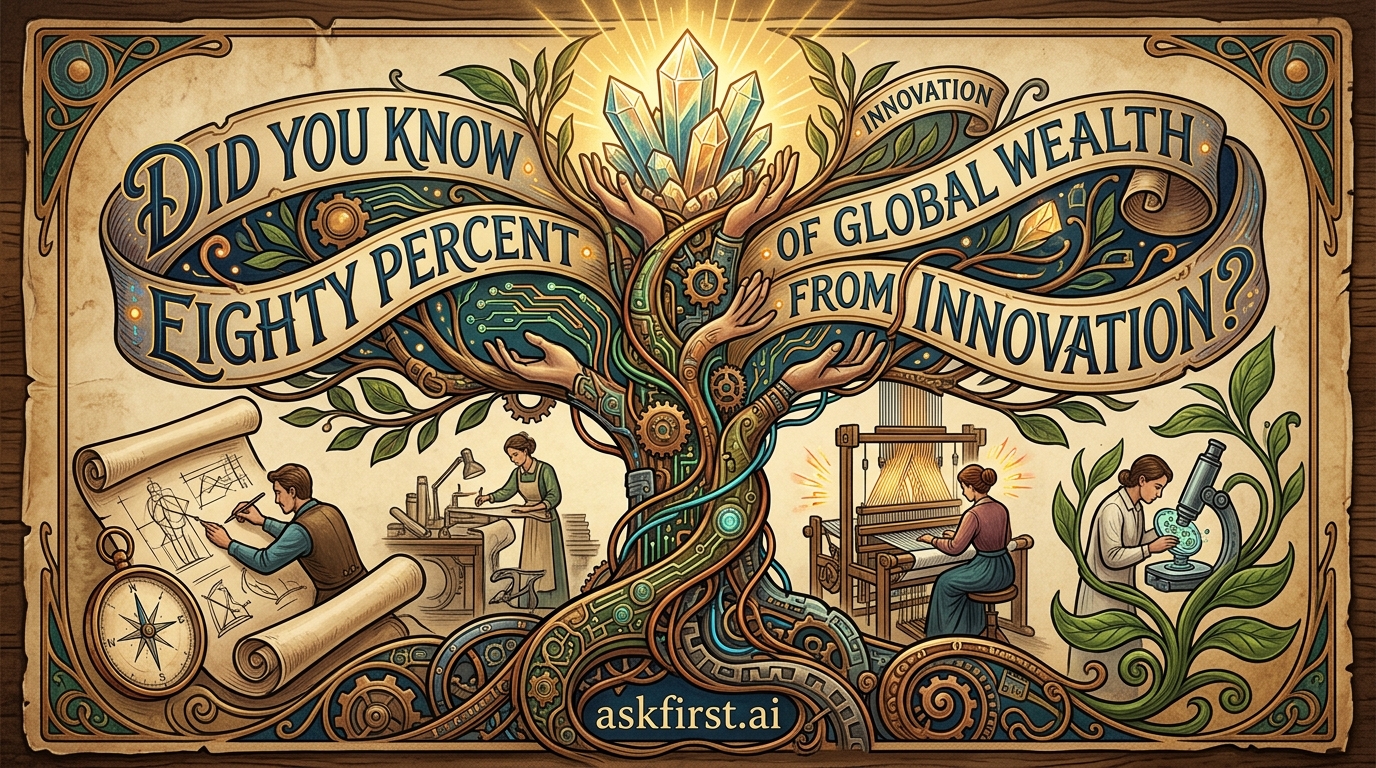
Innovation stands as the primary catalyst for economic expansion and global prosperity. While traditional economic models often emphasize land, labor, and capital as the foundational pillars of wealth, modern empirical analysis suggests that eighty percent of long-term economic growth is fundamentally driven by technological advancement and process innovation. This phenomenon, often described by economists as the Solow Residual, highlights how efficiency and ingenuity outperform mere resource accumulation.
The Dynamics of Value Creation
Wealth is rarely a static pool of existing resources; instead, it is a dynamic process of converting knowledge into utility. When an entity creates a new solution, it effectively multiplies the value of existing materials. For instance, the transition from analog to digital telecommunications did not simply add more wire to the infrastructure; it re-engineered the very nature of information exchange, creating massive wealth through reduced costs and increased speed. This transition demonstrates how intellectual capital serves as a multiplier for physical capital.
Why Innovation Bests Resource Accumulation
- Efficiency Gains: Innovations like automated manufacturing or AI-driven logistics reduce waste and increase output per capita.
- New Market Creation: Disruptive inventions, such as the internet or electricity, create entire industries that did not previously exist, providing new avenues for wealth capture.
- Knowledge Spillovers: Ideas are non-rivalrous, meaning one person's use of an idea does not prevent another from using it. This allows for exponential scaling of economic benefits across borders and industries.
Historically, societies that have prioritized research and development consistently demonstrate higher standards of living. The shift from an agrarian economy to an industrial one, and eventually to a knowledge-based economy, illustrates that human ingenuity is the only resource that does not suffer from diminishing returns. Unlike minerals or oil, which are finite and subject to depletion, human intellect is a self-renewing, compounding asset.
The Role of Institutional Support
To capture this wealth, systems must foster an environment conducive to risk-taking. Intellectual property protections, research funding, and a culture that values creative destruction are essential for sustaining high rates of innovation. By incentivizing the inventor, society encourages the creation of goods that uplift the collective standard of living. This symbiosis between individual creative output and macro-economic growth is the bedrock of the modern global economy. Whether through revolutionary breakthroughs or incremental improvements in efficiency, innovation ensures that the pie continues to grow, rather than being carved into smaller pieces. Ultimately, the focus on intellectual advancement serves as the most reliable path toward universal economic elevation, proving that the most valuable commodity in the world is not hidden beneath the earth, but exists within the human capacity to imagine a better way.