The Addiction to Disarray: Why Growth Demands Chaos
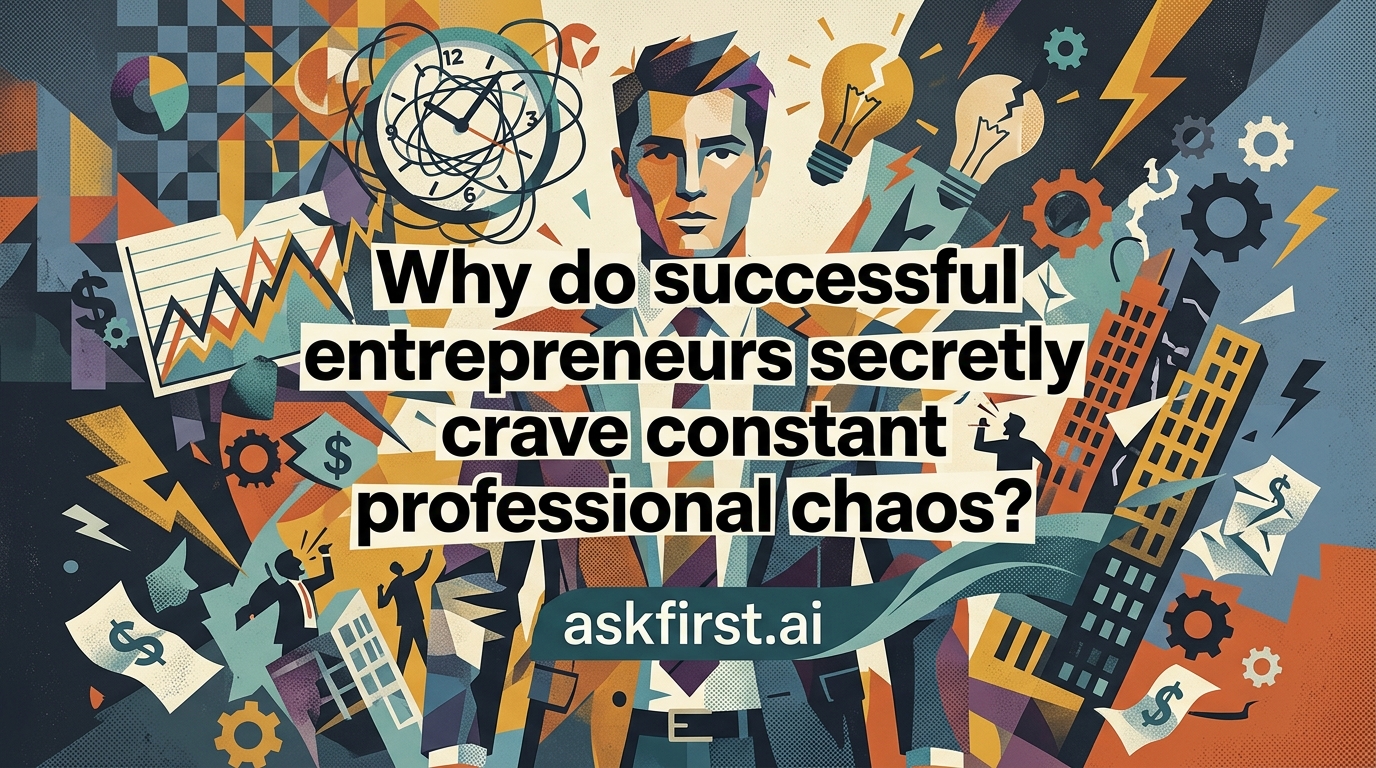
Many observers view successful entrepreneurs as masters of organization, yet the reality is often the inverse. Successful founders frequently engineer environments defined by deliberate, high-intensity volatility. This phenomenon, often termed 'optimal instability,' acts as a catalyst for innovation. When systems are too rigid, entropy sets in, and growth stalls; conversely, a controlled state of chaos forces rapid adaptation and problem-solving.
The Neurobiology of Creative Tension
The human brain experiences heightened neuroplasticity when exposed to unpredictable stimuli. Entrepreneurs thrive on this because the 'fight or flight' response, when tempered by strategic vision, acts as a performance enhancer. According to psychological research, high-achieving individuals often possess an 'openness to experience' trait, meaning they find stability boring and growth-inhibiting. This internal drive creates a feedback loop where the entrepreneur constantly pushes boundaries, essentially manufacturing crises to keep the organization agile.
Strategic Benefits of Constant Disruption
Maintaining a state of constant, purposeful chaos provides three distinct competitive advantages:
- Forced Innovation: When processes are constantly changing, employees cannot rely on stagnant legacy habits. They are forced to build novel solutions daily.
- Early Pattern Recognition: Chaos generates data at a rapid rate. By navigating a high-velocity environment, founders identify market shifts and consumer behavioral changes months or years before their competitors.
- Survival of the Fittest Culture: This environment naturally filters out talent that requires rigid structure, leaving only those who possess a high degree of autonomy, resilience, and creative foresight.
The Myth of the Steady State
Corporate lore often suggests that the end goal of a startup is a state of equilibrium. However, in the fast-moving landscape of global business, equilibrium is a synonym for obsolescence. Successful leaders understand that market stability is a mirage. By embracing chaos as a standard operating procedure rather than a temporary emergency, the business develops a unique resilience. This is similar to the concept of 'antifragility' proposed by Nassim Taleb, where a system does not merely survive stress but actually improves because of it.
Managing the Controlled Burn
It is vital to distinguish between toxic, destructive chaos and constructive, strategic chaos. Productive chaos is goal-oriented; it is about disruption, not mismanagement. Leaders must act as the orchestrators of this tension, ensuring that while the operational environment is dynamic, the mission and core values remain anchored. This balance allows the organization to move with fluid speed while preventing the total collapse of organizational structure. Ultimately, entrepreneurs crave this chaos because they recognize that stagnation is the true existential threat to their enterprise, far more dangerous than the occasional storm of change.