The Clockwork Mystery: Unveiling Ancient Greek Automata
When modern audiences think of robotics, the mind typically drifts toward the digital age or the industrial revolution. However, the true origins of mechanical animation trace back to the intellectual rigor of the Hellenistic period. The ancient Greeks did not merely invent simple toys; they conceptualized the first complex, autonomous mechanical theater systems that defined the trajectory of engineering for centuries to come.
The Pioneers of Programmable Motion
Historians generally credit the origins of these systems to figures like Heron of Alexandria, Philo of Byzantium, and Ctesibius. Their contributions were foundational, moving beyond static sculpture into the realm of kinetic storytelling. These early inventors utilized sophisticated hydraulic and pneumatic systems to drive movement, effectively creating "scripts" of motion.
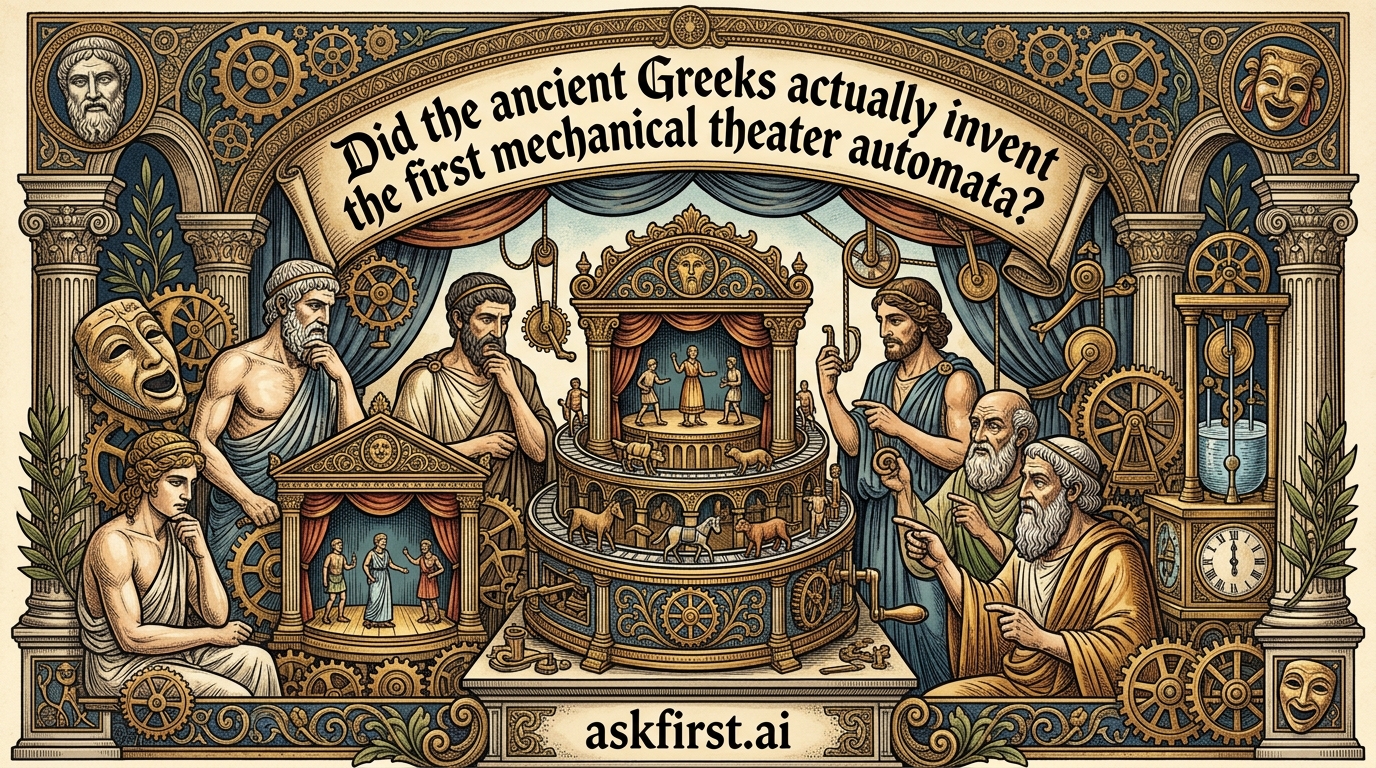
- The Self-Moving Theater: Heron of Alexandria, writing in his treatise Automata, described a self-operating stage that utilized rotating cylinders and complex rope-and-pulley systems. These stage platforms could move independently, featuring figurines that rotated, poured wine, or performed scenes based on Greek mythology without human intervention.
- Pneumatic Complexity: The Greeks harnessed the power of water pressure, compressed air, and siphons. By carefully calibrating these forces, they achieved timing mechanisms that allowed for choreographed sequences, essentially creating the world’s first "pre-programmed" performance art.
Challenging the Myths
While the ancient Greeks undeniably mastered these systems, it is essential to distinguish between invention and influence. Some scholars point to even earlier prototypes in Egyptian or Mesopotamian ritualistic tools. However, the Greek innovation lay in the shift from simple, singular movements to systematic automation. They transformed sporadic movement into reliable, repeatable theater performance.
How These Machines Worked
At the heart of Greek automation was the principle of the weight-driven clock. A lead weight would slowly descend, providing constant energy. This energy was transferred via a rope wrapped around a cylinder, which then translated rotational force into specific, mechanical actions. By altering the diameter of different cylinders, inventors could control the speed of various movements, ensuring that the dancer spun faster while the background scenery remained slow and majestic.
The Legacy in Modern Engineering
These ancient inventions represent the spiritual and technical ancestors of modern robotics. The logic used by Heron—if X happens, then Y occurs—is the precursor to binary logic. By formalizing the relationship between mechanical input and predictable physical output, the Greeks effectively laid the groundwork for the industrial revolution's automation. Their ability to simulate life through inanimate materials remains one of the most significant intellectual leaps in human history, proving that the dream of building "intelligent" machines is thousands of years old.