Ada Lovelace and the Myth of Algorithmic Music
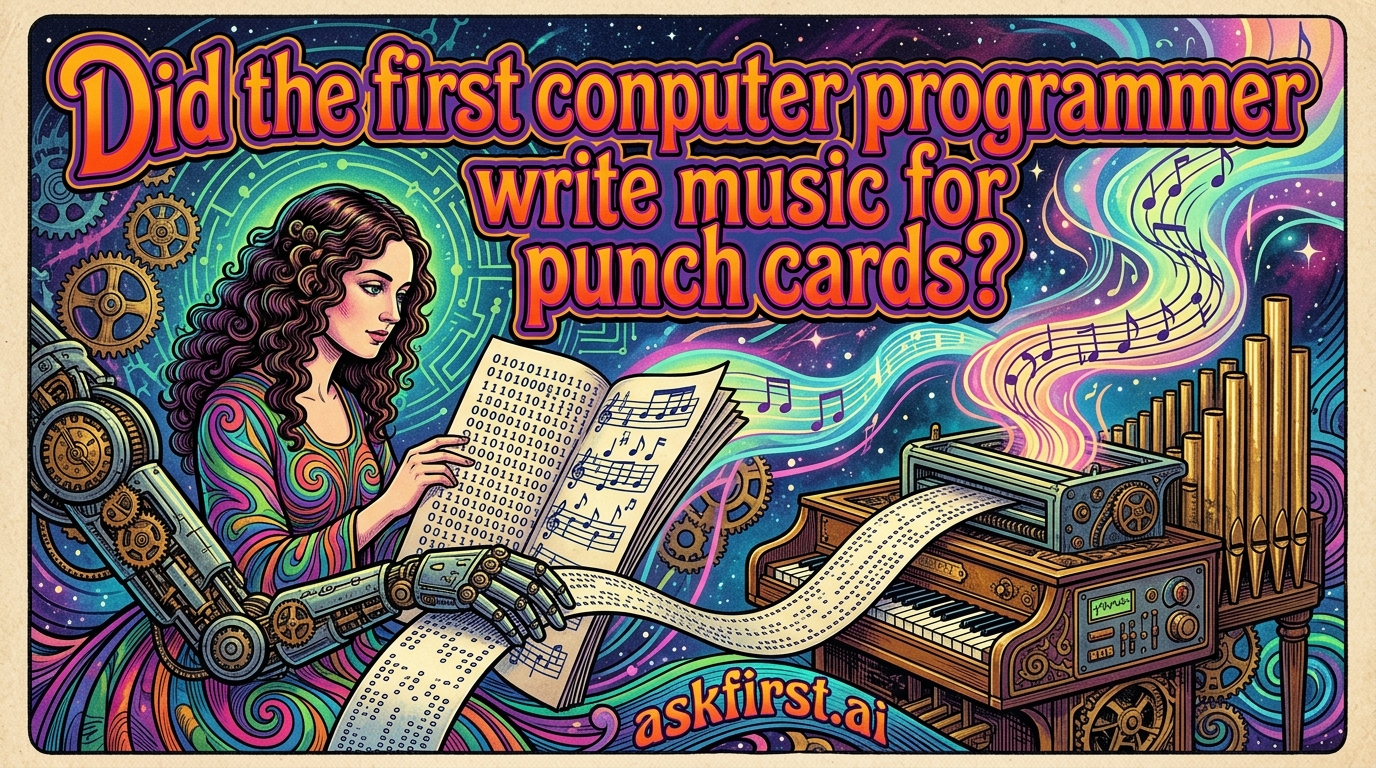
The historical narrative surrounding Ada Lovelace often positions her as the first computer programmer, a title earned through her visionary work on Charles Babbage's Analytical Engine in the 1840s. A recurring, captivating question in tech history is whether Lovelace, often linked to the very dawn of computing, actually programmed music into punch cards. To understand the truth, one must separate the reality of the Analytical Engine from modern misconceptions.
The Visionary Scope of the Analytical Engine
In her extensive 'Notes' on Babbage's machine, particularly Note A, Lovelace theorized that if the fundamental relations of pitched sounds in the science of harmony were susceptible to such expression, the engine might compose elaborate and scientific pieces of music of any degree of complexity or extent. This was a profound leap in logic. Lovelace understood that the Analytical Engine, unlike the earlier Difference Engine, was not a mere calculator but a machine capable of manipulating symbols based on rules.
The Distinction Between Theory and Practice
Did she actually write the music? The short answer is no. While Lovelace possessed the conceptual framework for computer-generated music, she never authored music programs on punch cards. The Analytical Engine itself was never fully completed in her lifetime. Consequently, the hardware capable of executing her visionary algorithms did not exist. Her work remained a theoretical framework rather than a practical application. Lovelace envisioned that numbers could represent objects other than quantity, such as music or graphics, but she did not translate a specific musical score into machine-readable card sequences.
Why the Confusion Persists
The confusion likely stems from the fact that Babbage’s designs utilized the Jacquard loom mechanism—a system that used punched cards to control patterns in weaving. This provided a tangible, physical metaphor for how information could be stored and fed into a machine. Because Lovelace famously noted the potential for the machine to act upon non-numerical data, modern enthusiasts have projected the concept of computer music back onto her work. She is celebrated correctly as the first person to envision a computer capable of "general purpose" processing, which includes musical synthesis.
Legacy of a Pioneer
Ada Lovelace’s true genius lay in her foresight. By stating that a machine could handle symbols as well as numbers, she effectively predicted the digital age. While she did not sit down and compose a symphony for punch cards, she established the mathematical and philosophical foundation for algorithmic composition. Her legacy is not found in a stack of physical cards, but in the monumental realization that technology could transcend arithmetic to become an instrument of human creativity. Her insights continue to serve as the guiding philosophy for modern software engineering and digital music production.