The Science of Canine Empathy: Do Dogs Truly Understand Human Emotions?
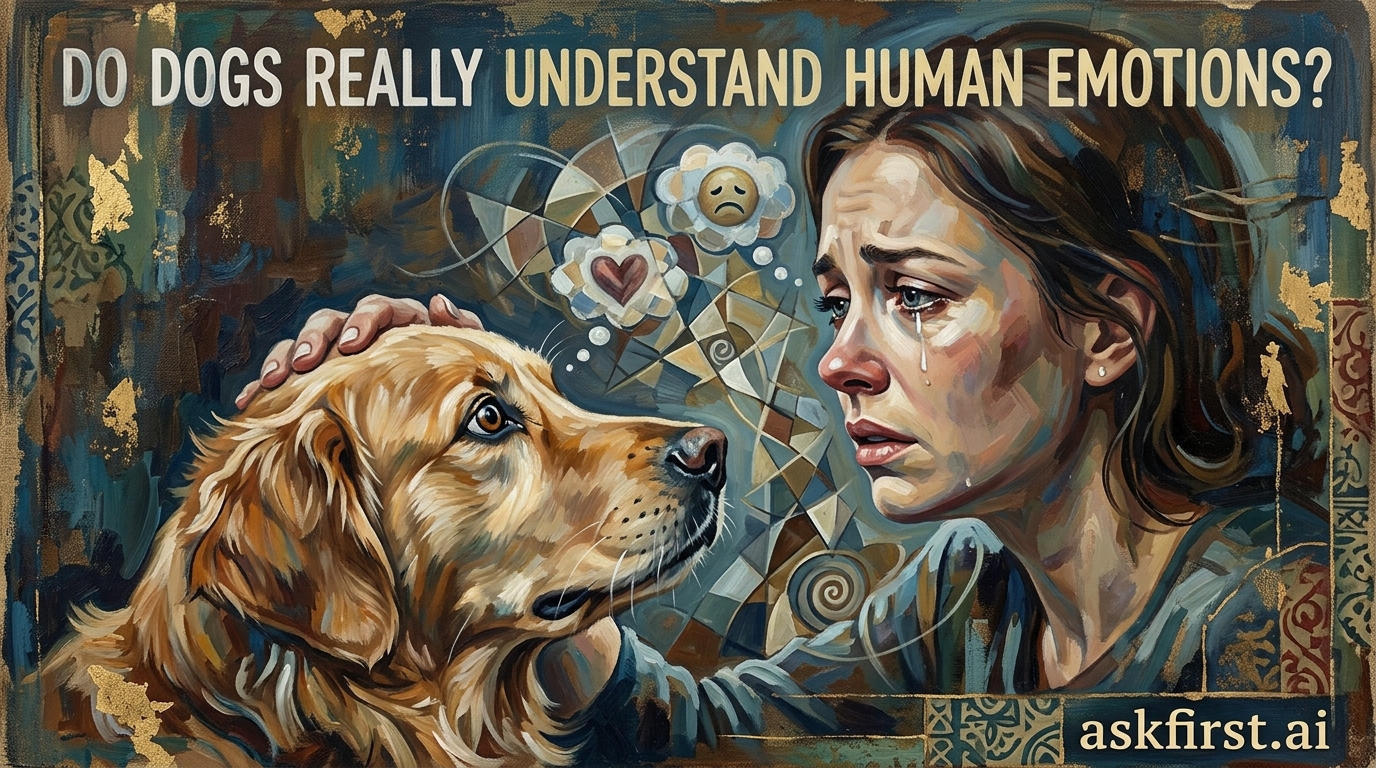
For centuries, dog owners have intuitively felt that their canine companions understand their moods, but modern science has finally moved beyond mere anecdote. Research in ethology and neuroscience confirms that dogs are not only sensitive to human emotional cues but are uniquely evolved to interpret them through sophisticated multisensory processing.
The Multisensory Mechanism
Dogs possess a specialized ability to integrate information from different senses to form a coherent perception of human emotion. A landmark study published in Biology Letters demonstrated that dogs use a "cross-modal" process. When presented with images of human faces (happy or angry) paired with congruent or incongruent vocalizations, dogs spent significantly longer looking at the face that matched the emotional tone of the voice. This suggests that dogs do not merely react to tone or facial structure in isolation; they mentally represent the emotional state of humans.
Neurological Evidence
Functional Magnetic Resonance Imaging (fMRI) studies have provided further insight into the canine brain. Research from Eötvös Loránd University in Budapest indicates that the canine auditory cortex processes vocalizations similarly to the human brain. Dogs have specific regions dedicated to processing emotional prosody—the tone and pitch of a voice—rather than just the linguistic content. When a dog hears a happy human sound, the brain’s reward centers light up, mirroring the neural activity seen in humans when they perceive positive affect.
Evolutionary Co-evolution
The bond between Canis lupus familiaris and Homo sapiens is rooted in over 30,000 years of co-evolution. During domestication, dogs developed specific physiological traits to communicate with us, most notably the levator anguli oculi medialis muscle, which allows them to raise their inner eyebrows—the "puppy dog eyes" that trigger human nurturing responses. This mutual feedback loop has reinforced the dog’s capacity for "emotional contagion," where the animal experiences a physiological state similar to the human they are observing.
Practical Implications and Benefits
Understanding this emotional intelligence has profound implications for modern society:
- Emotional Support Animals (ESAs): Dogs are trained to recognize cortisol spikes or behavioral shifts in humans, providing grounding for those with PTSD or anxiety.
- Therapy Work: Their ability to mirror human calm is utilized in hospitals and schools to lower blood pressure and reduce stress.
- Bonding: Owners can leverage this by maintaining consistent, calm emotional states, which dogs will naturally attempt to mirror.
Limitations and Considerations
While dogs are highly empathetic, they are not human. Their "understanding" is based on associative learning and evolutionary adaptation rather than abstract cognitive empathy. They may misinterpret a human’s frustrated body language for anger, or a high-pitched, excited tone for aggression.
Future Trends
As we advance in AI-assisted animal communication, researchers are exploring whether wearable technology can translate canine heart-rate variability and vocal patterns into readable human data, potentially creating a "bridge" to bridge the gap in emotional communication. Ultimately, while dogs may not comprehend the why behind our sadness, they are undeniably masters at reading the what, making them the most emotionally attuned non-human species on the planet.