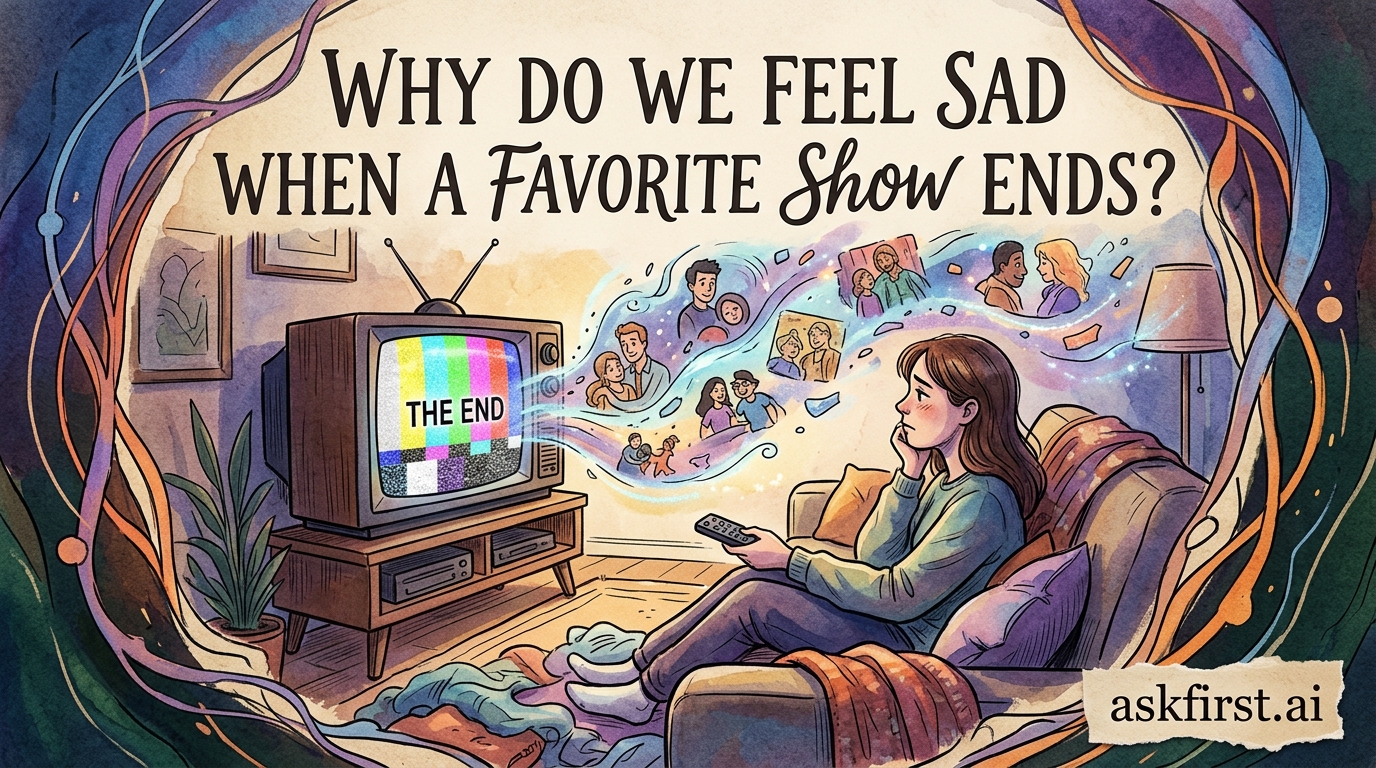
The Psychology of Post-Series Melancholy: Why Saying Goodbye Hurts
Experiencing a profound sense of emptiness after finishing a long-running television series is a near-universal human experience. This phenomenon, often termed "post-series depression" or "para-social bereavement," occurs because the human brain struggles to distinguish between real-world relationships and the vivid, simulated interactions provided by long-form narrative media.
The Architecture of Para-social Interaction
At the core of this sadness is the concept of para-social interaction, a term coined by sociologists Horton and Wohl in 1956. This describes one-sided relationships where a viewer invests emotional energy into characters who remain unaware of the viewer’s existence. Over dozens or hundreds of episodes, the brain processes these fictional characters as consistent social companions. According to psychological research, the brain’s amygdala and prefrontal cortex respond to high-quality character arcs similarly to how they respond to real-life social integration. When the show ends, the brain perceives a genuine social loss, leading to feelings of loneliness and withdrawal.
Cognitive Dissonance and Narrative Closure
Humans are biologically hardwired for storytelling. From an evolutionary perspective, stories were essential for sharing survival information and reinforcing community bonds. When a viewer consumes a serial narrative, they enter a state of narrative transportation, where the external world fades and the fictional world becomes primary. When the series concludes, the abrupt termination of this world creates cognitive dissonance. The brain, which has invested immense energy into predicting the motives and futures of these characters, suddenly lacks a "next" step in the social script. This lack of closure can manifest as physical lethargy, sadness, or a lingering desire to "visit" the show's setting once more.
Why We Form Deep Bonds with Fiction
- Consistency: Unlike real-life friends who may be moody or unreliable, fictional characters are present every time the screen turns on.
- Predictability: The controlled environment of a television show provides a sense of psychological safety.
- Emotional Labor: By experiencing the struggles of characters, viewers practice empathy and process their own suppressed emotions through a safe, external proxy.
Moving Forward: The Importance of Transition
Psychologists suggest that this sadness is not a sign of irrationality but rather evidence of human empathy and social capacity. The brain’s ability to build such complex connections with non-existent entities highlights the power of art to expand our emotional reach. To mitigate the feelings of loss, it is recommended to engage in active social activities, discuss the show with others to build communal closure, or transition to a new narrative slowly. Understanding that these feelings are a natural physiological response to the conclusion of a significant routine can help viewers process the transition back to everyday reality with more grace and patience.