The Eternal Nectar: Why Honey Defies the Laws of Decay
It is one of nature's most profound mysteries: a jar of honey discovered in an ancient Egyptian tomb, thousands of years old, remains perfectly edible. While most food products succumb to the inevitable march of decomposition, honey possesses a unique chemical composition that effectively halts the aging process. This phenomenon is not magic, but a masterclass in biochemistry orchestrated by honeybees.
The Triple Defense Mechanism
Honey survives indefinitely due to three primary pillars of preservation:
- Low Moisture Content: Honey is naturally hygroscopic, meaning it contains very little water in its natural state. Most bacteria and microorganisms require moisture to thrive and reproduce; because honey acts as a desiccant, it essentially starves these invaders of the environment they need to survive.
- Acidity: With a pH level typically between 3 and 4.5, honey is sufficiently acidic to inhibit the growth of common pathogens. This hostile environment acts as a chemical barrier, preventing the proliferation of most biological contaminants.
- Hydrogen Peroxide: Perhaps the most fascinating element is the presence of hydrogen peroxide. When bees process nectar, they introduce an enzyme called glucose oxidase. When honey is extracted and stored, this enzyme interacts with glucose, creating gluconic acid and, crucially, hydrogen peroxide, which acts as a potent antibacterial agent.
Why Your Pantry Honey Might Crystallize
If you find your honey turning solid or cloudy, it has not spoiled. This is a process known as crystallization, which is a physical change rather than a chemical one. Honey is a supersaturated solution of two main sugars: glucose and fructose. Over time, the glucose separates from the water and forms tiny crystals. This does not impact the safety or nutritional quality of the product; in fact, it is a hallmark of high-quality, raw honey. Simply placing the jar in a warm water bath will return it to a liquid state without damaging its integrity.
Historical Evidence of Longevity
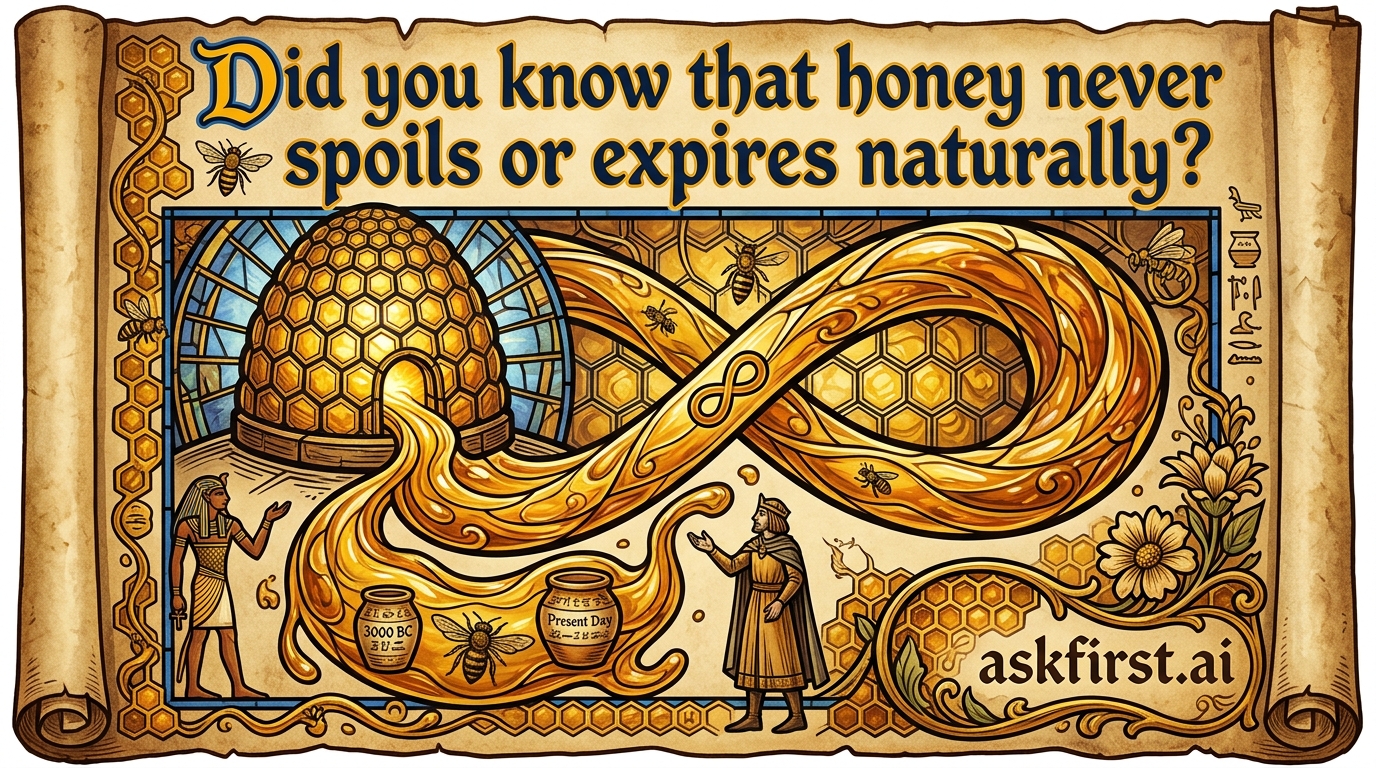
Archaeologists have famously uncovered pots of honey in ancient Egyptian tombs dating back over 3,000 years. Even after millennia of being sealed away from the sun, the honey remained chemically sound. This remarkable shelf life led ancient civilizations to view honey as a sacred substance, utilizing it for wound dressing and preservation. Modern science confirms that as long as the honey is sealed properly to prevent moisture absorption—which could lead to fermentation—it will remain a viable food source indefinitely. While commercial honey undergoes filtration and heating to prevent crystallization, the fundamental chemistry that prevents spoilage remains intact, solidifying honey’s reputation as the ultimate pantry staple.