The Biology of Belief: How the Mind Heals the Body
The placebo effect represents one of the most intriguing mysteries in neuroscience, demonstrating how expectation and context can influence physiological outcomes. Far from being "all in the mind," placebo responses involve complex neurochemical changes that can mirror the effects of active pharmaceutical interventions.
The Neurochemistry of Expectation
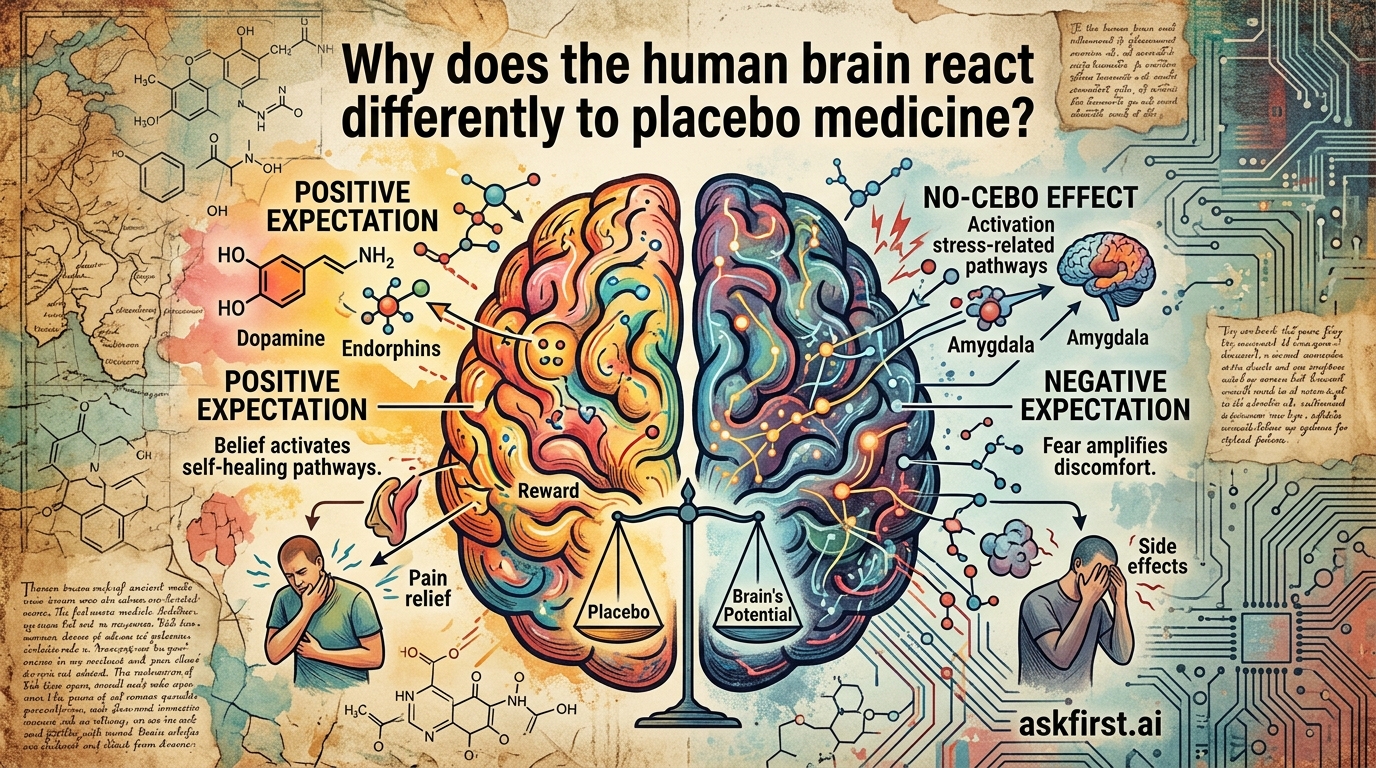
When a person expects to feel better, the brain initiates a cascade of chemical reactions. The most notable component of this response is the release of endogenous opioids—the body's natural painkillers—and dopamine, the brain's reward neurotransmitter. Research using positron emission tomography (PET) scans has shown that regions such as the prefrontal cortex, which governs decision-making and expectation, communicate with the brainstem to modulate pain signals. By anticipating relief, the brain actively signals the spinal cord to inhibit the transmission of pain-related information, effectively "turning down the volume" on sensory input.
The Role of Classical Conditioning
Beyond conscious expectation, the placebo effect is heavily influenced by classical conditioning. Throughout a lifetime of medical encounters, individuals learn to associate doctors, white coats, clinics, and the act of swallowing a pill with recovery. These environmental cues trigger conditioned responses where the body instinctively initiates healing processes. Even without an active drug, the mere presence of these cues acts as a conditioned stimulus, nudging the autonomic nervous system to reduce stress hormones like cortisol and elevate heart rate variability, creating a favorable physiological environment for recovery.
Psychological and Social Mediators
Several factors amplify this effect, transforming the context of care into a therapeutic tool. Key elements include:
- The Therapeutic Alliance: A warm, empathetic interaction with a practitioner significantly boosts the placebo response compared to cold, clinical interactions.
- Treatment Rituals: The form of the intervention matters. Studies indicate that injections often produce stronger placebo effects than pills, while surgery (even sham surgery) can be more powerful than oral medication due to the high-intensity "drama" of the procedure.
- Learning and Past Experience: Previous successful treatments strengthen the neural pathways associated with positive health outcomes, making future placebo responses more likely.
Conclusion: The Clinical Significance
Understanding the biology of placebo does not suggest that patients should replace medical treatment with sugar pills. Rather, it reveals that the human brain is a powerful participant in the healing process. By leveraging the placebo effect through compassionate care and clear communication, medical professionals can enhance the efficacy of evidence-based treatments. The brain is not just an observer; it is an active architect of physiological change, proving that belief and biological state are deeply interconnected.