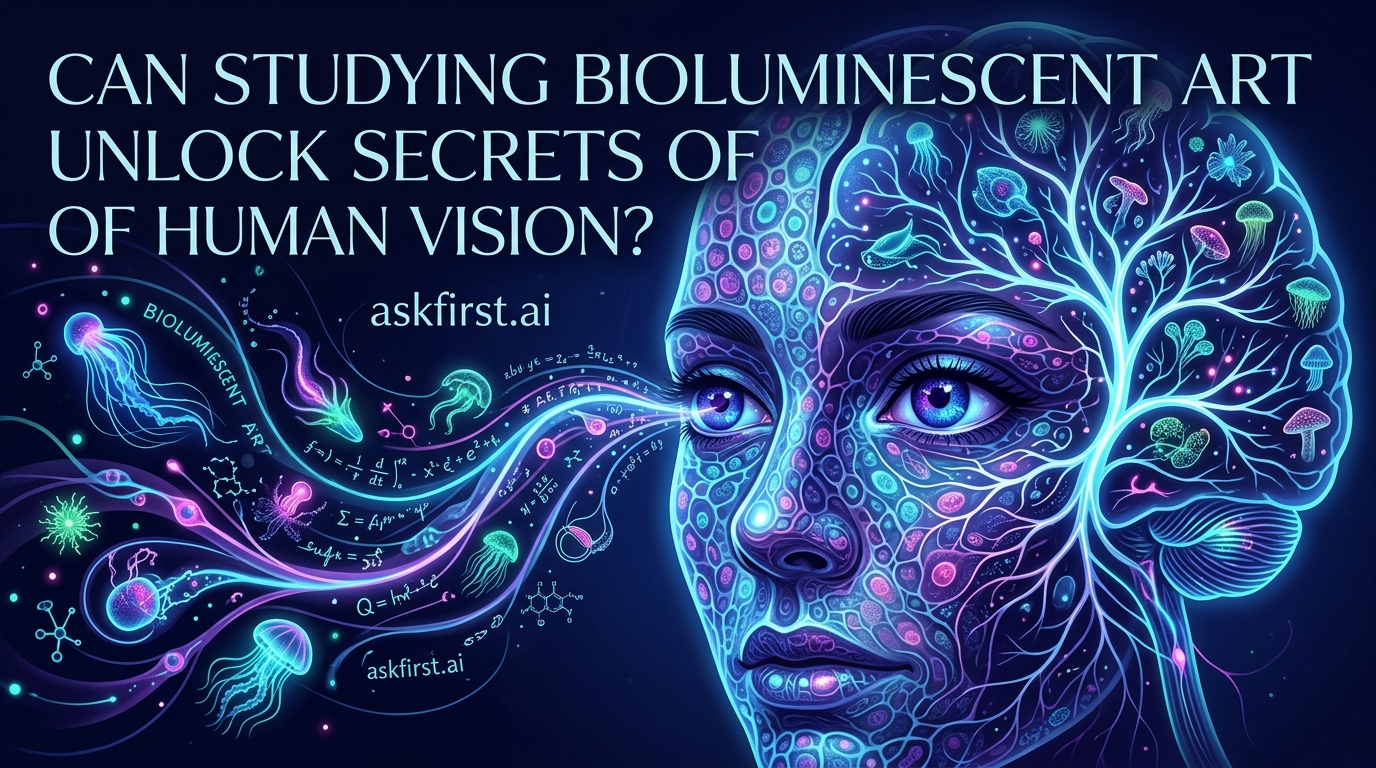
Illuminating Perception: The Science Behind Bioluminescent Art
Bioluminescent art—the creation of visual displays using light produced by living organisms—acts as a unique bridge between biological reality and human sensory interpretation. By manipulating light at low intensities and specific spectral wavelengths, scientists and artists are uncovering the precise thresholds of human photo-reception. This interdisciplinary exploration allows researchers to investigate how the human brain processes low-light input and distinguishes contrast in environments that challenge traditional optical capabilities.
The Physiology of Dim-Light Vision
Human eyes rely on two main types of photoreceptors: cones, which handle color and bright light, and rods, which excel in low-light sensitivity. Bioluminescent art often operates in the scotopic or mesopic range, the specific spectrums where rod dominance prevails. By observing how observers perceive bioluminescent installations, visual scientists can map the following:
- Spectral Sensitivity Shifts: Understanding why certain blue-green wavelengths are more perceptible in dark settings.
- Temporal Integration: Investigating how the brain stitches together the flickering nature of light into a continuous image.
- Contrast Sensitivity: Analyzing how bioluminescent art highlights movement against a void, helping to reveal how the human brain processes edge detection under duress.
Challenging Optical Myths
A common myth suggests that the human eye perceives low-light environments in grayscale. However, bioluminescent installations reveal that when light sources contain enough specific wavelength density, the brain may attempt to reconstruct a sense of chromatic depth even at near-threshold levels. Studying these reactions helps clarify why certain pigments within the retina, specifically those within the cone cells, interact differently than previously theorized when stimulated by organic, flickering light sources rather than steady, artificial white light.
Why This Matters for Future Technology
The study of human reactions to bioluminescent light patterns has practical applications beyond aesthetic enjoyment. Engineers utilize these data points to refine night-vision technology and low-light display hardware. By emulating the spectral quality of natural bioluminescence, displays can be designed to minimize ocular strain, providing a more naturalistic interface that respects the limitations and strengths of human rods. This work also provides insight into neuroplasticity; as the brain interprets these ethereal light displays, researchers monitor how visual processing centers adapt to novel, non-static lighting conditions. Ultimately, bioluminescent art serves as an accessible laboratory. It forces the human visual system to operate at the edge of its biological parameters, yielding data that helps experts decode the complex neural pathway from the retina to the visual cortex. This intersection of nature and design ensures that we continue to appreciate the sheer complexity of our internal optical machinery while finding new ways to harmonize human vision with the technologies of tomorrow.