The Genetic Blueprint: Why Humans Share DNA with Bananas
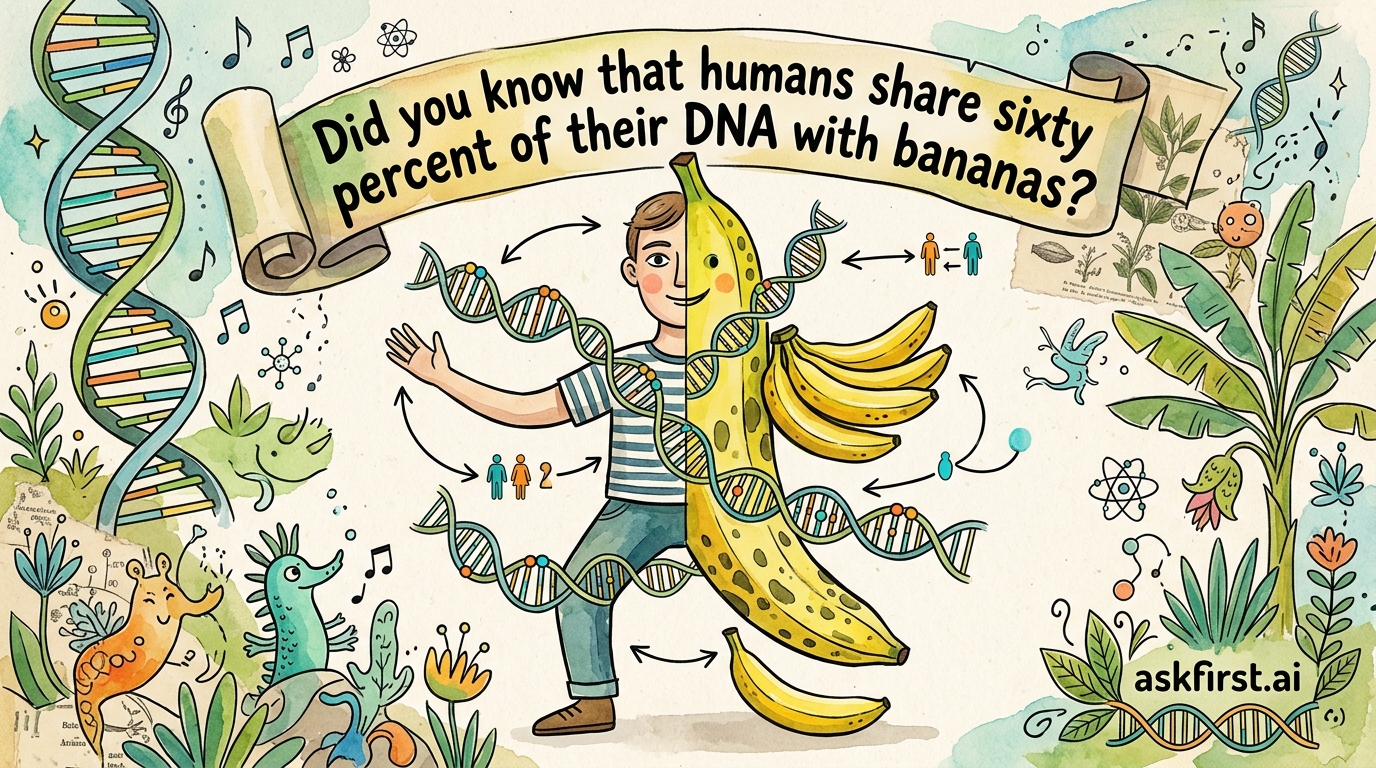
It is a common fascination in the field of genomics that humans share approximately 60% of their DNA with a banana. While this may seem counter-intuitive—given the vast physical differences between a primate and a tropical fruit—the reality of molecular biology offers a profound insight into the unity of life on Earth. This percentage does not suggest that a human is sixty percent banana; rather, it highlights the shared evolutionary heritage of all complex organisms.
Understanding Genomic Similarity
To grasp why this number exists, one must understand that DNA is essentially the instruction manual for building life. Every organism requires certain fundamental biological processes to survive, such as cellular respiration, replication, and protein synthesis. Because all eukaryotes—organisms whose cells contain a nucleus—evolved from a common ancestor billions of years ago, the genes responsible for these essential "housekeeping" tasks have remained remarkably consistent over time.
- Cellular Functionality: Both humans and bananas require genes to manage cell division and energy production. These "housekeeping genes" are highly conserved across species.
- Evolutionary Conservation: Evolution tends to preserve biological mechanisms that work perfectly. If a gene is critical for cellular energy, it is less likely to undergo radical mutation.
- The Protein Coding Difference: While 60% of our genes might have identifiable counterparts in a banana, the way these genes are expressed, regulated, and translated into physical traits varies dramatically between species.
The Misconception of Shared Traits
When scientists claim a 60% match, they are specifically referring to the protein-coding genes. In total, human DNA consists of billions of base pairs, yet only a small fraction of this genome codes for proteins. The vast majority of our DNA performs regulatory functions that determine how and when those proteins are built. A banana lacks the complex developmental instructions for building a nervous system, a circulatory system, or skeletal muscles, which is why the visual differences are so pronounced.
Why Genetic Unity Matters
This genetic overlap is actually a cornerstone of modern medical and scientific research. By studying the conserved genes in simpler organisms, researchers can gain insights into human diseases. If a protein essential for cellular health malfunctions in both a plant and a human, scientists can use model organisms—or even data from plants—to understand the mechanics of the failure. This shared genetic language reinforces the concept that biology is an interconnected tree of life, where every organism serves as a chapter in a much larger, cohesive story. The 60% overlap is a testament to the efficient, recurring nature of biological design, demonstrating that once nature finds a solution to a problem, it tends to keep it.