The Symphony of the Mind: How Classical Music Rewires the Brain
Classical music serves as a unique cognitive stimulus, triggering intricate physiological and neurological responses that distinguish it from other auditory experiences. The primary driver of these reactions is the inherent mathematical complexity and structural predictability found in works by masters like Bach, Mozart, and Beethoven. Unlike popular music which often relies on repetitive hooks, classical compositions engage multiple brain regions simultaneously, fostering a state of enhanced connectivity.
Neurochemical Cascades and The Mozart Effect
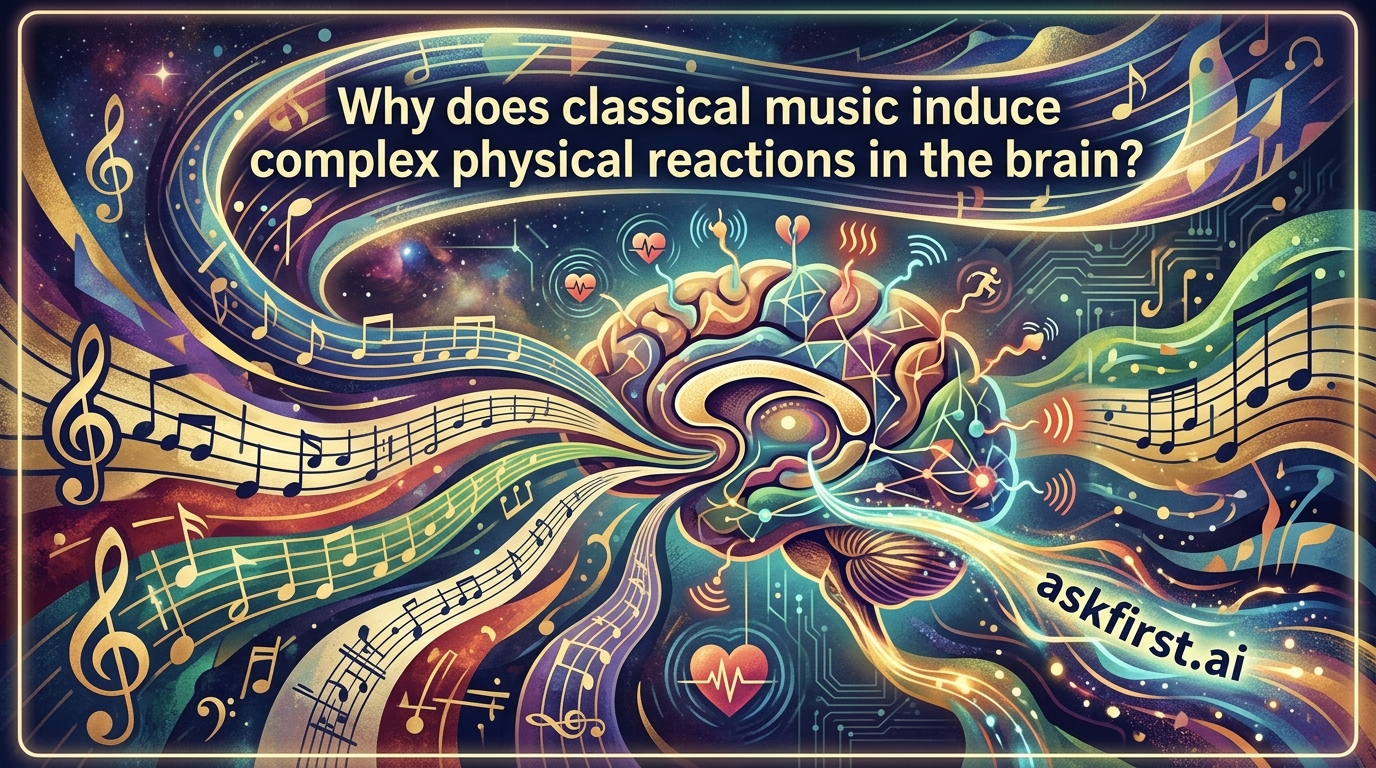
When listening to complex harmonic structures, the human brain releases a surge of dopamine—the primary neurotransmitter associated with reward and pleasure. Studies have shown that listening to complex music activates the nucleus accumbens, an area central to the brain's reward circuitry. Furthermore, the sustained focus required to parse intricate polyphonic layers stimulates the prefrontal cortex, which is responsible for executive function and emotional regulation. The phenomenon often colloquially referred to as the "Mozart Effect" is grounded in the observation that certain spatial-temporal tasks show improvement after listening to specific structural patterns. This is attributed to the priming of neural pathways that handle complex spatial reasoning.
Physiological Entrainment and Autonomic Regulation
Classical music exerts a profound effect on the autonomic nervous system. The temporal structure of adagio or largo movements often aligns with the human resting heart rate. Through a process known as "physiological entrainment," the body tends to synchronize its biological rhythms, such as heart rate and respiration, with the musical tempo. This synchronization helps lower cortisol levels—the body's primary stress hormone—leading to a measurable decrease in blood pressure and an increase in heart rate variability (HRV), a key indicator of cardiovascular resilience.
Structural Complexity and Neural Plasticity
- Pattern Recognition: The human brain is a prediction machine. Classical music challenges the brain to anticipate harmonic resolutions and thematic variations, keeping neural networks constantly active.
- Hemispheric Integration: Listening to dense musical arrangements forces communication between the left hemisphere (logical processing) and the right hemisphere (intuitive processing), strengthening the corpus callosum.
- Emotional Resonance: The interplay of dissonance and consonance mimics the fluctuations of human emotional states, providing a safe cognitive laboratory to process complex feelings without real-world consequences.
Conclusion: A Symphony for Survival
By engaging the brain’s deepest reward systems while simultaneously regulating the cardiovascular system, classical music acts as a comprehensive neurological workout. Its power lies not in magic, but in the sophisticated marriage of mathematical precision and human emotion. Integrating these auditory experiences into daily routines offers a sustainable method for enhancing cognitive flexibility, reducing physiological stress, and maintaining long-term neural health, proving that art is essential to our biological architecture.