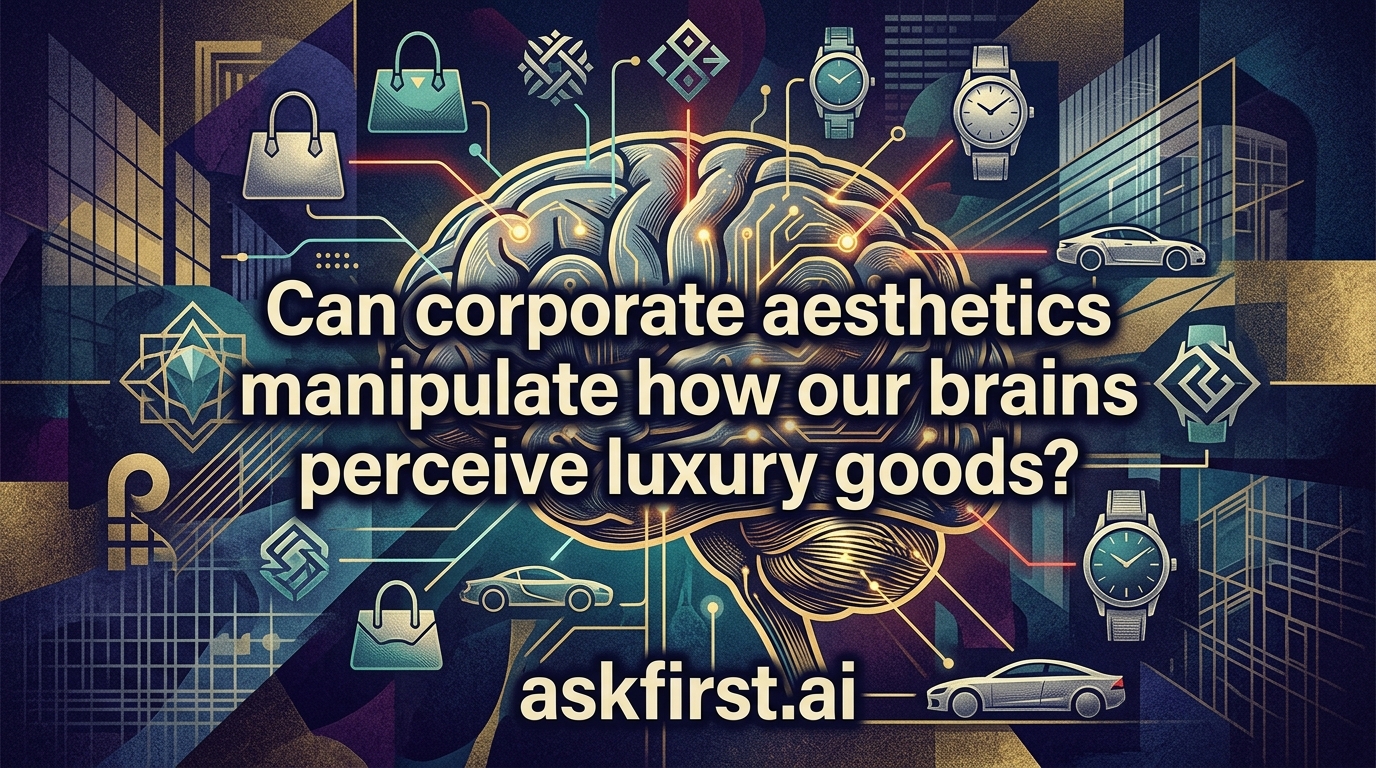
The Psychology of Prestige: How Corporate Aesthetics Command Value
Corporate aesthetics are far more than just surface-level branding; they function as a sophisticated psychological framework designed to influence human perception. When a luxury brand meticulously curates its visual identity—from its minimalist logo design to the weight and texture of its packaging—it triggers profound neurological responses. Neuroscience research indicates that the brain processes aesthetic signals rapidly, often before conscious rationalization occurs. This phenomenon, known as the "halo effect" in psychology, occurs when our positive impression of a brand's visual presentation spills over into an inflated perception of the product’s quality, utility, and social desirability.
The Neuroscience of Premium Packaging
Human cognitive processing is heavily influenced by sensory cues. Research published in the Journal of Consumer Psychology suggests that sleek, uncluttered designs stimulate areas of the brain associated with reward processing, such as the ventral striatum. Luxury brands exploit this by utilizing:
- Scarcity Cues: Visual minimalism that suggests exclusivity.
- Materiality: High-quality, heavy-weight materials that activate tactile receptors, signaling durability and worth.
- Chromatics: Specific color palettes, like gold, black, or deep navy, which are culturally hardwired to symbolize elite status.
These visual triggers bypass analytical thought, moving the consumer toward an emotional decision-making process where the "luxury" value is accepted as an intrinsic truth rather than a marketing construct. This manipulation is effective because the brain simplifies complex value assessments by relying on these visual heuristics.
Symbolism and Social Signaling
Beyond sensory processing, corporate aesthetics act as a powerful tool for social signaling. According to evolutionary psychology, humans are biologically inclined to identify status as a means of navigating hierarchy. Luxury companies leverage "aesthetic signaling" to convey that their products are associated with high-status groups. When a brand adopts a specific aesthetic—such as the quiet luxury trend—it taps into an individual's desire for belonging or distinction.
The Role of Cognitive Biases
Our brains are prone to confirmation bias, meaning once we see a luxurious aesthetic, we subconsciously look for reasons to justify the high price point. The "Price-Quality Schema" dictates that consumers often assume higher prices equate to higher quality. Corporations reinforce this mental shortcut through consistent visual branding, effectively creating a feedback loop where the aesthetic itself confirms the value to the observer. By standardizing high-end design languages, companies ensure that consumers don't just see a product; they see a status symbol, a promise of performance, and an extension of their personal identity. Ultimately, the aesthetic of luxury is a masterclass in behavioral architecture, guiding the consumer to experience a psychological "premium" that the product itself may not physically possess.