The Memory Mystery: Does Biology Keep Records Outside the Brain?
For decades, mainstream neuroscience has maintained a singular consensus: the human brain, specifically the hippocampus and the neocortex, serves as the exclusive warehouse for our experiences. However, emerging frontiers in epigenetics and cellular memory research have ignited a fascinating debate about whether information might reside elsewhere within the body. While popular culture often suggests that organs like the heart or individual cells might hold "records" of past events, the scientific reality is far more nuanced and grounded in molecular biology.
The Epigenetic Frontier
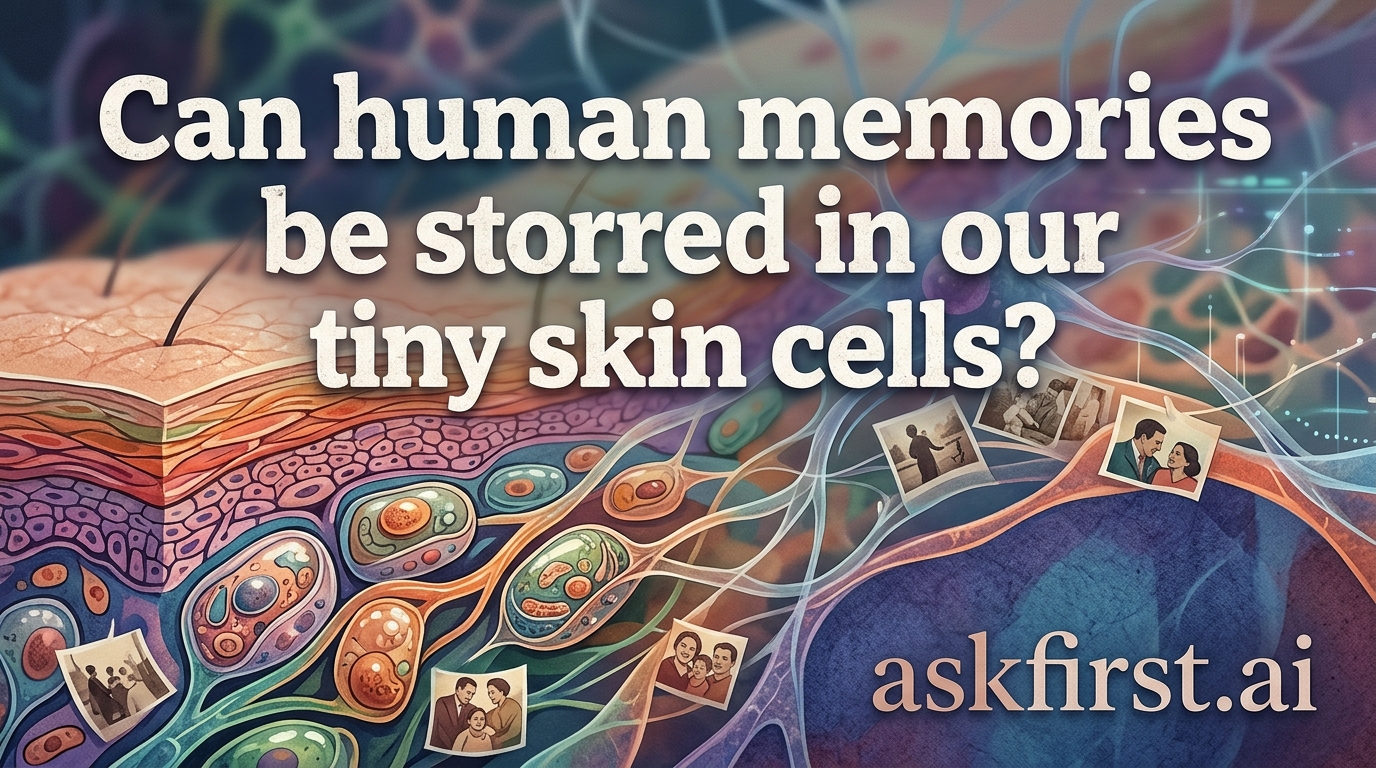
Recent studies on cellular biology indicate that while cells do not store "memories" in the sense of conscious recollection or narratives, they do retain a form of chemical history. Through a process known as epigenetic modification, skin cells and other somatic cells can undergo structural changes in response to environmental stimuli. For instance, chronic exposure to stress hormones or specific environmental toxins can alter the way genes are expressed in a skin cell. This is often referred to as "cellular memory," where the cell effectively "remembers" its past environment through DNA methylation patterns.
Challenging the Neuron-Centric Paradigm
Critics of the brain-only theory point to the phenomenon of peripheral nervous system conditioning. Research conducted on primitive organisms suggests that some form of learning can occur without a centralized brain, leading some theorists to hypothesize that human somatic cells might harbor similar mechanisms. However, it is vital to distinguish between a cell's adaptation and human memory:
- Adaptation vs. Recollection: A skin cell might react faster to an irritant due to previous exposure (an adaptation), but it cannot "remember" a childhood event or a facial expression.
- Synaptic Plasticity: True human memory requires the complex architecture of neurons and synapses to encode, consolidate, and retrieve information, a capability that skin cells simply lack.
The Verdict on Somatic Storage
While the concept that our skin cells hold the secrets to our past makes for compelling science fiction, the biological evidence indicates that memory remains a byproduct of complex neural networks. Skin cells perform vital functions—such as protecting against pathogens, regulating body temperature, and signaling structural damage—but they do not act as data drives for human experience. Epigenetics offers a fascinating look at how our cells record biological history, yet this is fundamentally different from the cognitive function of human memory. We are living, breathing entities where experience informs the biology of the body, but the mind remains the solitary vault for our subjective reality. As research into human biology continues to accelerate, understanding the precise mechanisms of how we store the past will remain one of the most intriguing journeys in modern science, distinguishing clearly between genetic imprints and the cognitive spark of consciousness.