Unlocking the Mind: Can We Really Record Our Dreams?
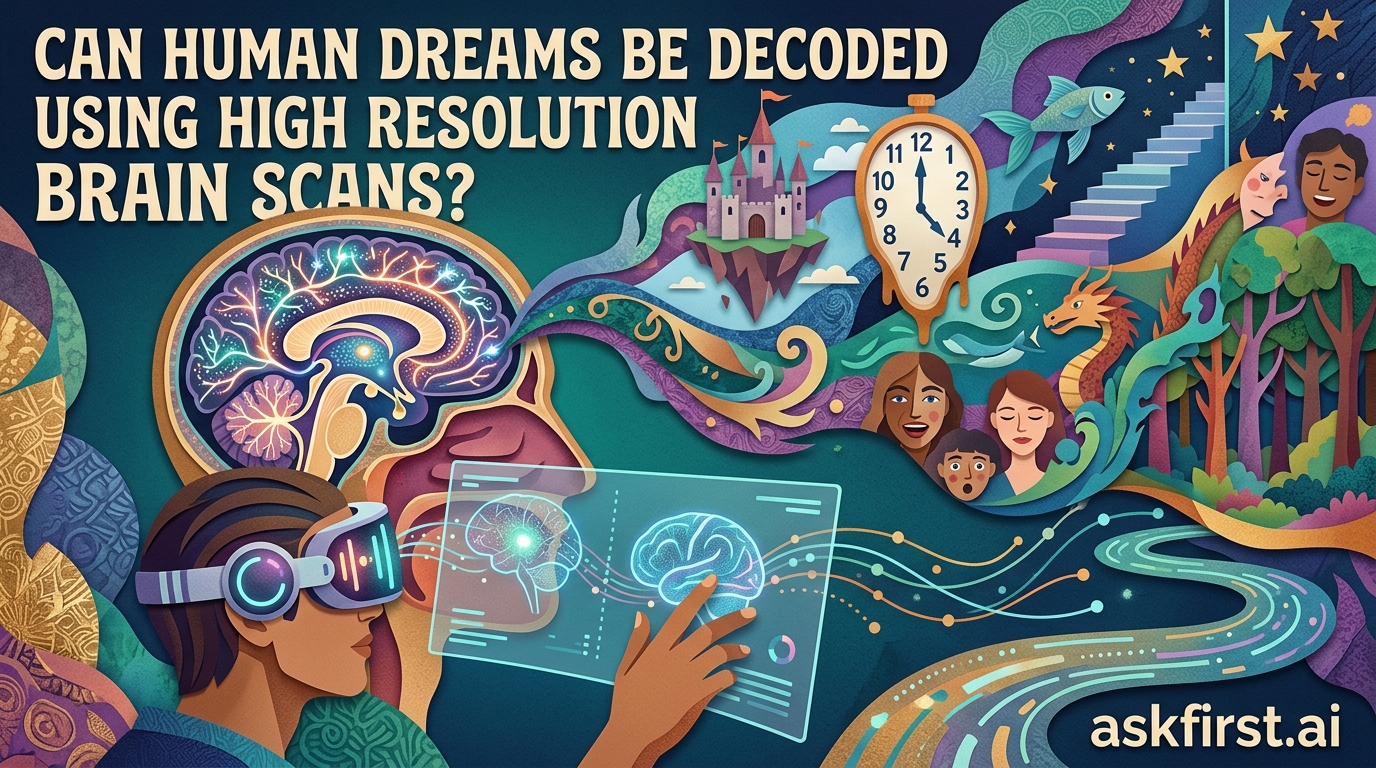
Modern neuroscience has moved significantly closer to answering whether humanity can translate the flickering images of sleep into visual reality. Researchers utilize high-resolution neuroimaging, primarily functional Magnetic Resonance Imaging (fMRI), to monitor patterns of brain activity that correlate with visual perception. By observing blood flow and neural firing patterns, scientists have discovered that the human brain processes dreamt imagery in regions very similar to those used while viewing the real world.
The Neural Basis of Visual Decoding
The fundamental premise relies on "decoding" algorithms. When a person views an image, specific areas of the visual cortex fire in a unique spatial configuration. By recording this data, computer models can reconstruct a rough approximation of the original image. Studies from the ATR Computational Neuroscience Laboratories in Japan successfully demonstrated this by showing participants specific categories of images—such as buildings, people, or landscapes—and training a model to recognize these neural patterns. When the subjects entered the REM stage of sleep, researchers analyzed their brain scans to predict what the subjects were seeing, yielding an accuracy rate significantly better than chance.
Challenges and Technological Frontiers
While this represents a monumental leap, decoding dreams remains far from perfect. The primary challenge is "noise" within the neural signal. During REM sleep, the brain is hyper-active and filled with emotional volatility, which can obscure the clarity of visual data. Furthermore, dreaming is not purely visual; it involves abstract thoughts, bodily sensations, and complex narrative structures that are notoriously difficult to map using current scan resolutions.
- Spatial Resolution: Current scanners struggle to distinguish fine-grained details within neural columns.
- Signal-to-Noise Ratio: The chaotic nature of REM sleep interferes with data clarity.
- Subjectivity: Dreams are highly individualized, requiring personalized training for every single participant.
The Future of Dream Projection
Looking toward the future, the integration of Artificial Intelligence with neural imaging promises to refine these reconstructions. AI is adept at pattern recognition; as models grow more sophisticated, they can interpret the subjective "shorthand" of the human brain. If a specific pattern of neural activity consistently triggers an internal image of a specific childhood home, the AI will learn to associate that unique biometric signature with that memory. While we are not yet at the point of playing back dream movies on a screen, the bridge between neural activity and external visualization is being built. The ability to peer into the inner theater of the sleeping mind stands as one of the most fascinating frontiers in human biological exploration.