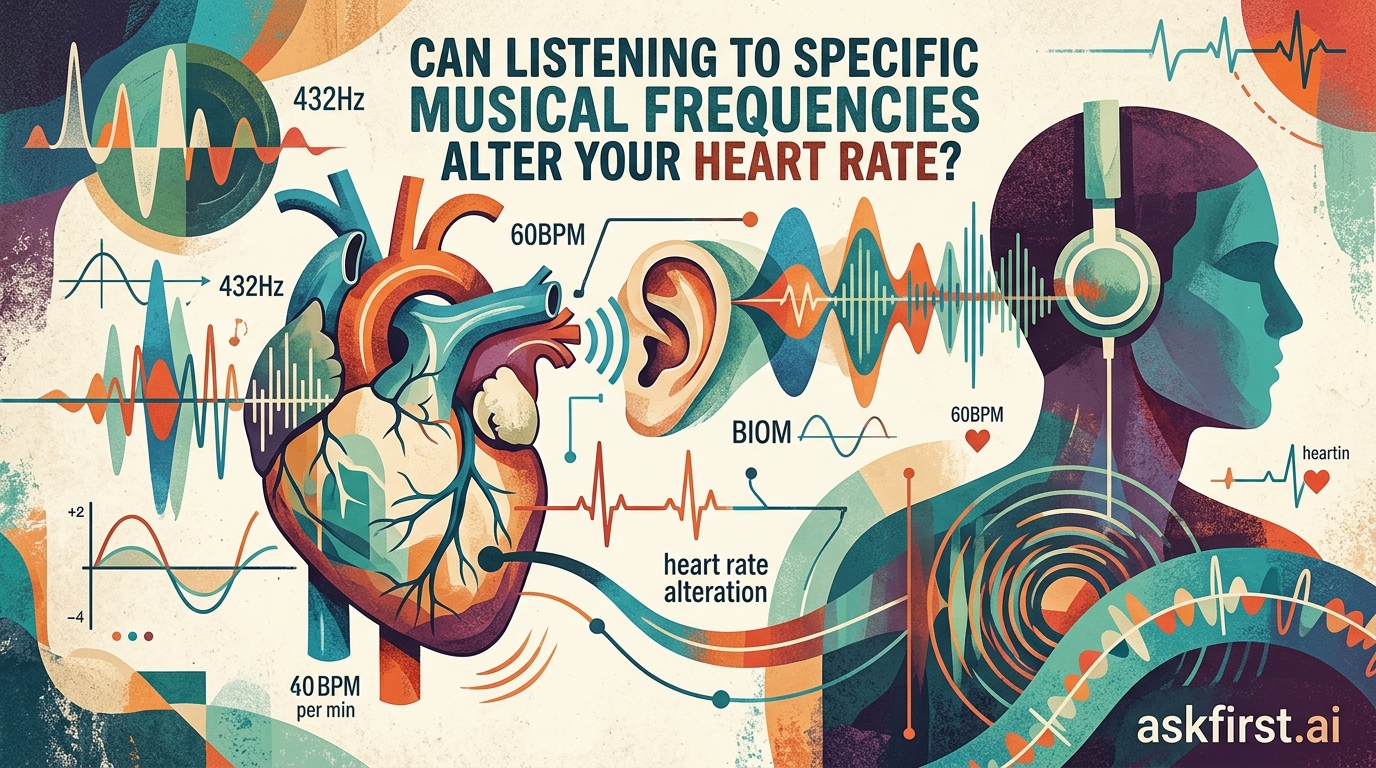
The Rhythmic Pulse: How Sound Frequencies Shape Your Heartbeat
Scientific research has increasingly demonstrated that music is not merely an auditory experience but a physiological tool capable of modulating the autonomic nervous system. The phenomenon of entrainment—where the human body synchronizes its biological rhythms with external periodic stimuli—explains how musical tempo and frequency can directly influence heart rate variability (HRV) and overall cardiac rhythm.
The Mechanism of Entrainment
At the core of this interaction is the concept of entrainment. When a listener is exposed to a consistent rhythmic pattern, the body's internal oscillators, including the heart and breathing rate, tend to synchronize with the external cadence. Studies published in journals like Psychology of Music indicate that high-tempo music, typically exceeding 120 beats per minute, tends to elevate the heart rate, while slower, low-frequency compositions below 80 beats per minute encourage a parasympathetic response. This response promotes relaxation by slowing the heart rate and lowering blood pressure, effectively acting as a natural sedative for the cardiovascular system.
Harmonic Frequencies and Biological Resonance
Beyond tempo, specific sound frequencies play a critical role. Low-frequency sound waves, particularly those between 20 Hz and 100 Hz, are often felt as much as heard. These "bass" frequencies can stimulate the vagus nerve, which serves as a primary control pathway for the heart rate. By engaging the vagus nerve through resonant sound, the body enters a state of homeostasis, reducing the "fight-or-flight" stress response that often keeps the heart rate artificially high. Conversely, high-frequency, jarring sounds can trigger an acute stress response, leading to a temporary spike in heart rate and cortisol production.
Clinical Applications and Daily Use
- Stress Reduction: Using ambient soundscapes with consistent, low-frequency drones can significantly stabilize heart rate during high-pressure situations.
- Athletic Performance: Rhythmic music with a high BPM is utilized by athletes to maintain a elevated, steady heart rate during endurance training, optimizing oxygen utilization.
- Sleep Hygiene: Listening to compositions based on "delta" or "theta" wave frequencies helps bridge the gap between wakefulness and sleep by gradually slowing the heart rate, facilitating a faster transition into deep sleep stages.
It is important to note that while music is a powerful regulator, it acts as a complementary intervention rather than a replacement for medical treatment. Individual responses to music are highly subjective, influenced by personal history, cultural background, and emotional state. However, the data confirms that intentional sound exposure is a viable, non-invasive method to influence cardiovascular performance and promote long-term physiological well-being. By curating a sound environment that aligns with desired states, individuals can leverage the fundamental physics of sound to master their own internal rhythm.