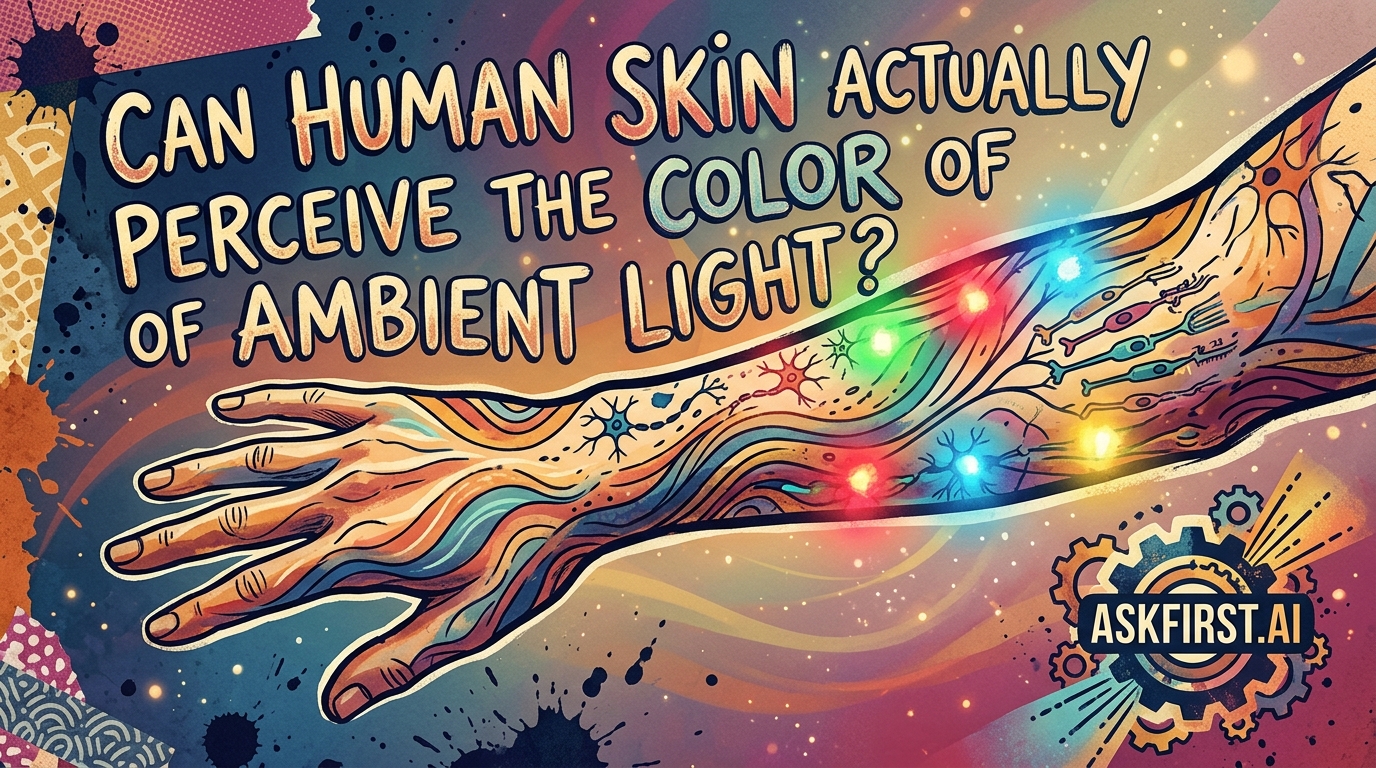
Beyond Sight: Does Your Skin See the Light?
While traditional biology teaches that vision is restricted to the retina, recent scientific breakthroughs suggest that human skin possesses a sophisticated light-sensing ability that goes far beyond simple temperature detection. It appears that our skin operates as a secondary, non-visual light sensor capable of distinguishing specific wavelengths of light, essentially "seeing" color through complex biochemical mechanisms.
The Discovery of Opsins in the Dermis
The primary mechanism behind this phenomenon involves opsins, which are light-sensitive proteins previously thought to reside exclusively within the eyes. Research published in journals such as the Journal of Investigative Dermatology has identified that various cell types in the human skin, including keratinocytes and melanocytes, express these opsin genes. These photoreceptors, particularly OPN3, are sensitive to blue light. When these skin cells are exposed to specific wavelengths, they initiate a signaling cascade that influences cellular processes like pigmentation, circadian rhythm regulation, and wound healing.
How Skin Distinguishes Colors
Unlike the eye, which uses a high-density array of rods and cones to process complex imagery, the skin utilizes a chemical-based approach to differentiate light spectrums. For instance, the skin's response to blue light (around 450-480 nanometers) differs significantly from its reaction to red or infrared light.
- Blue Light Sensitivity: Exposure triggers protective responses, such as the regulation of melanin synthesis to prevent oxidative stress.
- Red Light Sensitivity: Often linked to photobiomodulation, red and near-infrared wavelengths penetrate deeper into the tissue, potentially stimulating mitochondrial activity and accelerating tissue repair.
This sensitivity acts less like a camera and more like a biological stopwatch or a health monitor, helping the body calibrate its internal clock to the daily cycle of solar radiation.
Evolutionary Significance
This "extra-ocular" light perception likely evolved to help organisms maintain homeostasis. By sensing the spectral composition of ambient light, the skin can anticipate environmental shifts. This ensures that the body's internal systems align with the solar cycle even in the absence of direct eye-based input, such as during deep sleep or in specific nocturnal conditions. It represents an ancient, fundamental survival strategy, proving that our body is in constant, dynamic communication with the electromagnetic spectrum surrounding us.
A New Frontier in Photobiology
While humans do not possess "skin-sight" in the literal sense of forming images, the ability to sense color wavelengths through the skin is an undeniable biological reality. This ongoing research continues to influence fields such as dermatology, regenerative medicine, and light-therapy technology, as experts learn how to harness these pathways to treat skin conditions or improve human health through controlled exposure to specific light frequencies.