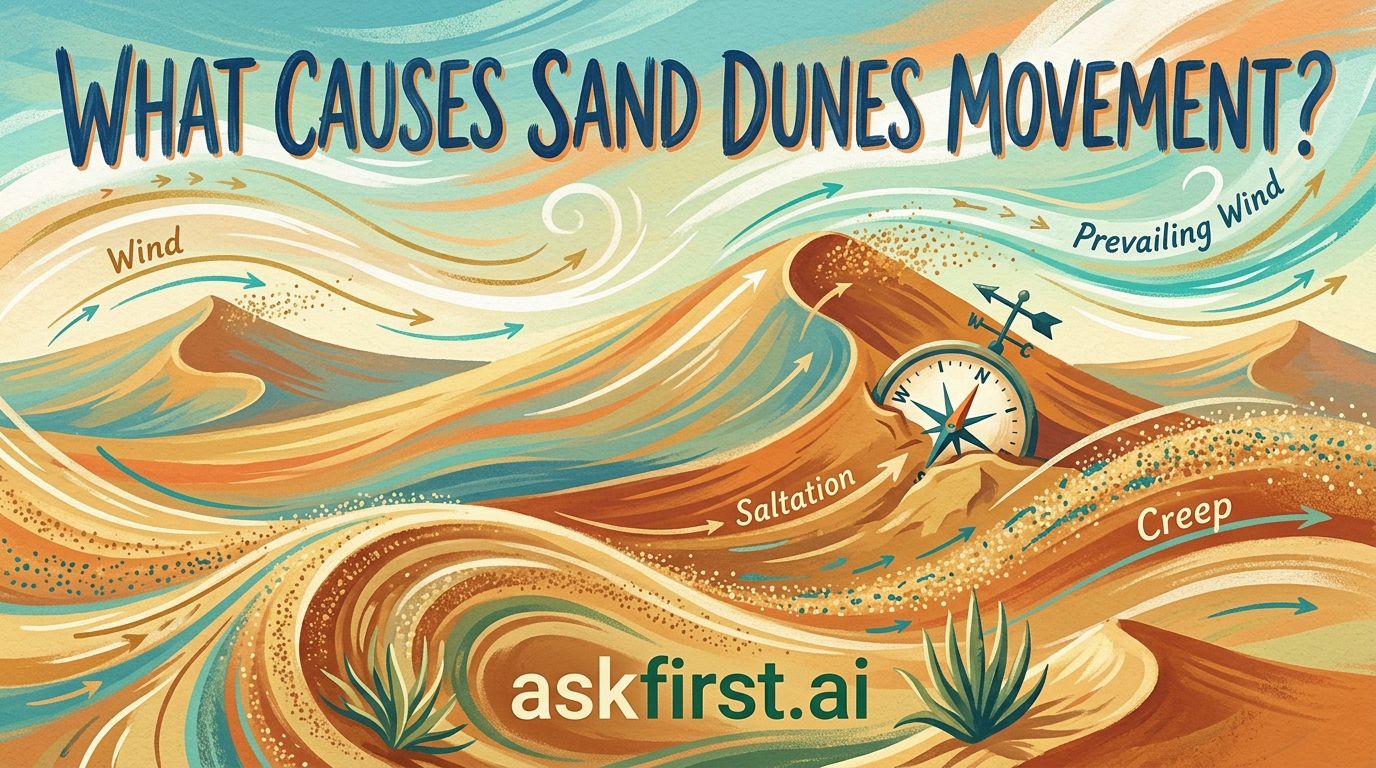
The Mechanics of Aeolian Migration: Why Sand Dunes Move
Sand dunes are dynamic landforms that serve as the primary evidence of the Earth's surface being in constant flux. The migration of sand dunes, a process known as aeolian transport, is driven by the complex interaction between wind energy, grain size, and gravity. Understanding why these massive structures move requires a deep dive into fluid dynamics and geomorphology.
The Physics of Sediment Transport
The movement of sand is primarily facilitated by three distinct physical processes driven by wind:
- Saltation: This is the most significant mechanism. Sand grains are lifted by the wind and bounce along the surface. When they land, they strike other grains, causing them to hop forward. Roughly 75% of dune movement is attributed to saltation.
- Creep: Heavier, larger particles that are too dense to be lifted into the air are pushed along the surface by the impact of saltating grains.
- Suspension: Very fine particles (dust and silt) are carried high into the atmosphere and can travel thousands of miles before settling.
The Role of Wind and Gravity
Dunes move because of the asymmetry of their structure. A typical dune has two distinct sides: the stoss side (the windward slope) and the lee side (the slip face).
- Windward Erosion: As wind hits the stoss side, it carries grains upward. Because the stoss slope is gentle, the wind maintains its velocity, effectively "pushing" the sand toward the crest.
- Lee Deposition: Once the sand reaches the crest, the wind velocity drops abruptly as the air flows over the edge. This creates a "wind shadow." Gravity then takes over, causing the sand to cascade down the steeper slip face.
This continuous cycle of eroding the windward side and depositing sand on the lee side creates the illusion of the dune "walking" across the desert floor.
Factors Influencing Migration Speed
Not all dunes move at the same pace. Several environmental factors dictate the velocity of migration:
- Wind Velocity: The higher the wind speed, the faster the saltation process.
- Dune Size: Smaller dunes move significantly faster than massive ones. A small barchan dune might move several meters per year, while a giant linear dune may remain relatively stationary for decades.
- Vegetation: Plants act as anchors. Root systems stabilize the sand, effectively stopping the migration process.
- Moisture: Water creates surface tension between grains, making them heavier and harder to lift, which inhibits movement.
Pros and Cons of Dune Migration
Migration is a natural process, but it carries significant implications for human infrastructure.
- Pros: Dunes are essential for ecological diversity, acting as reservoirs for sand that replenish beaches and coastal ecosystems. They also create unique habitats for specialized flora and fauna.
- Cons: Rapid migration leads to desertification, where fertile land is buried. This poses a constant threat to roads, pipelines, and agricultural settlements in arid regions.
Future Trends and Management
In the face of climate change, shifting wind patterns are altering the migration paths of dunes globally. Modern geomorphologists use satellite imagery and LiDAR to track these movements. To mitigate damage, engineers now employ sand fences and reforestation projects—planting drought-resistant vegetation to mimic natural stabilization, effectively "locking" the dunes in place to protect human development.