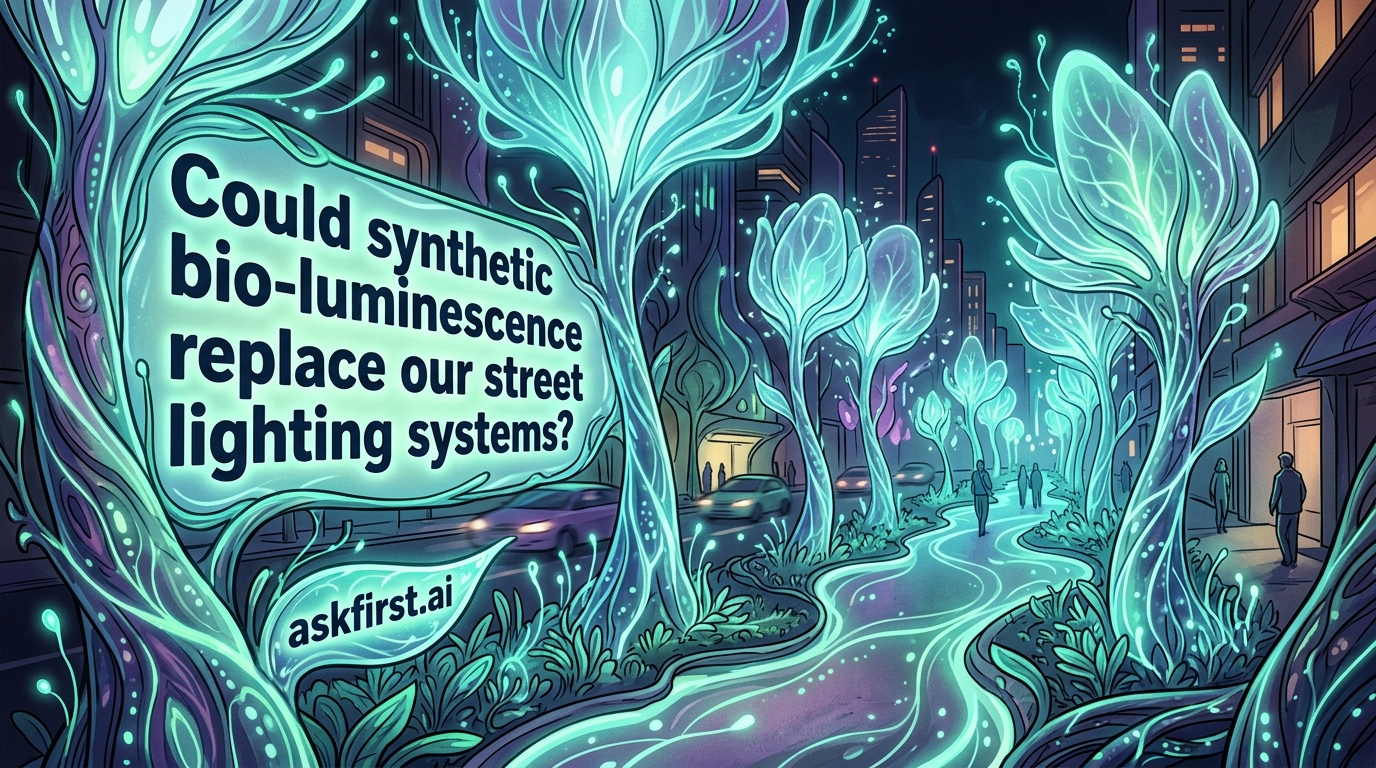
The Future of Glowing Cities: Harnessing Synthetic Bio-Luminescence
Imagine walking down a city street at night where the sidewalks shimmer with a soft, natural glow, eliminating the need for harsh, energy-consuming electric streetlights. This is the promise of synthetic bio-luminescence, a cutting-edge field of biotechnology that integrates light-emitting genes from organisms like fireflies, deep-sea jellyfish, or glowing fungi into trees, shrubs, and urban materials. While it sounds like science fiction, the technology is moving rapidly from the laboratory to potential real-world applications.
How Bio-Luminescence Works
Bio-luminescence is a chemical reaction that occurs within a living organism where an enzyme, luciferase, acts upon a pigment, luciferin, to produce light. Unlike traditional incandescent or LED lights that generate light through heat or semiconductors—often wasting significant energy in the process—biological light is nearly 100% efficient. Scientists are now using synthetic biology to edit the genomes of plants and bacteria to induce this expression continuously. By optimizing these metabolic pathways, researchers are increasing the intensity and longevity of the light emitted.
Potential Urban Applications
- Glow-in-the-Dark Infrastructure: Incorporating bio-luminescent proteins into synthetic polymers or coatings for road markings could create self-illuminating pathways. This passive lighting system would require no electricity and increase safety during power outages.
- Bio-Luminescent Urban Forests: Projects are underway to develop bioluminescent trees that could line walkways. These trees would absorb carbon dioxide during the day and provide ambient navigation lighting at night, acting as a functional component of "green cities."
- Low-Light Navigation: Rather than replacing high-intensity industrial lamps, bio-luminescent plants could define the edges of paths and trails in parks, reducing light pollution and protecting nocturnal wildlife habitats.
The Challenges and Future Prospects
Despite the enthusiasm, significant hurdles remain. Current light output from engineered plants remains low compared to LED systems. Scaling the production of these organisms to survive diverse climate conditions requires robust genetic resilience. Furthermore, the ecological impact of introducing synthetic light-emitting organisms into wild ecosystems necessitates rigorous oversight and containment protocols to prevent horizontal gene transfer.
However, the potential benefits are immense. Shifting toward biological light sources could drastically reduce the urban heat island effect associated with traditional lighting and decrease our reliance on fossil-fuel-based power grids. As synthetic biology matures, we may transition from a world illuminated by electric wires to one where our infrastructure is as alive as the environment it serves. The fusion of biotechnology and urban design is not just a dream; it is the next step in creating sustainable, harmonious human settlements.