The Mechanics of Vertical Motion: How Elevators Work
Elevators are sophisticated vertical transportation systems that rely on fundamental principles of physics—specifically gravity, counterbalancing, and electromechanical force—to move passengers and freight between floors. While modern designs vary, the core mechanism remains remarkably consistent across the industry.
1. The Core Mechanism: Traction Elevators
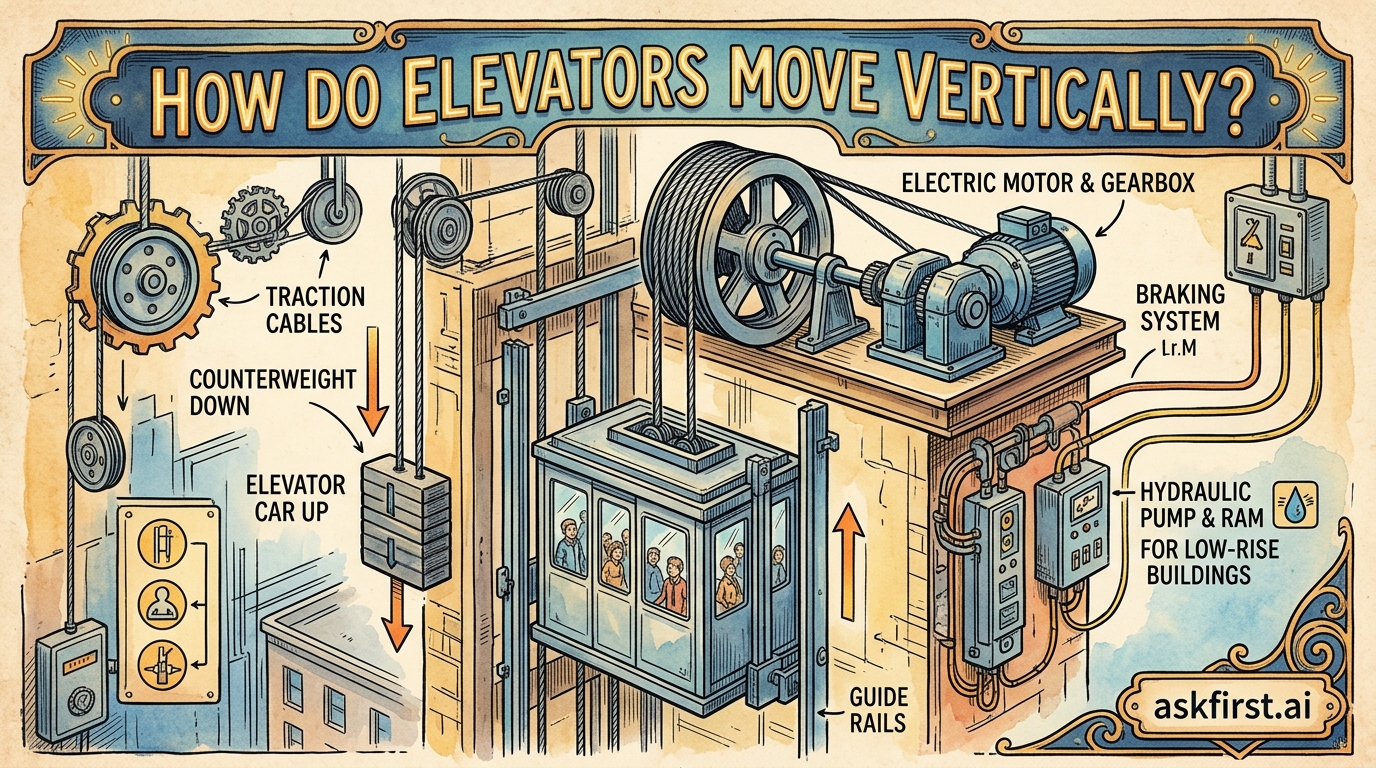
Most high-rise buildings utilize traction elevators. These systems consist of a car and a counterweight connected by heavy steel ropes (hoisting cables) that pass over a drive sheave (a grooved pulley) located in the machine room at the top of the shaft.
- The Counterweight: This is a crucial engineering component. The counterweight is typically equal to the weight of the empty car plus 40% to 50% of the elevator’s maximum load. By balancing the car, the motor only needs to overcome the difference in weight rather than the entire load, significantly increasing energy efficiency.
- The Drive Sheave: Powered by an electric motor, the sheave turns, creating friction against the cables. This friction moves the cables, which in turn lift or lower the car and counterweight in opposite directions.
- Acceleration and Braking: Variable Frequency Drives (VFDs) control the motor's speed, allowing for smooth acceleration and deceleration, preventing the "jerk" sensation during movement.
2. Alternative Systems: Hydraulic Elevators
Common in low-rise buildings (usually up to five or six stories), hydraulic elevators function differently. Instead of ropes and pulleys, these systems use a piston mounted inside a cylinder. An electric motor pumps hydraulic oil into the cylinder, forcing the piston upward and lifting the car. To descend, a valve releases the fluid back into a reservoir, using gravity to return the car to the ground floor.
3. Safety Systems: The "Fail-Safe" Design
Elevator safety is governed by strict regulations, such as ASME A17.1. Several layers of protection prevent accidents:
- Safety Brakes: If the elevator exceeds a pre-set speed, a mechanical governor triggers heavy steel clamps (safeties) that grip the guide rails, bringing the car to an immediate, forced stop.
- Multiple Cables: Each elevator is suspended by multiple steel ropes. Even if one were to snap, the others are engineered to hold the full weight of the car independently.
- Buffers: Located at the bottom of the shaft, these act as shock absorbers in the unlikely event the car descends past the lowest floor.
4. Future Trends: The Evolution of Motion
The industry is currently shifting toward rope-less technology. Companies like ThyssenKrupp have developed the MULTI system, which utilizes linear motor technology (similar to Maglev trains). These elevators use electromagnetic tracks to move cars horizontally and vertically, allowing multiple cabins to operate in a single shaft simultaneously.
Conclusion
Whether utilizing traditional traction cables or cutting-edge magnetic levitation, the elevator remains one of the safest and most reliable forms of transport ever engineered. By mastering the balance between gravity and mechanical force, these systems continue to enable the vertical expansion of modern global cities.