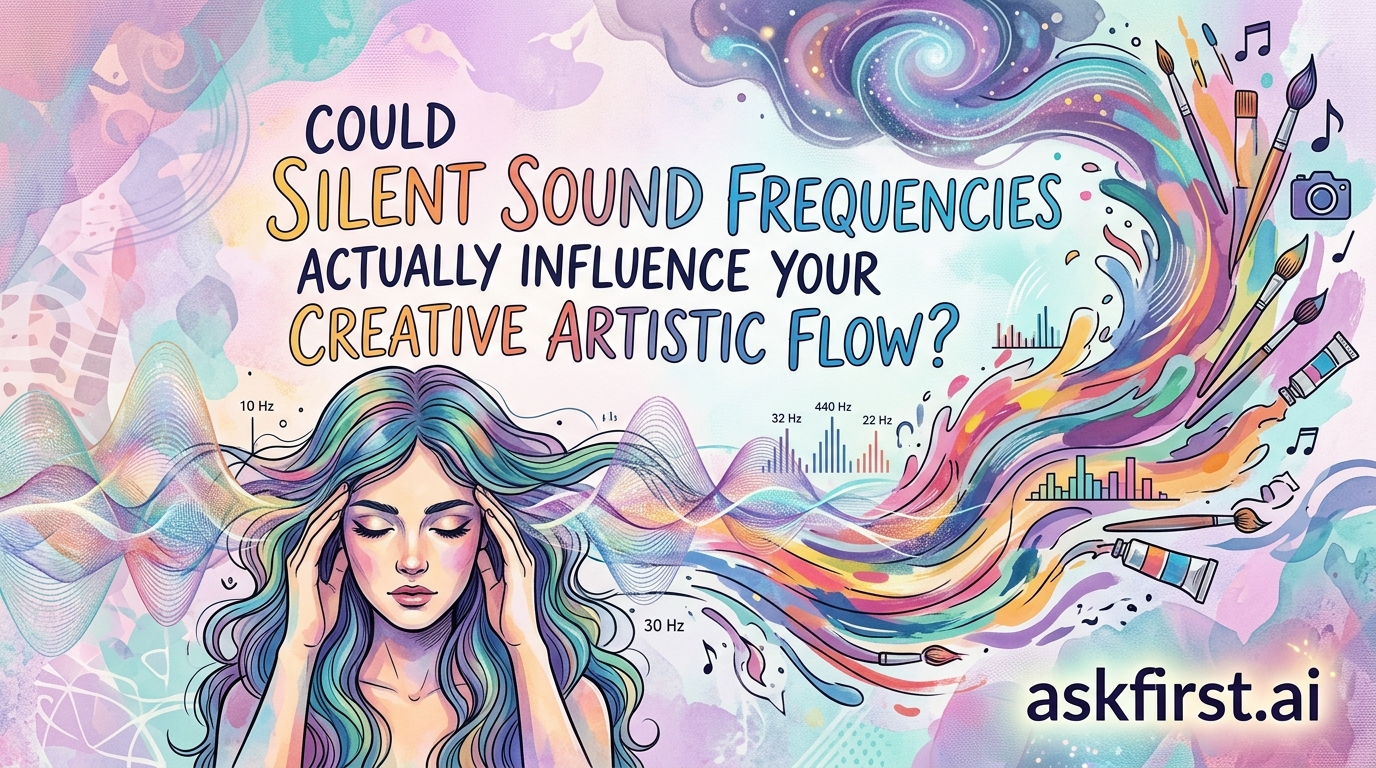
The Hidden Symphony: Can Silent Sound Frequencies Unlock Creative Flow?
While the human ear typically perceives frequencies between 20 Hz and 20,000 Hz, the realm of silent or near-silent sound—infrasound and ultrasound—holds profound potential for cognitive manipulation. Research into psychoacoustics suggests that these inaudible vibrations can interact with the human brain, potentially bypassing the conscious filter to alter states of consciousness and stimulate creative centers.
The Physics of Inaudible Influence
Infrasound, which consists of frequencies below 20 Hz, has long been associated with unsettling physiological effects, yet controlled exposure may foster unique psychological environments. Some studies suggest that low-frequency oscillations can induce states of relaxation or heightened focus by entraining brain waves. By aligning external physical vibrations with internal neural rhythms, the brain may enter a "flow state"—the elusive mental condition characterized by complete immersion and heightened productivity.
Brainwave Entrainment and Neural Plasticity
Beyond mere atmosphere, the application of binaural beats and silent frequency modulations functions as a tool for neural synchronization. When the brain detects a slight frequency difference between two signals—even those masked by ambient noise—the inferior colliculus creates a third internal frequency. This phenomenon allows creators to induce specific states, such as the Alpha or Theta wave patterns, which are deeply linked to divergent thinking and artistic problem-solving.
- Alpha Waves (8–12 Hz): Ideal for relaxed alertness and visual creativity.
- Theta Waves (4–8 Hz): Frequently observed during meditation and the "aha!" moments of insight.
Practical Implementation for Artists
Artists seeking to leverage these silent influencers often utilize specialized soundscapes that layer high-frequency hums or low-frequency pulses beneath traditional instrumental music. This layering strategy achieves two objectives: it keeps the conscious mind occupied with melodic content while the underlying silent frequencies nudge the subconscious toward deeper exploration.
Evidence in clinical settings shows that controlled sound environments can reduce cortisol levels, allowing for a clearer, less cluttered mental workspace. By eliminating the "noise" of internal stressors, the creator gains the quiet required for intricate conceptual work. Moreover, the lack of vocalization in these tracks prevents the "phonological loop"—the brain’s tendency to process language—from interfering with the non-verbal process of visual or structural artistic creation.
Beyond the Myth
It is essential to clarify that silent sound is not a magic potion for instant genius. Rather, it serves as a sophisticated environmental conditioning tool. When coupled with deep work principles and intentional practice, the subtle influence of these frequencies provides a structural scaffold for the mind to inhabit. By shifting the acoustic baseline of the studio or workspace, creators can fundamentally alter the neuro-biological landscape, transforming passive frustration into a rhythmic, highly productive artistic flow.