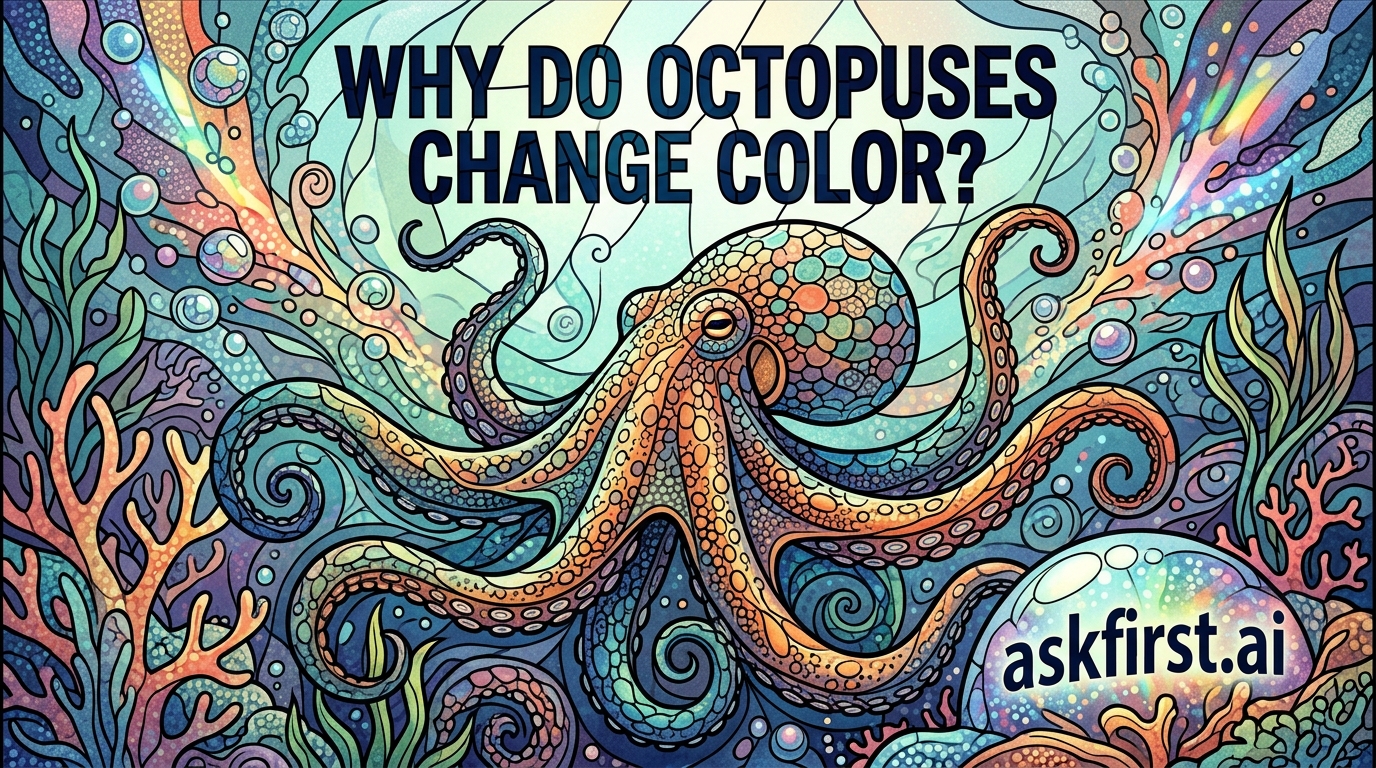
The Science of Cephalopod Camouflage: Why Octopuses Change Color
Octopuses are among the most fascinating creatures in the marine world, renowned for their intelligence and, most notably, their extraordinary ability to change color and texture in milliseconds. This phenomenon is not merely an aesthetic display; it is a sophisticated biological mechanism essential for survival, communication, and predation.
The Biological Mechanism: How It Works
The octopus’s ability to change color relies on a complex interplay between the nervous system and specialized skin cells. The process is governed by three distinct layers of cells working in harmony:
- Chromatophores: These are the primary color-changing organs. Each is a tiny sac of pigment (black, brown, red, yellow, or orange) surrounded by radial muscles. When the octopus’s brain sends a signal, these muscles contract, stretching the sac and making the pigment visible. When they relax, the color retracts, turning the skin pale.
- Iridophores: Located beneath the chromatophores, these cells contain stacks of reflective plates that create iridescent blues, greens, and silvers by refracting light.
- Leucophores: These are the bottom-most layer, acting as white mirrors. They reflect the ambient light of the environment, allowing the octopus to blend into the general luminosity of its surroundings.
Primary Reasons for Color Modification
1. Camouflage and Predation
The most common reason for color change is crypsis. By mimicking the color, pattern, and texture of rocks, coral, or sand, the octopus becomes nearly invisible to both predators and prey. Because octopuses lack a protective shell, they rely on this "active camouflage" to survive. They can match the high-contrast patterns of dappled sunlight or the uniform dullness of a seafloor within 200 milliseconds.
2. Communication and Signaling
Octopuses use color to communicate with others of their species. During mating rituals, males may display vibrant, pulsing patterns to attract females or intimidate rival males. Conversely, a display of dark, high-contrast colors is often a warning sign of aggression or agitation, signaling to potential threats that the octopus is ready to defend itself.
3. Emotional Expression
Research suggests that color changes are linked to the octopus's "mood." A startled or threatened octopus may turn bright red or stark white, while a relaxed octopus often exhibits a mottled, earthy tone.
Pros and Cons
- Pros:
- Survival: Unmatched ability to evade predators.
- Efficiency: Allows for energy-conserving hunting strategies.
- Versatility: Functions in various lighting conditions and habitats.
- Cons:
- Cognitive Load: The process requires significant neurological processing power.
- Visibility: In rare instances, "flashing" colors can betray their location to an observant predator.
Future Trends and Research
Scientists are currently studying cephalopod skin to revolutionize biomimetic technology. By replicating the micro-mechanics of chromatophores, engineers are developing "smart camouflage" materials for military and industrial applications, aiming to create surfaces that can adapt to changing environments in real-time. As of 2026, progress in synthetic soft robotics continues to draw heavy inspiration from these marine masters, promising a future where adaptive materials are as common as the natural world that inspired them.