The Flow State: Why Your Brain Silences Pain During Creativity
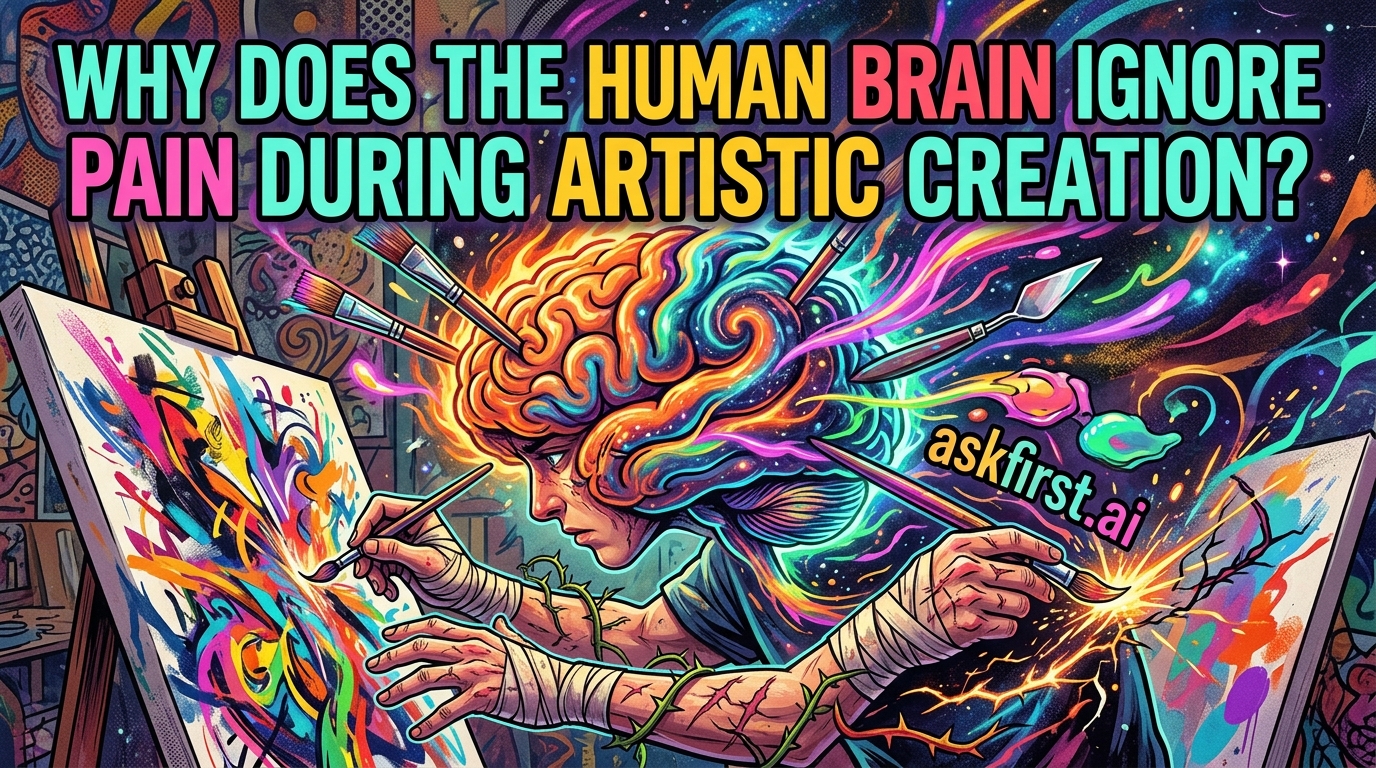
When an individual is deeply engrossed in the act of artistic creation—painting, composing music, or writing—the perception of physical pain often diminishes significantly. This phenomenon is rooted in the complex neurobiology of the "flow state," a concept popularized by psychologist Mihaly Csikszentmihalyi. During this state, the brain undergoes a profound shift in activity, effectively reallocating cognitive resources to prioritize the creative task over somatic sensory feedback.
The Neurochemistry of Creative Absorption
The primary mechanism behind this temporary analgesia is the surge of neurotransmitters that accompany intense creative focus. As a creator enters a flow state, the brain releases a cocktail of neurochemicals, including dopamine, norepinephrine, endorphins, and anandamide.
- Dopamine: Enhances focus and heightens the reward response, making the creative act intrinsically gratifying.
- Endorphins: These act as the body’s natural painkillers, interacting with opioid receptors in the brain to block the transmission of pain signals from the peripheral nervous system.
- Anandamide: A lipid neurotransmitter that promotes lateral thinking and reduces feelings of fear or discomfort, facilitating a "bliss" state that further masks minor physical ailments.
The Role of Transient Hypofrontality
Central to understanding why pain is ignored is the phenomenon of transient hypofrontality. During deep artistic engagement, the prefrontal cortex—the part of the brain responsible for self-monitoring, analytical thinking, and future planning—temporarily "downregulates." Because the prefrontal cortex is also heavily involved in processing the emotional and cognitive aspects of pain, its reduced activity allows the brain to silence the "self" and focus entirely on the present experience.
This shift means that the brain is no longer performing the high-level evaluation of incoming pain signals. While the nerves in the hands or back may still be sending impulses of fatigue or tension, the brain's "gate control" mechanisms are diverted. The information is essentially filtered out or rendered insignificant because the attentional bandwidth is entirely consumed by the nuances of color, rhythm, or syntax.
Evolutionary and Practical Significance
This mechanism serves an evolutionary purpose: it allows for deep focus in high-stakes environments where immediate survival might depend on ignoring distractions. In an artistic context, this allows for prolonged sessions of intense effort that would otherwise be interrupted by physical discomfort. Studies into athletes and musicians confirm that when a task is perceived as intrinsically rewarding and challenging, the perceived threshold for pain shifts upward. The brain prioritizes the pursuit of the creative "goal" as a primary survival value, relegating background physical noise to a lower priority level. This mastery over one's own sensory experience underscores the incredible plasticity and adaptive nature of human cognitive function during moments of peak inspiration.