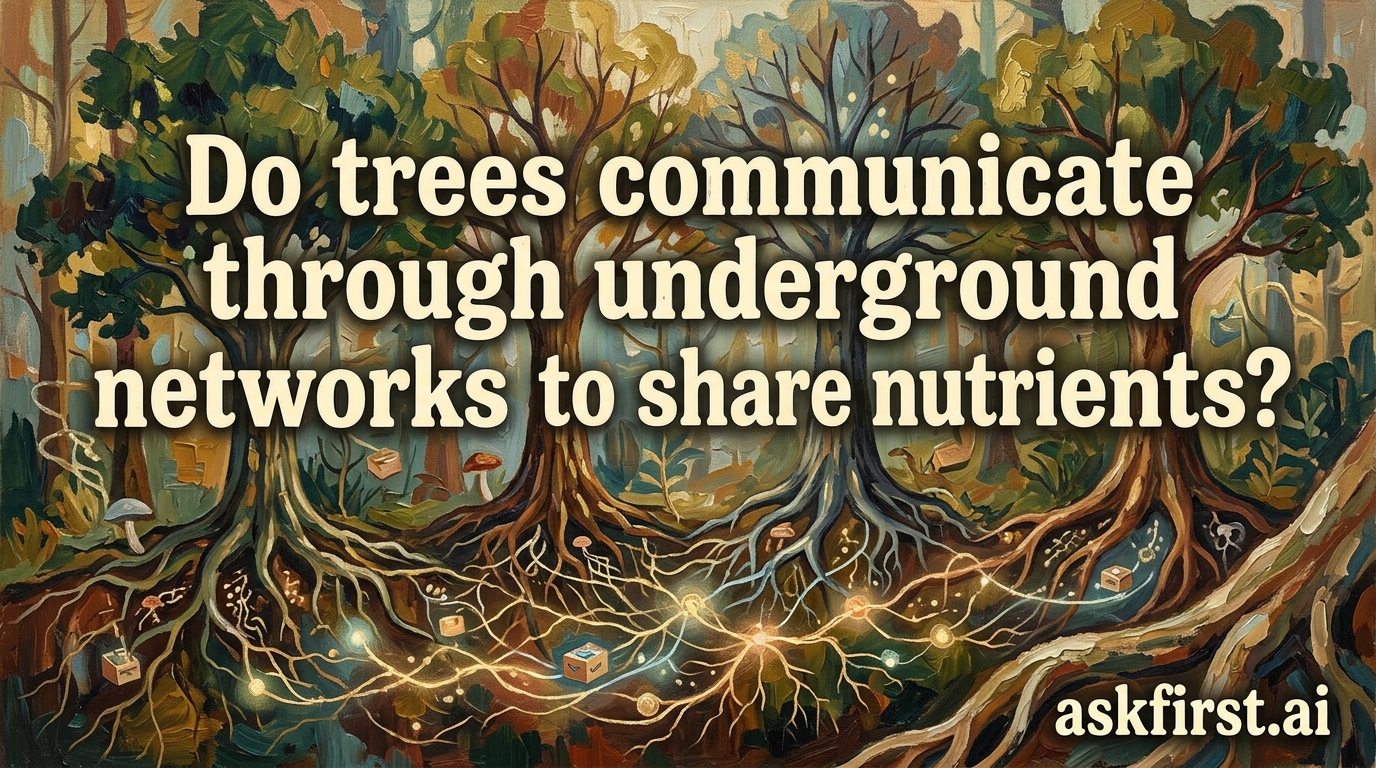
The Secret Social Lives of Forests: The Wood Wide Web Explained
Recent ecological discoveries have fundamentally transformed how humanity perceives the forest. It turns out that trees are not merely solitary, silent giants competing for sunlight. Instead, they are deeply interconnected members of a sophisticated social network, often referred to as the "Wood Wide Web." This hidden infrastructure relies on a symbiotic relationship between trees and underground fungal networks known as mycorrhizae.
The Mycorrhizal Connection
Mycorrhizal fungi live in a mutualistic association with plant roots. These fungi form tiny, hair-like filaments called hyphae that extend into the soil, creating a massive, sprawling network. This infrastructure allows the fungi to harvest phosphorus and nitrogen from the soil, which they trade with trees in exchange for carbon-rich sugars produced during photosynthesis. This trade is not restricted to a single tree; the fungal threads bridge the gap between different trees, effectively creating a subterranean communication highway.
Communication and Resource Sharing
Research indicates that trees use this network for several vital functions:
- Resource Redistribution: Older, larger trees, frequently called "Mother Trees," often act as central hubs. Studies suggest these trees funnel excess sugars through the fungal network to saplings struggling in the shaded understory, helping them survive until they reach the canopy.
- Chemical Signaling: If a tree is attacked by beetles or aphids, it can release chemical distress signals into the fungal network. Neighboring trees receive these molecular warnings and begin preemptively producing defense chemicals to bolster their own resilience against the encroaching threat.
- Species Cooperation: Interestingly, these networks do not always respect species boundaries. Scientists have documented data indicating that different species of trees, such as birches and firs, can trade nutrients seasonally, suggesting a level of ecological cooperation that rivals the complexity of human logistics systems.
Evolutionary Significance
This interconnectedness challenges traditional Darwinian models that focus solely on individual competition. While competition for resources remains a factor, the forest functions as a cooperative organism where the survival of the collective increases the health of the individual. By sharing nutrients during lean times or providing warnings of impending danger, the forest ecosystem maximizes its overall resilience.
Understanding these mechanisms is crucial for modern forest management. Disrupting these delicate fungal networks through intensive tilling or deforestation can sever these vital lifelines, leaving forests significantly more vulnerable to disease, climate shifts, and environmental stress. Protecting the "Wood Wide Web" is essential for maintaining the stability of global ecosystems, ensuring that forests continue to serve as the planet's primary carbon sinks and guardians of biodiversity for generations to come.