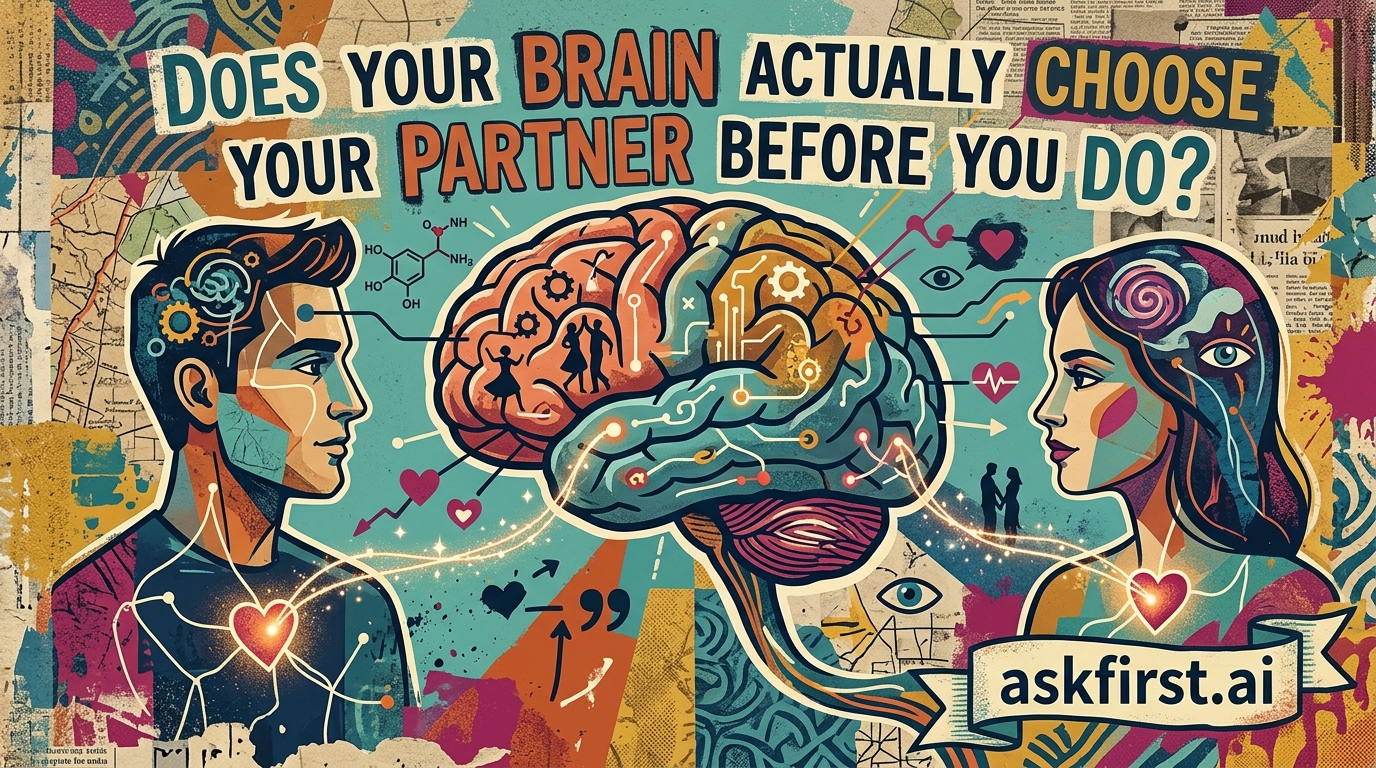
The Neuroscience of Attraction: Does Your Brain Choose Your Partner Before You Do?
Human romantic attraction is often romanticized as a mystical experience, yet modern neuroscience suggests it is a calculated, lightning-fast biological process. Research in neurobiology and psychology indicates that the brain begins evaluating potential partners long before conscious thoughts arrive at a decision. This phenomenon is rooted in deep evolutionary mechanisms designed for survival and genetic compatibility.
The Split-Second Assessment
Studies in evolutionary psychology show that within milliseconds of meeting someone, the brain processes cues related to physical fitness, health, and behavioral traits. This unconscious scan is driven primarily by the amygdala and the orbitofrontal cortex, areas responsible for emotional processing and reward-based decision-making. Researchers often call this the "thin-slice" judgment. These rapid assessments bypass the rational brain to focus on indicators of biological viability.
The Chemistry of Choice
When an individual encounters a potential partner, the brain triggers a chemical cascade. Key players include:
- Dopamine: This neurotransmitter provides a rush of reward and focus, effectively "marking" the potential partner as a high-value target.
- Norepinephrine: This chemical contributes to the physical symptoms of attraction, such as elevated heart rate and excitement.
- Oxytocin and Vasopressin: Often linked to long-term bonding, these hormones start their subtle influence almost immediately, encouraging the formation of an emotional attachment.
These chemicals operate outside of immediate conscious control. By the time a person thinks, "I feel a connection," the brain has already released a mixture of these chemicals to reinforce that choice. It is a biological nudge designed to steer behavior toward reproductive and social advantages.
Evolutionary Drivers and Genetic Compatibility
Beyond initial attraction, there is the intriguing theory of the Major Histocompatibility Complex (MHC). Studies, such as the famous "sweaty t-shirt" experiments, suggest that humans are attracted to the scent of individuals whose immune systems are different from their own. This unconscious olfactory preference helps ensure healthier offspring with more robust immune systems. This happens at a level so deep that the individual is rarely aware of the specific biological drive steering their preference.
Conclusion: The Rational Brain as Editor
While the brain does indeed perform a "pre-selection" process based on these deep-seated biological cues, this does not imply a total loss of autonomy. The prefrontal cortex—the seat of executive function and higher reasoning—eventually steps in to evaluate the long-term feasibility of a partnership. Conscious choice involves weighing shared values, life goals, and emotional compatibility against the initial biological impulse. While the brain may suggest a path, the final decision remains a blend of instinctual attraction and cognitive reflection, proving that while chemistry initiates the spark, consciousness determines the flame's duration.