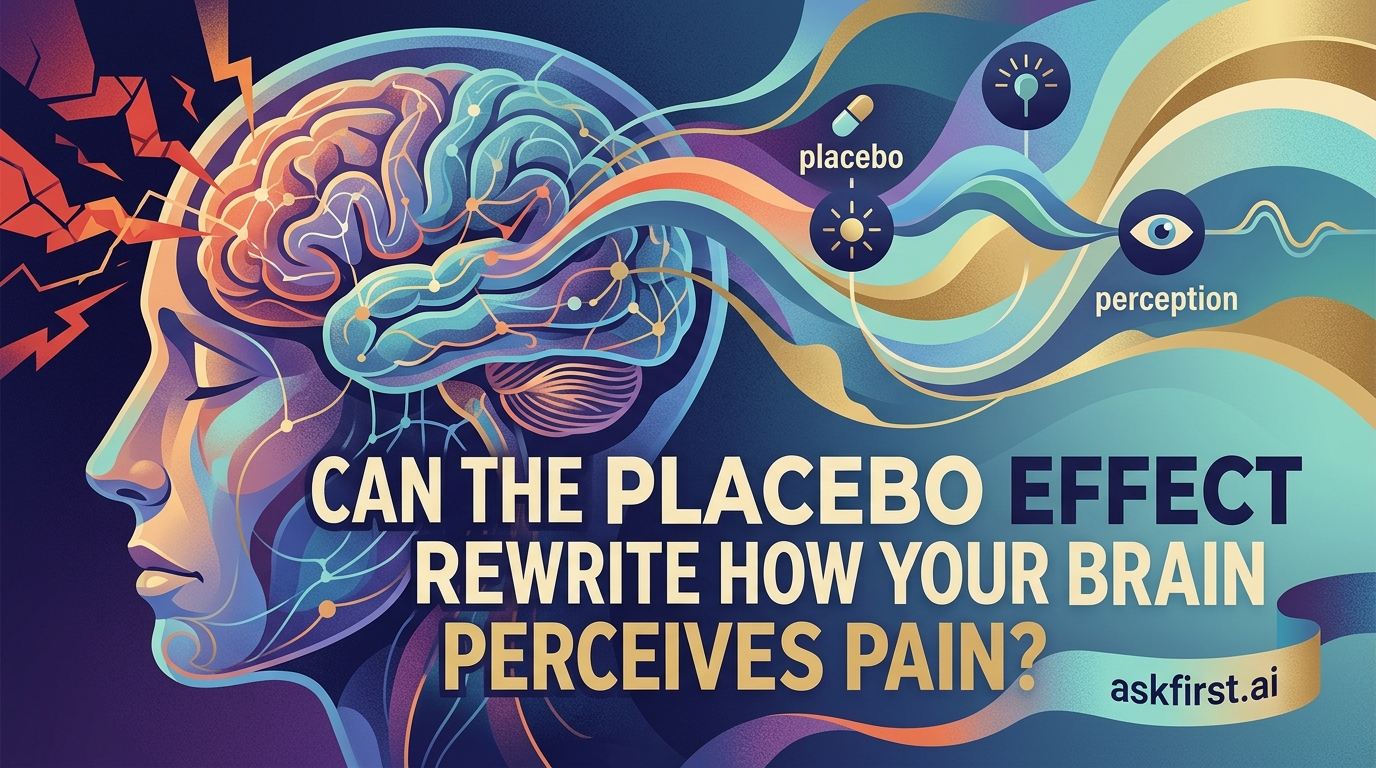
The Neurobiology of Belief: How Your Brain Rewrites Pain
Recent scientific breakthroughs have illuminated a fascinating phenomenon: the human brain possesses an intrinsic ability to modulate pain through expectations alone. This process, known as the placebo effect, is not mere imagination but a complex neurobiological reality where anticipation of relief triggers the release of endogenous opioids and dopamine.
The Neurochemical Mechanism
When an individual believes they are receiving treatment, the prefrontal cortex—the area responsible for executive function and anticipation—signals the descending pain-modulation pathways. This process involves the activation of the periaqueductal gray matter, which effectively dials down the transmission of nociceptive (pain) signals from the spinal cord to the brain. Studies using positron emission tomography (PET) scans have shown that individuals experiencing placebo analgesia exhibit increased activity in the anterior cingulate cortex, a region central to the emotional evaluation of pain.
The Role of Expectancy and Conditioning
Placebo effects generally manifest through two primary mechanisms:
- Expectancy: This is the conscious belief that an intervention will work. When a patient anticipates relief, the brain actively prepares to reduce incoming pain signals.
- Classical Conditioning: If an individual has historically associated a clinical setting or a specific action with healing, the brain creates a learned response. Even without active medicine, the environment triggers a physiological release of neurotransmitters.
Clinical trials, such as those conducted by Benedetti et al., demonstrate that this effect is so potent that it can be reversed by opioid antagonists like naloxone. This proves that the placebo response is not just psychological; it is a chemical reaction that utilizes the body’s internal pharmacy. Research suggests that when patients feel cared for or have high trust in a provider, the placebo effect is amplified, proving that the therapeutic relationship is a crucial component of pain management.
Ethical and Practical Implications
Understanding that the brain can actively rewrite its perception of pain has revolutionized medical approaches. It emphasizes that the context in which a treatment is delivered is just as important as the pharmacology itself. While placebos cannot cure structural damage, they can significantly lower the burden of subjective pain, reducing the need for high-dose analgesics. This knowledge empowers practitioners to harness positive patient expectations to enhance standard medical care.
In conclusion, the placebo effect is a profound testament to the plasticity of the human nervous system. By shifting focus from pure pathology to the power of human expectation, science continues to unlock new ways to manage discomfort, highlighting that the mind is not just an observer, but an active participant in physical healing.