How the Placebo Effect Unlocks Hidden Brain Power
Unlocking the Mind: The Science of Placebo Effects
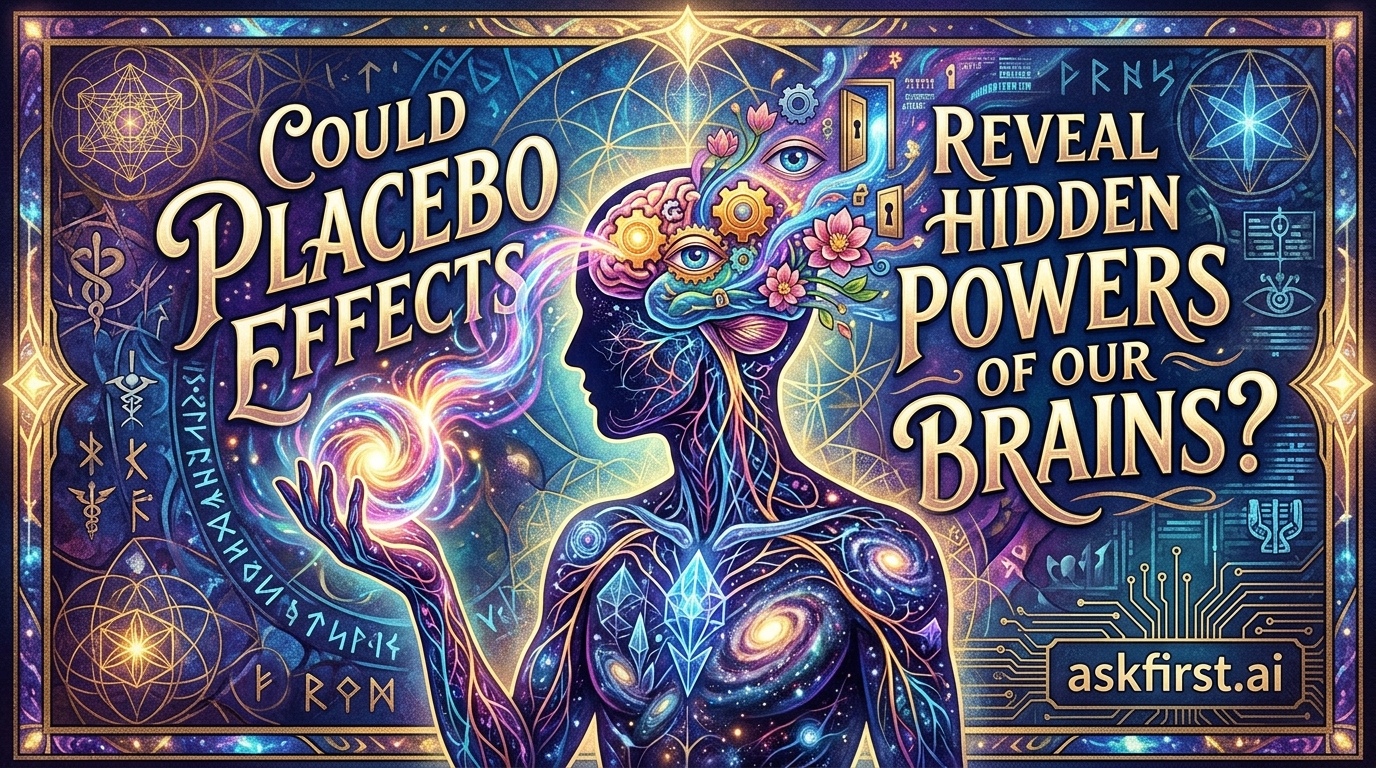
The placebo effect represents one of the most intriguing phenomena in modern medicine, challenging conventional understanding of how biology interacts with belief. Often dismissed as a mere statistical nuisance in clinical trials, the placebo effect actually highlights a profound mechanism: the brain's ability to trigger physiological changes based solely on the expectation of healing. This process suggests that the mind possesses latent, untapped capabilities to modulate pain, inflammation, and even endocrine responses.
The Neurobiology of Expectation
At its core, the placebo effect is not "all in the head" in a dismissive sense, but rather a sophisticated neurochemical cascade. When an individual expects relief, the brain's prefrontal cortex, anterior cingulate cortex, and periaqueductal gray matter become active. These regions orchestrate the release of endogenous opioids and dopamine. This neurochemical release acts as a biological signal to the rest of the body, effectively dampening pain signals in the spinal cord and regulating autonomic functions. Essentially, the belief in a recovery prompts the body to mobilize its own "internal pharmacy."
Conditioning and Contextual Healing
Research indicates that placebo responses are built upon two primary pillars:
- Expectancy Theory: The conscious belief that a treatment will work directly influences the nervous system's output.
- Classical Conditioning: Patients who have experienced relief from previous treatments develop a Pavlovian association. Simply walking into a doctor's office or taking a familiar pill can trigger a physiological improvement due to these conditioned neural pathways.
Furthermore, the "ritual" of care matters. Studies have shown that the physical characteristics of a placebo—such as color, branding, and even the price of a perceived treatment—impact the degree of the effect. A brightly colored pill is often perceived as more potent than a plain white one, and larger, expensive-looking injections frequently yield stronger physiological outcomes than cheaper alternatives.
Implications for Human Potential
Could this suggest we have hidden powers? The evidence points toward a remarkable plasticity in how the brain manages health. While a placebo cannot shrink a tumor or knit a broken bone, it can significantly alter the subjective and objective experience of symptoms. For chronic conditions like irritable bowel syndrome or fibromyalgia, the engagement of these pathways can lead to measurable clinical improvement. This demonstrates that the brain acts as an active participant rather than a passive observer of physiological health. By intentionally engaging the mind-body connection—through mindfulness, stress reduction, and positive reinforcement—individuals may be able to harness these latent pathways more effectively. Ultimately, the study of placebos does not reveal magic, but rather the highly efficient, yet often overlooked, biological reality that our thoughts are powerful tools for self-regulation and therapeutic support in the ongoing journey of human health maintenance.