Why Frogs Need Both Land and Water to Survive
The Evolutionary Marvel: Why Frogs Lead Amphibious Lives
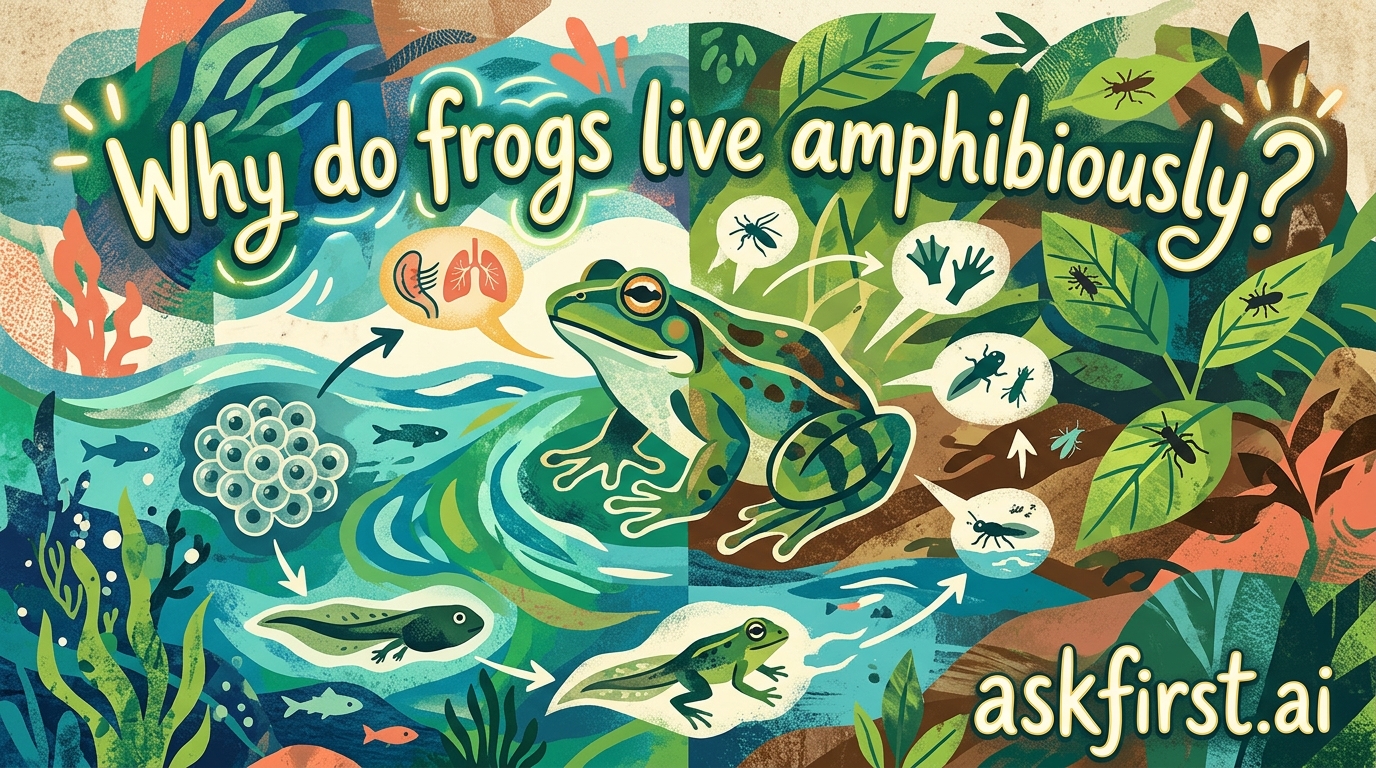
The term "amphibian" is derived from the Ancient Greek amphibios, meaning "living a double life." Frogs (order Anura) have evolved to thrive in both aquatic and terrestrial environments, a strategy that provides significant evolutionary advantages but necessitates complex physiological adaptations. Their ability to transition between water and land is not merely a preference; it is a fundamental survival mechanism dictated by their biology.
Physiological Foundations
The primary reason frogs live amphibiously is their bimodal respiration. Unlike mammals, which rely solely on lungs, frogs possess highly permeable skin that acts as a secondary respiratory organ. Through a process called cutaneous respiration, oxygen diffuses directly through their skin into the bloodstream.
- The Moisture Requirement: For this gas exchange to occur, the skin must remain moist. Exposure to dry air causes dehydration, which is fatal to most species. Thus, frogs must remain near water or in high-humidity environments to prevent their skin from desiccating.
- Lung Development: While adult frogs possess lungs, they lack a diaphragm. They use a "buccal pump" mechanism, essentially swallowing air to force it into their lungs. This system is less efficient than the mammalian method, making cutaneous respiration essential for meeting metabolic demands.
Evolutionary History and Reproductive Strategy
Frogs are descendants of lobe-finned fish that began colonizing land during the Devonian period (roughly 360 million years ago). This transition was driven by the need to exploit untapped food sources—specifically the abundant insects on land—while avoiding aquatic predators.
The Role of Water in Reproduction
Despite their terrestrial capabilities, most frogs are tied to water for reproduction. Their eggs lack the protective, calcified shells of amniotes (reptiles, birds, and mammals). Instead, frog eggs are encased in a gelatinous substance that is susceptible to drying out.
- External Fertilization: Most species release eggs and sperm into water, where embryos develop into aquatic larvae (tadpoles).
- Tadpole Anatomy: Tadpoles possess gills and lateral line systems, making them strictly aquatic. The metamorphosis from a gilled tadpole to an air-breathing adult is one of nature’s most dramatic biological transitions.
Pros and Cons of Amphibious Living
Living in two worlds offers a unique balance of risk and reward:
Advantages:
- Niche Exploitation: Frogs can forage for food on land while retreating to water to escape terrestrial predators.
- Temperature Regulation: Water acts as a thermal buffer, allowing frogs to regulate their body temperature more effectively than purely terrestrial animals.
Disadvantages:
- Vulnerability to Pollution: Because their skin is permeable, frogs are highly sensitive to environmental toxins, pesticides, and heavy metals. They are widely considered "indicator species"—the "canaries in the coal mine" for ecosystem health.
- Desiccation Risk: The constant need for moisture limits their range, preventing them from inhabiting arid deserts or extremely dry climates.
Future Trends and Conservation
Today, amphibians are facing a global decline due to habitat loss, climate change, and the spread of the chytrid fungus. As wetlands disappear, the "double life" of the frog is under threat. Conservationists emphasize that protecting water sources is synonymous with protecting frog populations. Understanding their amphibious nature is critical to preserving biodiversity; without clean, accessible water, these ancient survivors cannot complete their life cycles, leading to potential ecosystem collapse.