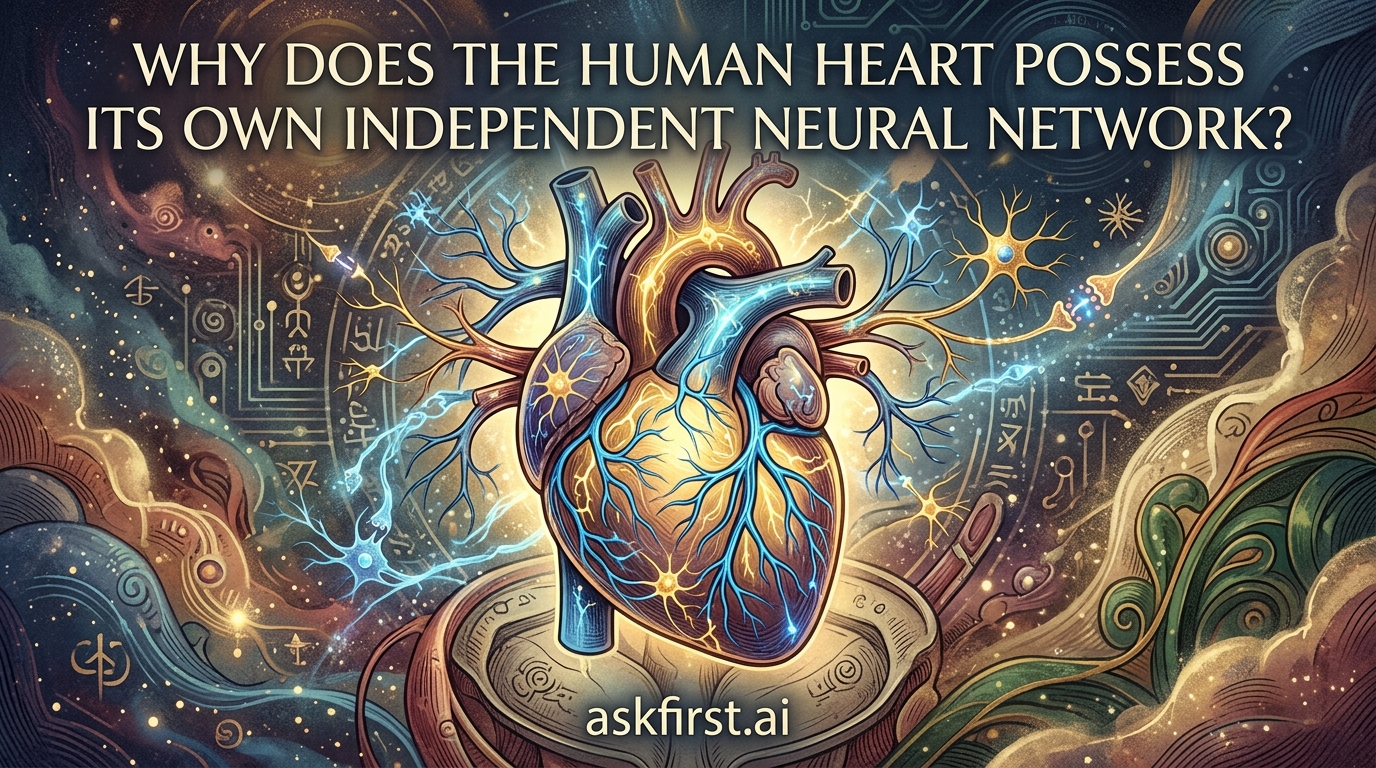
The Heart's Hidden Brain: Understanding the Intrinsic Cardiac Nervous System
Beyond the well-known signals originating from the brain, the human heart maintains a sophisticated, internal control center known as the Intrinsic Cardiac Nervous System (ICNS). This complex network, often referred to as the "heart brain," consists of approximately 40,000 neurons, which allow the heart to function with remarkable autonomy and intelligence.
Anatomy of the Heart Brain
This intricate web of neurons is embedded within the epicardial fat pads of the heart. It processes information, executes commands, and coordinates the mechanical pumping rhythm independently of the central nervous system. While the autonomic nervous system modulates heart rate, the ICNS ensures the heart responds instantly to local fluctuations in blood pressure, chemistry, and mechanical stress without waiting for instructions from the brainstem.
Why Autonomy Matters: Resilience and Speed
Evolution favored an independent cardiac nervous system because the heart serves as the body’s ultimate survival engine. By managing its own neural localizations, the heart achieves:
- Instantaneous Adaptation: Immediate correction of blood flow dynamics without latency.
- Systemic Redundancy: Continued, rhythmic operation even if the primary connections to the brain are severed (as seen in successful heart transplant procedures).
- Intracellular Signaling: Sophisticated communication between cardiac cells, maintaining electrical synchronicity across the atria and ventricles.
Neurotransmitters and Memory Functions
The ICNS operates using a vast array of neurotransmitters, including norepinephrine, dopamine, and acetylcholine, mirroring the chemical environment of the cranial brain. Research indicates that the heart not only receives information but also possesses the ability to "learn" and store sensory experiences through synaptic plasticity. This biological phenomenon enables the heart to optimize its performance based on recurrent stressors, effectively maintaining its own form of functional memory.
The Heart-Brain Communication Loop
While the ICNS is independent, it is not isolated. A constant, bidirectional dialogue occurs between the heart and the brain through the vagus nerve. Interestingly, more neural signals travel upward from the heart to the brain than downward. This afferent signaling influences the brain's emotional regulation centers, such as the amygdala and the prefrontal cortex, fundamentally shaping human perception, intuition, and psychological states. This confirms that the heart is not merely a pump, but an essential component of the human information-processing architecture.
Implications for Human Vitality
The existence of the ICNS highlights the biological necessity of coherence. When the heart’s neural network functions optimally, it creates systemic physiological patterns that enhance cognitive performance and emotional regulation. By understanding that the heart possesses its own decentralized intelligence, individuals can better appreciate the intricate, self-regulating biological engineering that sustains human life. This sophisticated neural architecture ensures that the heart remains a robust, adaptable, and sentient-like organ, capable of managing life-sustaining rhythms throughout an entire human lifespan.