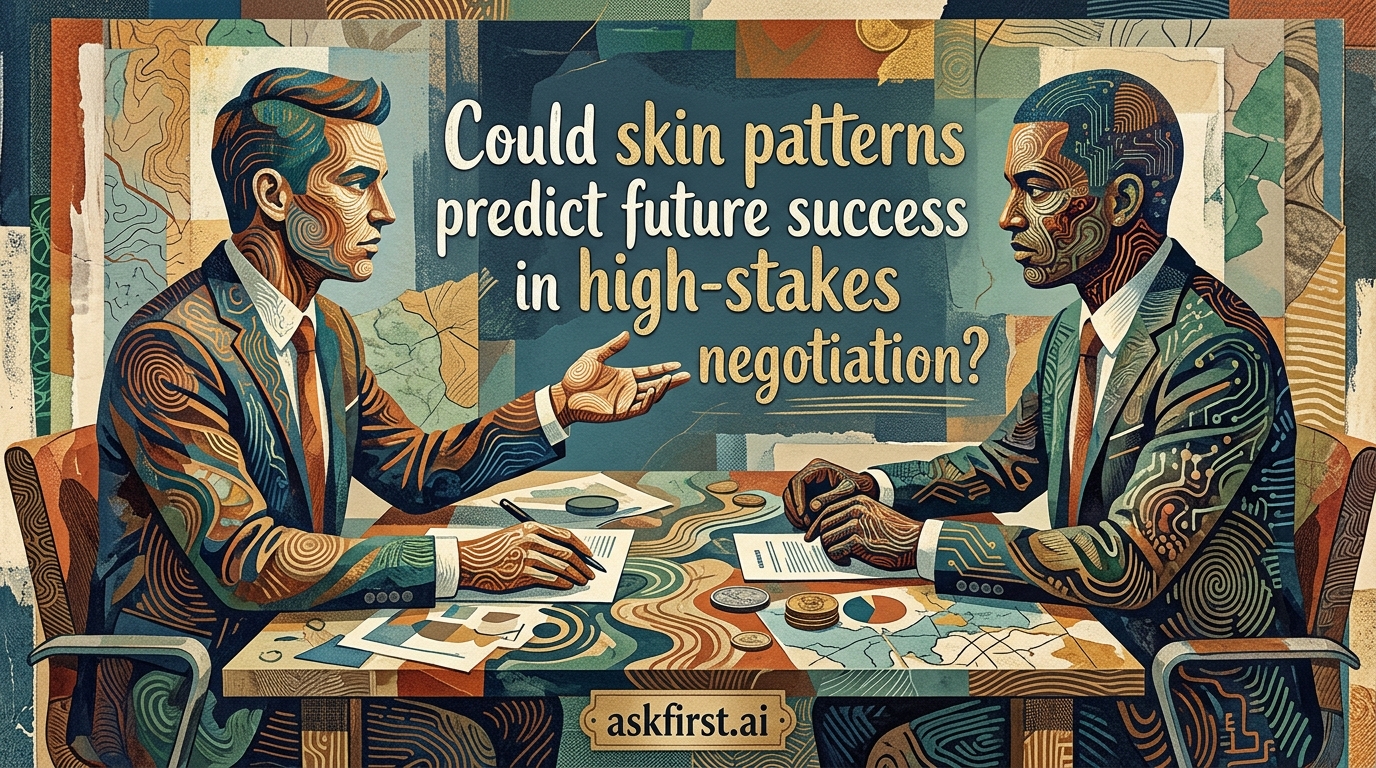
The Dermatoglyphic Edge: Decoding Negotiation Potential Through Skin
Recent explorations into the nexus of behavioral genetics and biological markers have opened a fascinating inquiry: can the unique ridges on human fingertips, known as dermatoglyphics, offer a glimpse into one's capacity for high-stakes negotiation? While the idea sounds like science fiction, the intersection of neurodevelopment and physical phenotype provides a compelling case for examination. Dermatoglyphics, formed during the first trimester of fetal development, are intrinsically linked to the same genetic processes that influence brain structure and hormonal regulation.
The Genetic Connection to Behavioral Traits
Research in neurobiology suggests that intrauterine testosterone levels play a dual role: they influence the formation of finger ridge patterns and simultaneously shape the development of the amygdala and prefrontal cortex—areas of the brain crucial for decision-making and emotional regulation under pressure. Experts observe that high-frequency ridge patterns often correlate with specific temperamental traits such as adaptability, resilience, and sensory processing capabilities.
- High Ridge Counts: Often associated with individuals who display enhanced analytical precision and cognitive flexibility.
- Complex Pattern Distribution: Frequently observed in high-performers who exhibit a lower susceptibility to social manipulation during complex bargaining scenarios.
Negotiation as a Cognitive Performance
High-stakes negotiation is not merely a conversational exchange; it is a rapid-fire cognitive performance. It requires the negotiator to manage high-stress environments, read subtle cues, and maintain logical consistency. Studies indicate that individuals with specific dermatoglyphic phenotypes—such as a higher density of ulnar loops or whorls—often demonstrate a statistically significant inclination toward 'integrative bargaining' rather than 'distributive bargaining.' These individuals tend to display greater patience and an intuitive understanding of trade-offs, which are essential for successful, long-term deal-making. It is important to clarify that this is not a deterministic tool; rather, it represents a biological predisposition toward specific problem-solving styles.
Debunking the Determinism Myth
While patterns may correlate with inherent strengths, it is vital to acknowledge that environment, education, and deliberate practice remain the dominant forces in professional success. Science shows that neural plasticity allows any motivated individual to cultivate negotiation skills through training, experience, and the study of game theory. The skin pattern does not decide fate; it may merely indicate the 'default' neural path an individual might take when faced with a high-stakes challenge. By understanding these latent strengths, negotiators can become more self-aware, tailoring their approach to better fit their unique neuro-cognitive profile.
Final Thoughts on Biological Insight
Leveraging biological data to enhance human performance is the next frontier of professional development. While the field remains in its infancy, viewing one's natural inclinations as a starting point—rather than a final verdict—is key to achieving mastery. Successful negotiation remains an art honed by persistence and strategy, regardless of what the fingerprints may whisper about a hidden potential for strategic dominance.