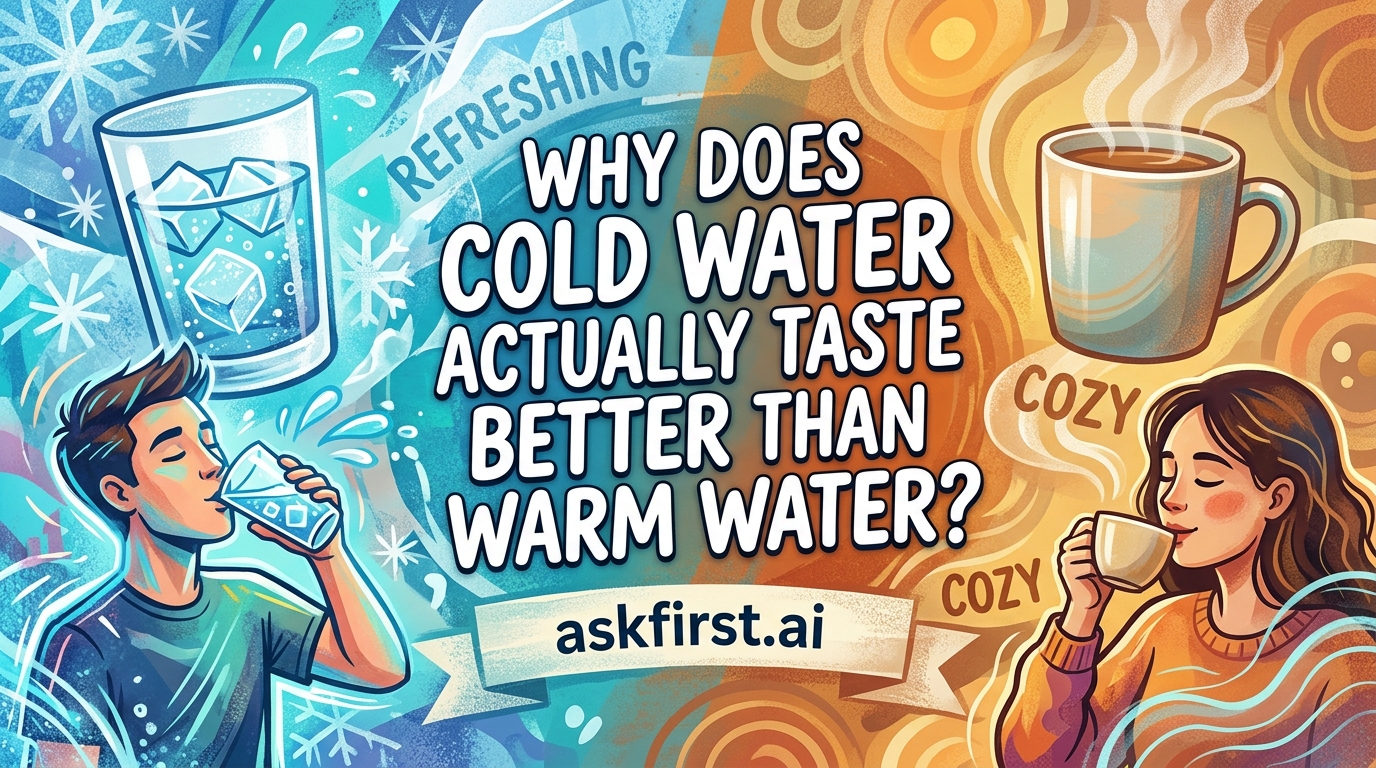
The Science of Refreshment: Why Cold Water Tastes Superior
Many individuals harbor a strong preference for chilled water, often finding room-temperature or warm water unpalatable or even difficult to swallow. This phenomenon is not merely a psychological quirk but a complex interplay of evolutionary biology, sensory perception, and the physical chemistry of our oral cavity. Understanding why cold water delivers a more satisfying drinking experience requires a deep dive into how human biological systems interpret hydration.
The Evolutionary Bias Towards Cold
From an evolutionary standpoint, human ancestors relied on sensory cues to identify safe, clean drinking sources. Natural, running water found in streams and springs is typically cooler than the surrounding ambient air. Warm or stagnant water, by contrast, is more likely to host bacteria, parasites, and algae, which thrive in higher temperatures. Consequently, the human brain developed a bias, associating cool, flowing water with safety and high quality. Drinking cold water triggers a positive neurological response, reinforcing the perception that the liquid is fresh and drinkable, which encourages necessary rehydration.
The Oral Sensory Experience
When water enters the mouth, it engages various sensory receptors. Cold water provides a sharp, tactile stimulation to the tongue and throat that warm water lacks. This thermal contrast is refreshing and creates a sensory "high" that masks the subtle, sometimes flat flavors inherent in plain water. Cold temperatures dampen the sensitivity of certain taste buds, specifically those sensitive to bitterness. This is a crucial observation; many minerals and impurities in water can possess a faint, bitter profile. By lowering the temperature, these bitter notes become less detectable, resulting in a cleaner, more neutral taste that is highly palatable to the average person.
The Role of Mouthfeel and Thermodynamics
Beyond taste, the concept of "mouthfeel" plays a significant role in consumption. The physical temperature of the water alters its viscosity and its interaction with the salivary glands. Cold water creates an immediate cooling sensation in the esophagus, which is biologically interpreted as a relief mechanism, especially after physical exertion or exposure to heat. This sensation satisfies the internal drive to lower core body temperature, making the act of drinking inherently more rewarding. In contrast, warm water does not provide this physiological relief, leading to a feeling of "heaviness" or lack of stimulation.
Conclusion: The Psychology of Hydration
In essence, the preference for cold water is a combination of safety-seeking biology and sensory optimization. By minimizing bitter notes and providing an immediate, cooling sensory reward, cold water effectively "tricks" the palate into finding it more delicious. While warm water is just as hydrating, the human sensory system is tuned to favor the crispness of the cold, ensuring that the act of drinking is as pleasurable as it is essential for survival.