The Molecular Chemistry of Love: Can Science Predict Your Soulmate?
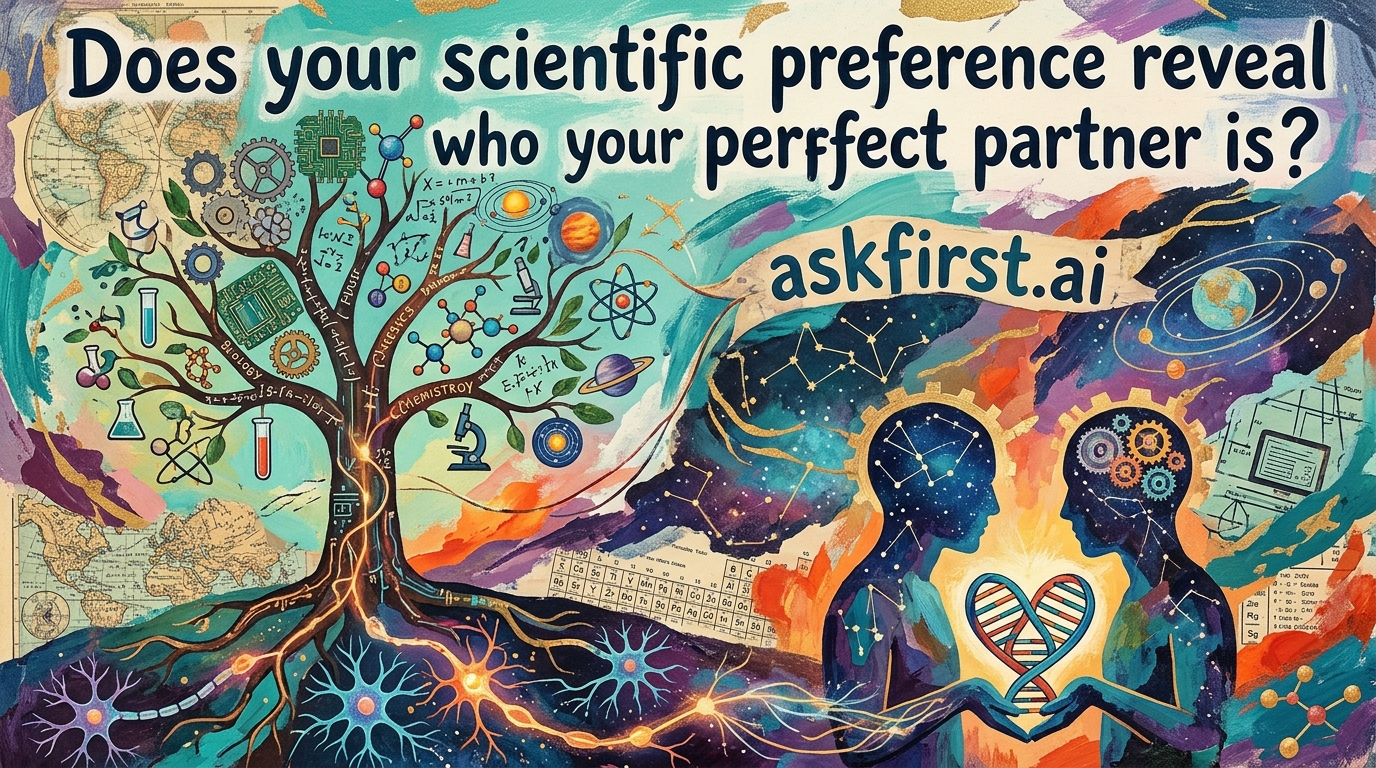
At the intersection of psychology and biology, researchers have long explored whether our cognitive inclinations toward specific scientific disciplines reflect deep-seated personality traits that dictate compatibility. The hypothesis suggests that a fascination with structured, rule-based systems like physics or chemistry versus the organic, fluid nature of biology and psychology signals how an individual processes emotional information.
The Cognitive Profiling of Interests
Scientific interests often act as proxies for cognitive styles. Individuals who gravitate toward the "hard sciences"—such as mathematics, engineering, or physics—often exhibit high levels of Systemizing. According to Simon Baron-Cohen’s systemizing-empathizing theory, these individuals excel at identifying rules, predicting variables, and seeking logical consistency. In relationships, these partners tend to prioritize stability, clear communication, and shared problem-solving goals. Conversely, those attracted to the life sciences, ecology, or psychology often score higher on Empathizing, prioritizing the nuances of human behavior, emotional validation, and interconnected systems.
Compatibility Paradigms
Are opposites attractive, or is similarity the bedrock of a perfect match? The "Assortative Mating" theory suggests that individuals often choose partners who share their cognitive framework. If an engineer, who thrives on empirical data and system-based logic, pairs with a sociologist, who understands the complexities of behavioral motives, the relationship can either flourish through complementary strengths or falter due to linguistic and value-based disconnects.
- The Systemizer-Systemizer Dynamic: These couples often experience low conflict regarding household management and financial planning, as both parties value logic and predictable outcomes. However, they may struggle with articulating emotional needs.
- The Empathizer-Empathizer Dynamic: These pairs often report high levels of emotional intimacy and shared compassion, though they may face challenges during stressful external events where pragmatic, dispassionate decision-making is required.
- The Cross-Disciplinary Blend: This represents the "best of both worlds" scenario, where one partner provides a logical scaffolding for the other's emotional intelligence.
Scientific Indicators and Relationship Longevity
It is not the subject matter itself, but the underlying motivation behind the interest that serves as a diagnostic tool for partner selection. A preference for astronomy, for instance, might indicate a desire for grand, abstract perspectives, whereas an interest in microbiology suggests a detail-oriented, analytical mindset. When these preferences align with a partner's fundamental approach to life, the relationship dynamic naturally feels more fluid. While scientific interests are not a foolproof predictor, they act as an excellent diagnostic lens for understanding how potential partners process the world, set expectations for communication, and ultimately define what they consider a "successful" resolution to life's inherent complexities. Choosing a partner whose cognitive architecture harmonizes with one's own scientific worldview can significantly enhance mutual understanding and emotional synchronicity over a lifetime.