The Psychology of Shared Narratives
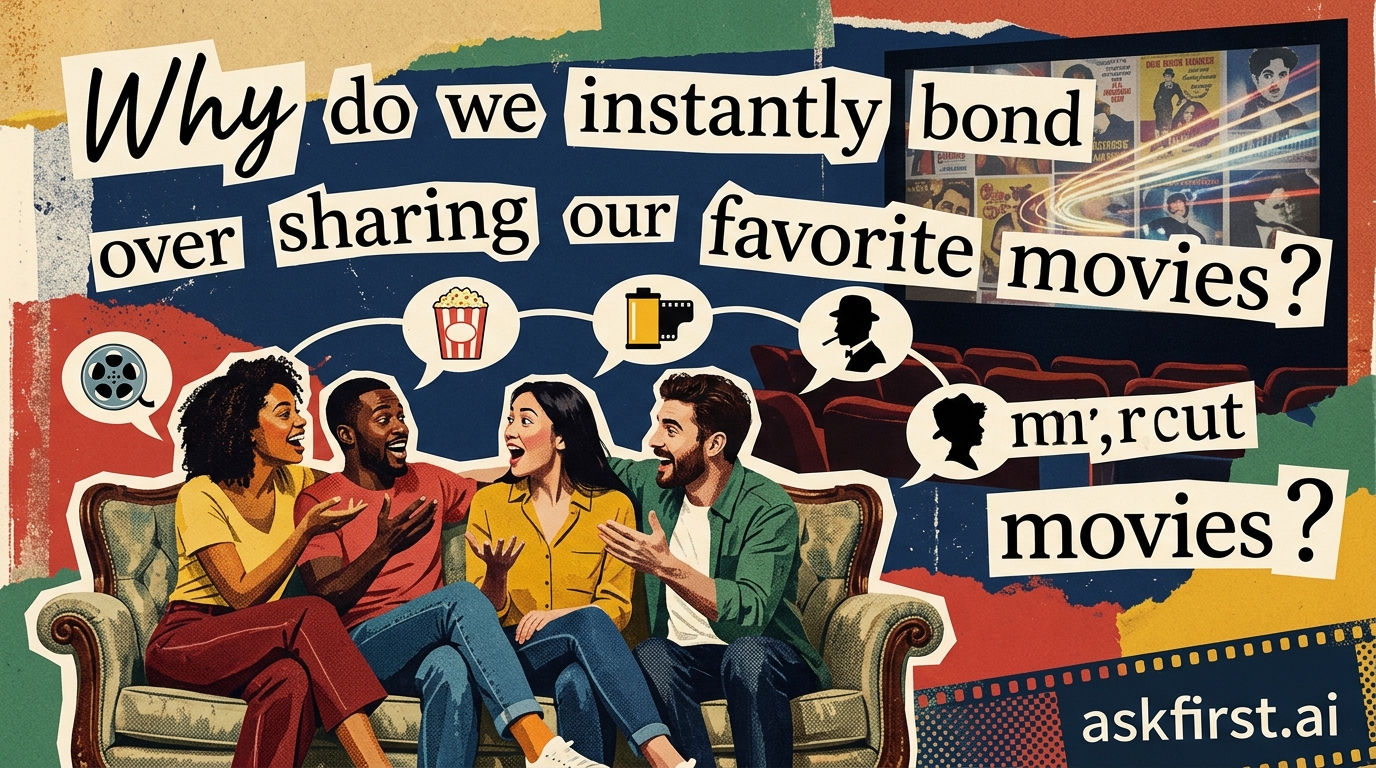
The phenomenon of instant social connection through cinema preference is rooted in the psychological concept of Self-Expansion Theory. When individuals share a favorite film, they are not merely exchanging preferences; they are revealing an internal map of their values, emotional triggers, and personality architecture. Research in social psychology suggests that humans perceive themselves as larger entities when they integrate the perspectives and experiences of others, and cinema acts as a conduit for this psychological expansion.
The Mirror Neuron Mechanism
At the neurological level, the process is facilitated by mirror neurons. When a person describes the emotional impact of a film, the listener's brain simulates those same emotional states. This process, often referred to as 'neural coupling,' creates a temporary bridge between two minds. By aligning the narrative structure of a story with a counterpart, the brain experiences a dopamine release associated with social cohesion and the relief of being understood.
Cultural Signifiers and Social Signaling
Sharing a favorite movie functions as a highly efficient form of social signaling. It acts as a shortcut to determine whether a person belongs to one's 'in-group.' Consider these primary drivers:
- Value Alignment: A preference for certain genres—such as sci-fi for innovation or drama for empathy—signals core personality traits to the listener.
- Cultural Literacy: Referencing a cult classic acts as a linguistic shibboleth, immediately establishing a shared history and vocabulary.
- Emotional Vulnerability: Admitting to being moved by a specific film requires a level of honesty that lowers social defenses, encouraging reciprocity.
The Role of Narrative Transportation
According to the Transportation Theory proposed by Green and Brock, when an individual is fully immersed in a narrative, their critical faculties decrease, and their emotional capacity increases. When two people discuss a film that has successfully transported them, they are essentially comparing the ways in which their mental simulations were altered. This shared vulnerability fosters rapid trust. It is not just about the movie; it is about the intersection of two separate lives within the same fictional universe.
Why This Stays Constant
This behavior is an evolutionary adaptation for forming alliances. In prehistoric times, identifying individuals with shared survival mentalities was crucial. Today, we achieve this through stories. By discussing our favorite films, we are unconsciously scanning for partners who interpret reality in compatible ways. This mechanism remains constant regardless of technological shifts because it addresses a fundamental human requirement: the desire to feel that our subjective internal reality is validated by another member of our species.