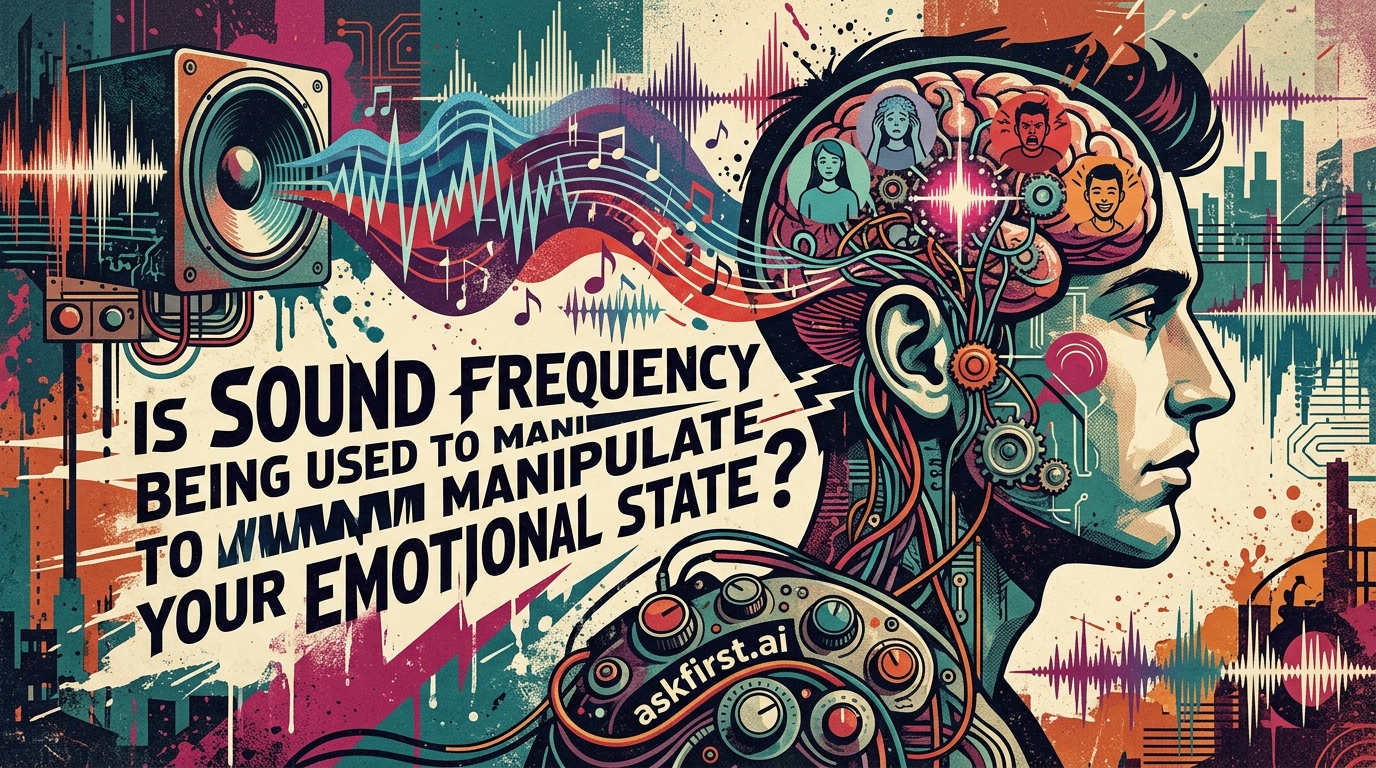
The Psychoacoustics of Sound
Sound is far more than just audible vibration; it is a fundamental driver of human physiology and psychological state. Psychoacoustics, the study of how humans perceive sound, demonstrates that frequency manipulation serves as a primary tool for altering brainwave activity and nervous system regulation. While the idea of 'manipulation' may sound conspiratorial, it is a well-documented biological reality employed across cultures for centuries and modernized through current neuroscientific research.
The Mechanism of Entrainment
At the core of emotional regulation via sound is a process known as Brainwave Entrainment. The human brain naturally oscillates at different frequencies depending on cognitive load—ranging from high-alert Beta waves to deep-relaxation Delta waves. When exposed to rhythmic acoustic stimuli, such as binaural beats or isochronic tones, the brain has a tendency to synchronize its electrical cycles with the frequency of the external input. This phenomenon allows specific auditory environments to shift an individual from a state of anxious alertness into profound calm or heightened focus within minutes.
Practical Applications in Modern Life
- Stress Reduction: Low-frequency oscillations, particularly in the Alpha (8-12 Hz) and Theta (4-8 Hz) range, are frequently utilized in clinical and wellness settings to dampen the amygdala's response to stressors. By slowing down the perceived pace of incoming stimuli, these frequencies induce a state of parasympathetic dominance.
- Cognitive Enhancement: Certain soundscapes enriched with specific harmonic ratios have been shown to optimize neural pathways associated with creative problem-solving. This is the underlying principle behind the popularity of 'focus' playlists, which leverage steady-state frequencies to sustain task-oriented brain activity.
- Emotional Priming: Beyond pure brainwave entrainment, psychoacoustic engineers utilize 'emotional mirroring' through sound. High-frequency, rising-tempo audio cues trigger a physiological arousal response similar to excitement or anticipation, while descending-register tones are used to create feelings of melancholy or safety.
Are You Being Manipulated?
The term 'manipulation' often carries a negative connotation, yet sound frequency is essentially a neutral tool. Commercial industries, such as video game development and cinematic scoring, have refined the use of dissonant frequencies to create tension and harmonic frequencies to evoke empathy. This is not inherently deceptive; it is the art of manipulating the listener's interior landscape to better align with an intended narrative experience. The human response to sound is evolutionary, rooted in a time when the ability to discern the emotional intent of a sound—such as a predator's growl versus a social call—was a matter of survival. Modern sound design simply speaks to these archaic neural circuits, turning biology into an instrument for intentional emotional design. Understanding these mechanisms grants individuals the agency to consciously choose their own auditory environment, transforming sound from a passive background element into an active tool for mental health.