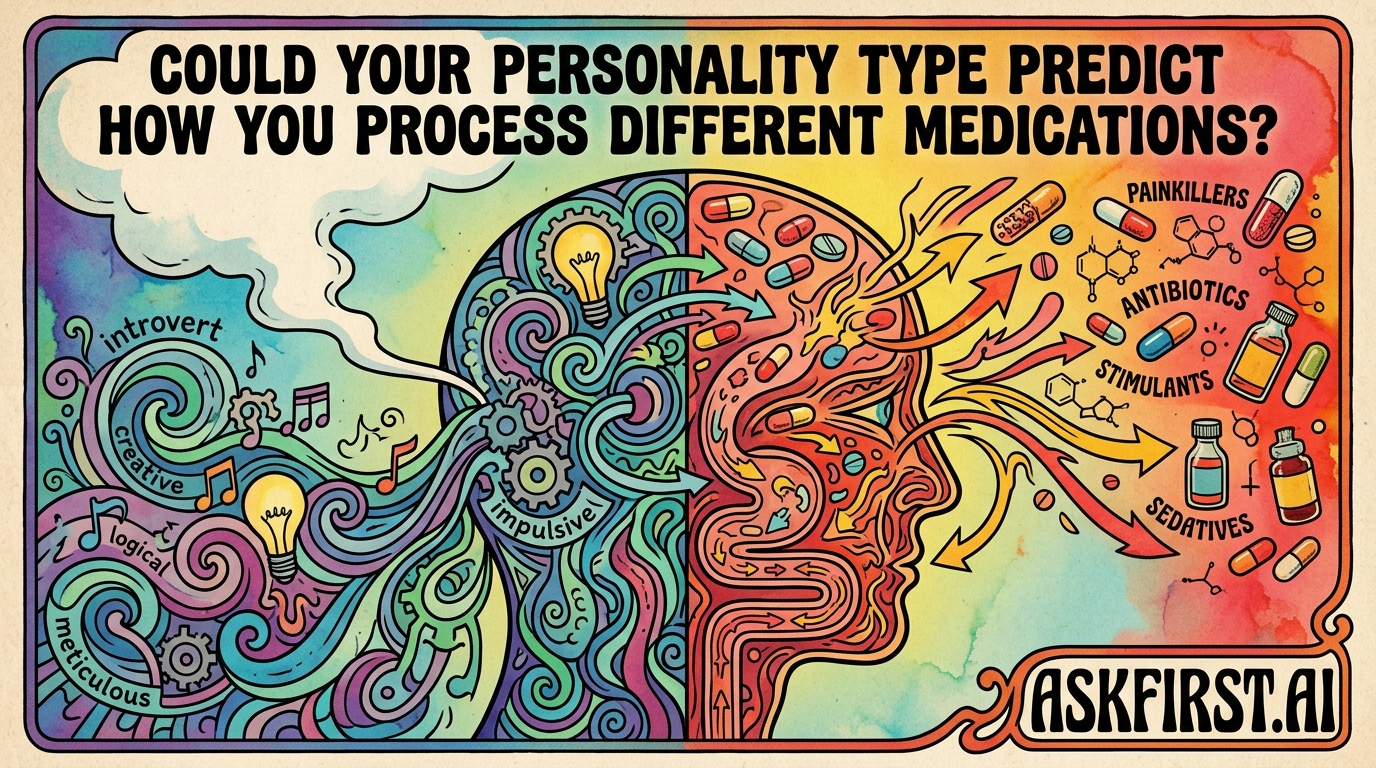
The Intersection of Temperament and Pharmacogenomics
The notion that personality type could dictate physiological drug responses remains a captivating area of interdisciplinary study. While pharmacogenomics focuses primarily on genetic markers and enzymatic variations, psychological profiles often act as a secondary layer in clinical outcomes. Research indicates that the way a brain responds to environmental stimuli is fundamentally linked to the central nervous system, which in turn influences how metabolic pathways manage pharmaceuticals.
Psychological Traits and Drug Metabolism
Personality, specifically the trait of 'neuroticism' versus 'extraversion,' correlates with differences in baseline arousal levels. Individuals scoring high in neuroticism often display an overactive sympathetic nervous system. In clinical trials, these patients may manifest higher rates of 'nocebo' effects, where anticipation of side effects alters the actual physiological processing of a drug. Furthermore, stress-related hormones such as cortisol can influence the activity of hepatic enzymes like the cytochrome P450 family, which are the primary gatekeepers of medication breakdown.
- High Sensitivity Individuals: Those with high sensory processing sensitivity (SPS) often report lower thresholds for side effects. This is frequently due to a heightened awareness of subtle physiological changes, causing the body to react more dynamically to chemical inputs.
- Impulsivity and Medication Adherence: Beyond metabolic processing, impulsivity scores in the 'Big Five' personality model directly predict compliance. High impulsivity is associated with irregular dosing schedules, which can disrupt steady-state plasma concentrations, making it appear that a medication is 'processed' poorly by the body when it is actually a matter of improper timing.
The Placebo and Personality Connection
Studies regarding the 'placebo responder' phenotype suggest that personality traits such as optimism and high social suggestibility play a role in the effectiveness of analgesics. When the brain anticipates relief, it initiates an endogenous opioid response. This neurochemical release can effectively augment the pharmacological action of the drug. Consequently, a patient with a resilient and optimistic personality may actually experience a faster reduction in symptoms compared to a pessimistic individual taking the exact same dose of a pain reliever.
Future Implications for Personalized Medicine
While personality cannot override genetic enzymes—such as the CYP2D6 variant that determines the speed of metabolizing antidepressants—it serves as a powerful modifier of drug experience. Future diagnostic protocols might incorporate psychological profiling alongside genetic testing to optimize medication regimes. Understanding that personality shapes the internal 'ecosystem' of the body provides a holistic view of human health. By recognizing these psychological predispositions, clinicians can better tailor dosages and set expectations, ultimately transforming how we approach the delicate science of patient-specific therapy.