The Lisp Enigma: A Journey Through Computational History
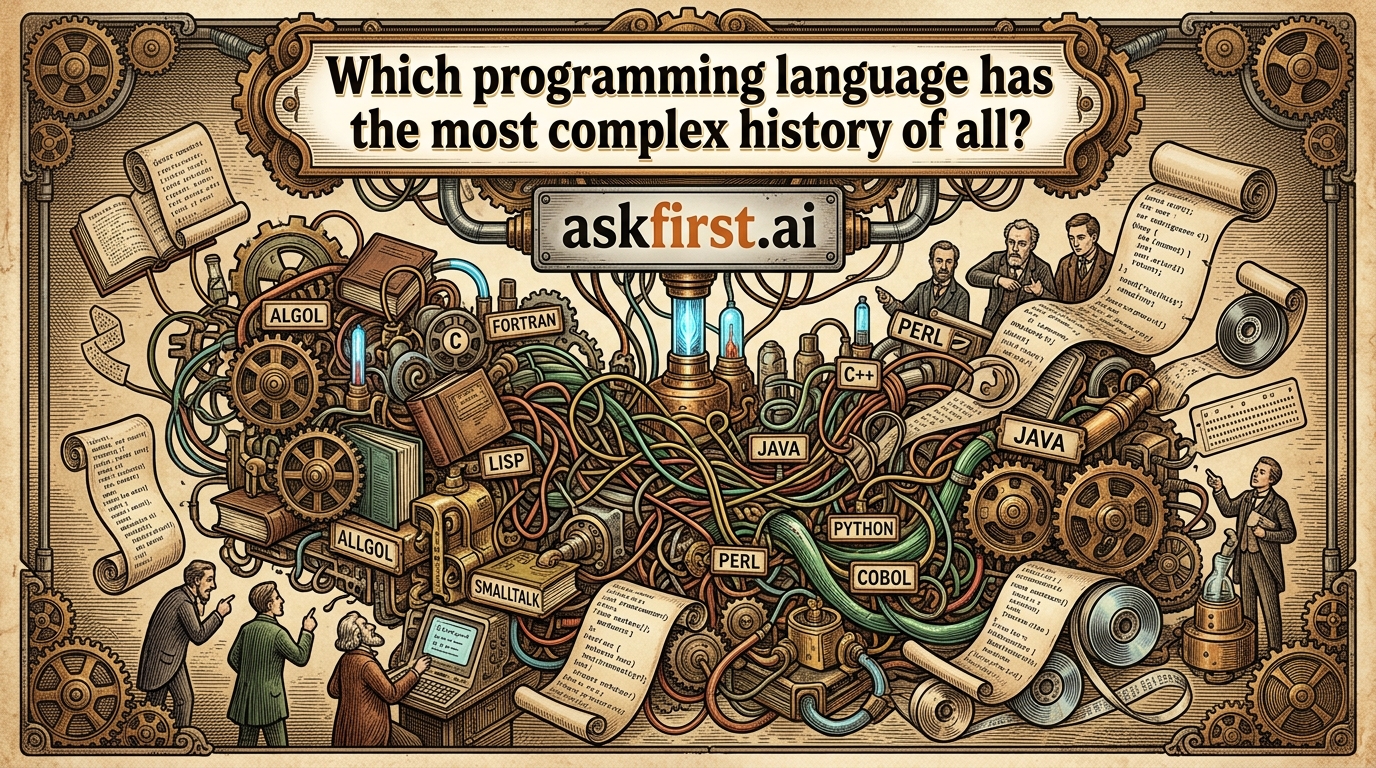
When exploring the labyrinthine history of programming languages, one name stands as the undisputed champion of conceptual evolution: Lisp. Created by John McCarthy in 1958 at the Massachusetts Institute of Technology, Lisp is not merely a language; it is a foundational pillar of computer science that defies simple categorization. Its history is a testament to the fact that the most sophisticated tools often emerge from the most radical ideas.
The Roots of Mathematical Beauty
Lisp was heavily influenced by Lambda Calculus, a mathematical framework developed by Alonzo Church in the 1930s. Unlike its contemporaries, which were designed as sets of instructions for hardware, Lisp was conceived as a mathematical notation for computer programs. This singular shift—viewing code as data—is known as homoiconicity. In Lisp, the program structure is the same as the data structure, allowing code to manipulate itself with unprecedented ease. This concept alone sparked a revolution in software development.
Surviving the Artificial Intelligence Winter
Lisp became synonymous with early Artificial Intelligence research. During the 1960s and 1970s, it was the primary vehicle for pioneers exploring symbolic processing, natural language understanding, and expert systems. The language's dynamic nature and recursive capabilities made it the standard for high-level computing. When the "AI Winter" descended, bringing a collapse in funding for AI research, many languages vanished. Lisp, however, persevered through its inherent adaptability. It splintered into various dialects—most notably Common Lisp and Scheme—each catering to specific academic or practical needs.
Why Complexity Defines Lisp
- The Macro System: Lisp introduced the concept of code macros, allowing developers to extend the language itself. This effectively makes Lisp a language that writes its own syntax.
- Garbage Collection: Lisp was one of the first languages to implement automatic garbage collection, a feature that is now taken for granted in modern languages like Python and Java.
- The REPL Experience: The Read-Eval-Print Loop, the standard interface for modern development, traces its origins directly to the Lisp interaction style, enabling rapid, iterative prototyping.
A Legacy That Never Ends
Despite its age, Lisp remains deeply embedded in modern software. Features such as closures, dynamic typing, and functional programming constructs—once considered "Lisp-specific"—are now ubiquitous in JavaScript, Ruby, and Clojure. The history of Lisp is a journey from pure mathematical theory into the very DNA of every major modern programming environment. While newer languages focus on performance or memory safety, Lisp maintains a historical complexity derived from its ability to reinvent itself through the decades. It stands as a reminder that the most durable technology is not the one with the fastest compiler, but the one with the deepest intellectual foundation.