How Coding Skills Can Make You a Better Partner
The Algorithmic Heart: How Programming Skills Enhance Relationships
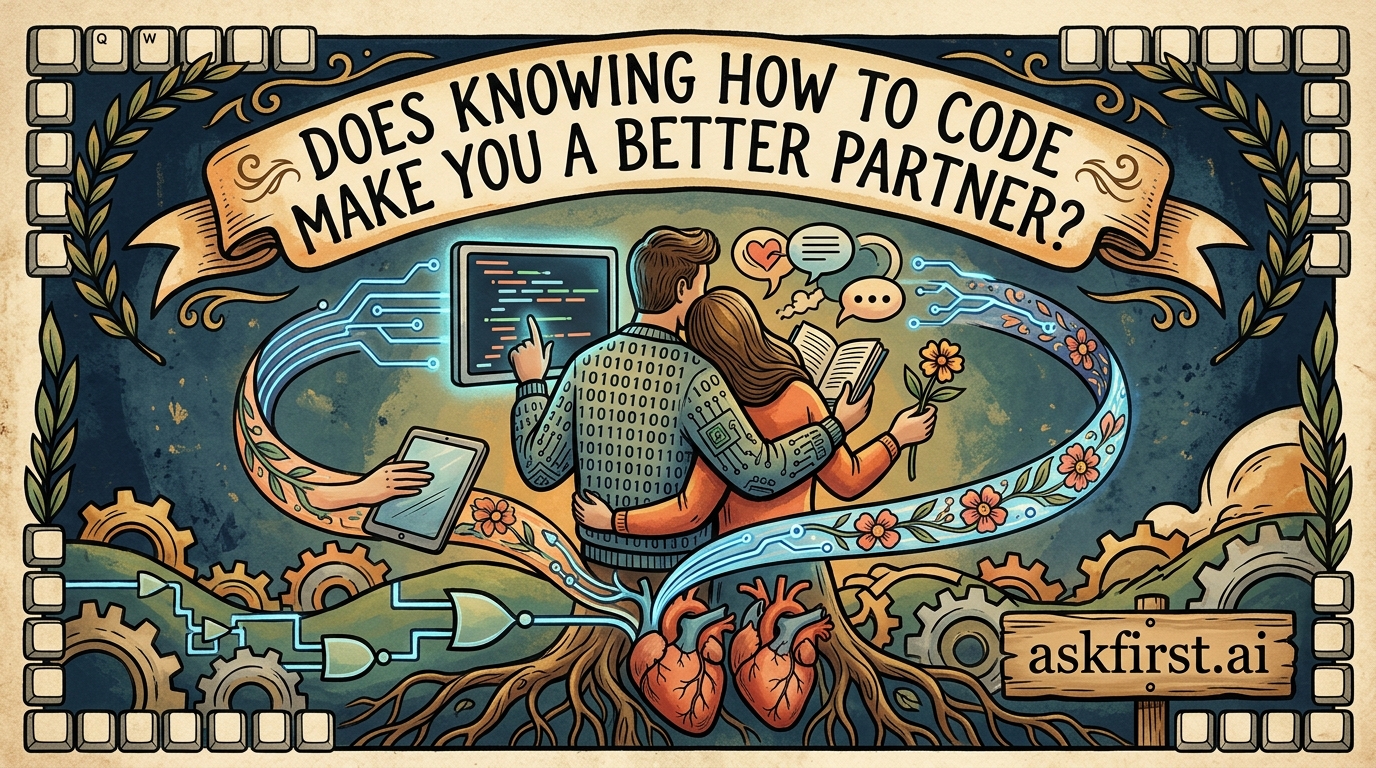
While software development and romance may seem like disparate realms, the cognitive habits cultivated through coding frequently translate into superior relationship dynamics. The acquisition of programming skills involves more than just syntax; it fosters a systematic approach to problem-solving, communication, and emotional regulation that can fundamentally elevate a romantic connection.
Logical Troubleshooting in Conflict Resolution
One of the most valuable transfers from the world of code to the world of dating is the concept of debugging. In a relationship, conflict is inevitable, but how couples handle that conflict determines the partnership's success. Coders are trained to isolate variables, identify the root cause of an error, and implement iterative solutions. Instead of reacting emotionally to a disagreement, a programmer-minded partner often seeks to deconstruct the issue.
- Isolating the issue: Identifying specific triggers rather than generalizing problems.
- Iterative improvement: Recognizing that communication patterns require constant refinement through trial and error.
- Empathy for constraints: Understanding that every individual operates under specific system requirements, such as past experiences or stress levels.
The Art of Structured Communication
Clear documentation is the backbone of any maintainable codebase. Similarly, in a relationship, the ability to express needs, boundaries, and expectations with precision is vital. Coders are accustomed to writing readable, maintainable documentation that allows others to understand complex processes. When applied to love, this skill manifests as intentional communication. Partners who can articulate their thoughts clearly, without relying on ambiguous subtext, effectively reduce the "bugs"—or misunderstandings—that plague many relationships. This practice mirrors the principle of KISS (Keep It Simple, Stupid) in engineering, where simplicity is favored over unnecessary complexity in interpersonal interactions.
Resilience and Growth Mindset
Programming is an inherently iterative process defined by frequent failures. A developer is accustomed to spending hours debugging a single semicolon, only to find the solution requires a different approach entirely. This builds a profound level of patience and emotional resilience. When a relationship hits a rough patch, a person with a coding background is less likely to view the difficulty as a terminal failure. Instead, they view it as a logical challenge requiring a different strategy. This "growth mindset," a term popularized by psychologist Carol Dweck, is essential for long-term commitment. It replaces the notion of "soulmates" with the reality of "system maintenance," transforming love into a proactive, collaborative project that requires active, ongoing engagement.
Ultimately, while the ability to write Python or C++ does not replace emotional intelligence, the structured habits and analytical empathy gained from learning to code provide a robust framework for building more stable, communicative, and resilient partnerships.